Tag: Research

Is it Possible to Know the Daily High or Low Intraday with 80% Accuracy?
PythonQuant

Is it Possible to Know the Daily High or Low Intraday with 80% Accuracy?

Introduction This is an old concept concerning the opening range. The idea is that the opening range often sets the day’s high or low within the first hour of cash equities trading (9:30 am - 10:30 am EST). Recently a trader on Youtube made the claim that you can know with 88% probability the high or low of the day after the first hour of trading. He managed to successfully repopularize the idea of using the opening range in a a more specific way than other methods. In this article I set out t

READ MORE
The Secret to Shorting Stocks
ResearchQuant

The Secret to Shorting Stocks

This post contains affiliate links. An affiliate link means Blackarbs may receive compensation if you make a purchase through the link, without any extra cost to you. Blackarbs strives to promote only products and services which provide value to my business and those which I believe could help you, the reader. Misinformation is everywhere. Many people believe the key to successful short selling is simply the inversion of a successful long strategy. I also used to believe this, among other short

READ MORE
Synthetic ETF Data Generation (Part-2) - Gaussian Mixture Models
PythonQuant

Synthetic ETF Data Generation (Part-2) - Gaussian Mixture Models

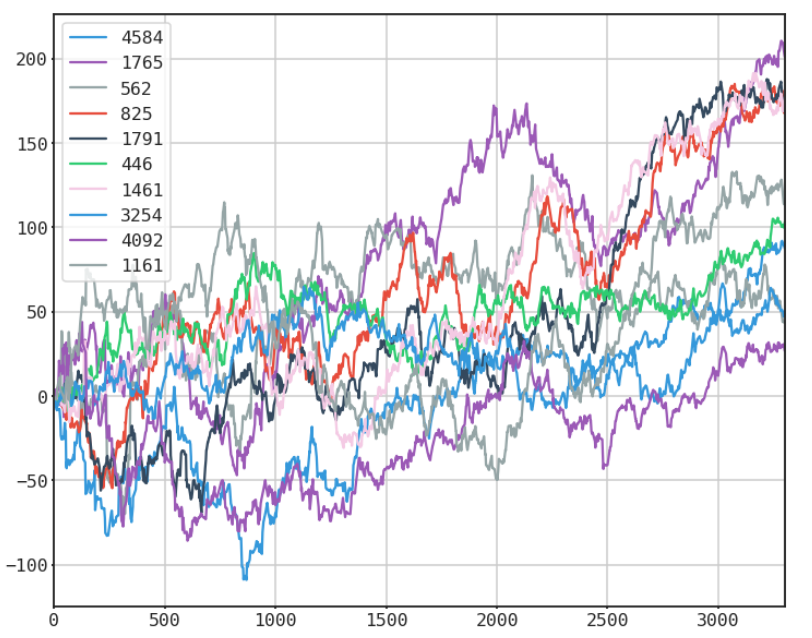
This post is a summary of a more detailed Jupyter (IPython) notebook where I demonstrate a method of using Python, Scikit-Learn and Gaussian Mixture Models to generate realistic looking return series. In this post we will compare real ETF returns versus synthetic realizations. To evaluate the similarity of the real and synthetic returns we will compare the following: * visual inspection * histogram comparisons * descriptive statistics * correlations * autocorrelations The data set we will

READ MORE
A Dead Simple 2-Asset Portfolio that Crushes the S&P500 (Part 4)
PythonQuant

A Dead Simple 2-Asset Portfolio that Crushes the S&P500 (Part 4)

For newsletter subscribers this post is best viewed directly on my blog. Recap In Part 3 of the series we reviewed the relationship between returns and correlation of the 2-asset portfolio UPRO and TMF. The basic equal weight strategy was very compelling in terms of total return and CAGR. However, the strategy is susceptible to large drawdowns, especially in situations where US equities and long term bonds are out favor, for example in the 2015 and 2018 periods. We also went over some prototy

READ MORE
A Dead Simple 2-Asset Portfolio that Crushes the S&P500 (Part 3)
PythonQuant

A Dead Simple 2-Asset Portfolio that Crushes the S&P500 (Part 3)

Recap This is an update to the original blog series that explored a simple strategy of being long UPRO and TMF in equal weight, inverse volatility and inverse-inverse volatility. This strategy crushed the cumulative and risk-adjusted returns of the benchmark SPY etf. However through our research we determined that this strategy is heavily dependent on the correlation between the two assets. This strategy works best when correlations are positive and prices are trending positively, however, theo

READ MORE
Synthetic Data Generation (Part-1) - Block Bootstrapping
PythonQuant

Synthetic Data Generation (Part-1) - Block Bootstrapping

Outline * Introduction * An Alternative Solution? * Notebook Description and Links * Conclusions * Future Work * Resources and Links Introduction Data is at the core of quantitative research. The problem is history only has one path. Thus we are limited in our studies by the single historical path that a particular asset has taken. In order to gather more data, more asset data is collected and at higher and higher resolutions, however the main problem still exists; one historical path

READ MORE
Labeling and Meta-Labeling Returns for ML Prediction
EducationPython

Labeling and Meta-Labeling Returns for ML Prediction

Post Outline * Introduction * Links * Embedded Notebook INTRODUCTION This post focuses on Chapter 3 in the new book Advances in Financial Machine Learning by Marcos Lopez De Prado. In this chapter De Prado demonstrates a workflow for improved return labeling for the purposes of supervised classification models. He introduces multiple concepts but focuses on the Triple-Barrier Labeling method, which incorporates profit-taking, stop-loss, and holding period information, and also meta-labeli

READ MORE
Exploring Alternative Price Bars
PythonQuant

Exploring Alternative Price Bars

Post Outline * Introduction * Links * Embedded Notebook Introduction This post explores a concept at the heart of quantitative financial research. Most qfin researchers utilize statistical techniques that require varying degrees of stationarity. As many of you are aware financial time series violate pretty much all the rules of stationarity and yet many researchers, including me, have applied or will apply techniques when not appropriate thereby calling into question many of the resulting

READ MORE
Mixture Model Trading (Part 5 - Algorithm Evaluation with pymc3)
PythonQuant

Mixture Model Trading (Part 5 - Algorithm Evaluation with pymc3)

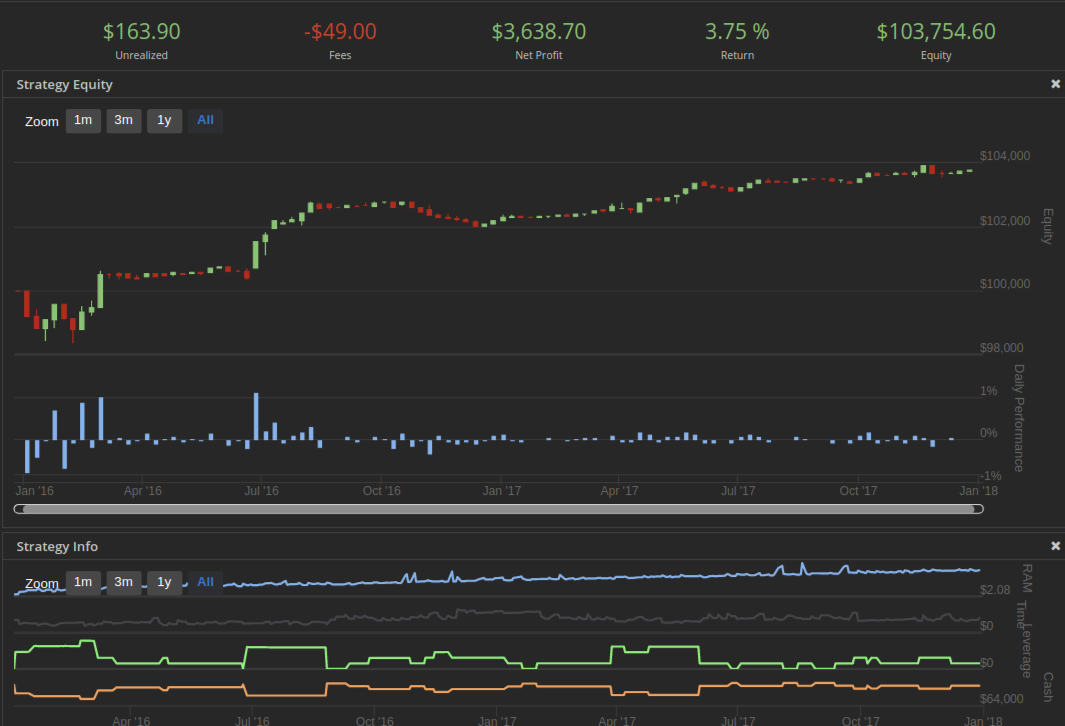
Post Outline * Recap * Chapter Goals and Outline * Links * Embedded Jupyter Notebook Recap See <Mixture Model Trading (Part 1, Part 2, Part 3, Part 4, Part 5, Github Repo)>. This research demonstrates a systematic trading strategy development workflow from theory to implementation to testing. It focuses on the concept of using Gaussian Mixture Models as a method for return distribution prediction and then using a simple market timing strategy to take advantage of the predicted asset retu

READ MORE
Mixture Model Trading (Part 4 - Strategy Implementation)
PythonQuant

Mixture Model Trading (Part 4 - Strategy Implementation)

Post Outline * Chapter Goals and Outline * Links * Introduction * Mixture Model Trading Algorithm Outline * GMM Algorithm Implementation * Next Steps Chapter Goals and Outline * Use Part 3 - strategy research as a basis for algorithmic trading strategy. * Implement strategy using the Quantconnect platform. Links * Mixture Model Trading Github Repo * Part 4 Jupyter Notebook Link * Full Algorithm Python Script Introduction This notebook will walkthrough the algorithm implement

READ MORE
Mixture Model Trading (Part 3 - Strategy Research)
PythonQuant

Mixture Model Trading (Part 3 - Strategy Research)

Post Outline * Introduction * Links * Notebook * Next Steps Introduction This is the beginning of a three part series that I completed towards the end of 2017 as a learning module for Quantinsti.com. The purpose of the series is to demonstrate a research workflow focused around the theory and application of mixture models as the core framework behind a algorithmic trading strategy. Below is a quote taken from the README of the github repo: “The primary goal of this repo is to demonstrat

READ MORE
Mixture Model Trading (Part 2 - Gaussian Mixtures)
PythonQuant

Mixture Model Trading (Part 2 - Gaussian Mixtures)

Post Outline * Introduction * Links * Notebook * Next Steps Introduction This is the beginning of a three part series that I completed towards the end of 2017 as a learning module for Quantinsti.com. The purpose of the series is to demonstrate a research workflow focused around the theory and application of mixture models as the core framework behind a algorithmic trading strategy. Below is a quote taken from the README of the github repo: “The primary goal of this repo is to demonstrat

READ MORE
Mixture Model Trading (Part 1 - Motivation)
PythonQuant

Mixture Model Trading (Part 1 - Motivation)

Post Outline * Introduction * Links * Notebook * Next Steps Introduction This is the beginning of a three part series that I completed towards the end of 2017 as a learning module for Quantinsti.com. The purpose of the series is to demonstrate a research workflow focused around the theory and application of mixture models as the core framework behind a algorithmic trading strategy. Below is a quote taken from the README of the github repo: I will be presenting each of the notebooks

READ MORE
Computing Option Skews with Dask
ResearchQuant

Computing Option Skews with Dask

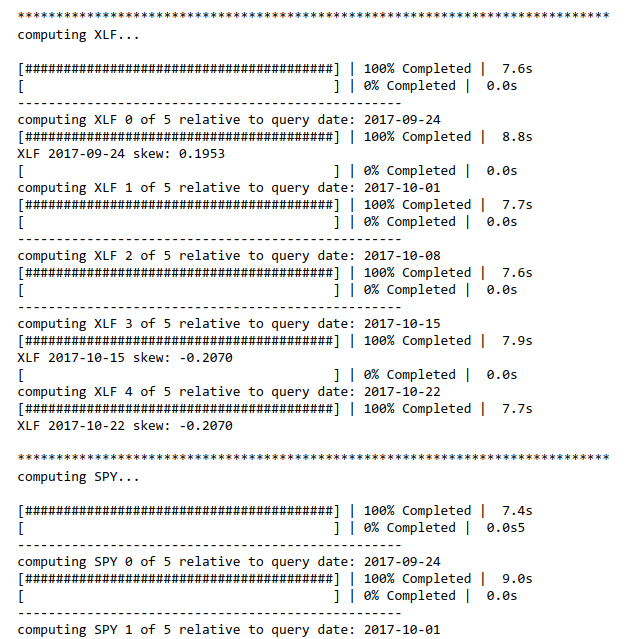
Post Outline * Introduction * Links + Datasets * Notebook * Next Steps Introduction This article series provides an opportunity to move towards more interactive analysis. My plan is to integrate more Jupyter notebooks and Github repos into my research/publishing workflow. For datasets that are too big to share through github I will provide a download link both here and in the github readme. I will be posting the notebooks into this blog using iframes. If you experience any issues with f

READ MORE
How To Get Free Intraday Options Data With Pandas-DataReader
PythonResearch

How To Get Free Intraday Options Data With Pandas-DataReader

Post Outline * Purpose * Intuitive explanation * Code * Next Steps Purpose This is a simple reference article for readers that might wonder where I get/got my options data from. In this regard I would like to shout out the contributors to the pandas-datareader, without their efforts this process would be much more complex. Intuitive Explanation So this code consists of three components. The first is the actual script that wraps the pandas-datareader functions and downloads the options

READ MORE
Exploring Our Scraped Options Data Bid-Ask Spreads (Part-2)
PythonResearch

Exploring Our Scraped Options Data Bid-Ask Spreads (Part-2)

Post Outline * Notes on Part-2 * The Data * Bid-Ask Spread Analysis * How Do Aggregate Bid-Ask Spreads Vary with Days To Expiration? * How Do Bid-Ask Spreads Vary with Volume? * How Do Bid-Ask Spreads Vary with Volatility? * Summary Conclusions Notes on Part-2 Some astute readers in the comments noted that analysis based on the absolute difference in bid-ask price is not robust when considering the price of the underlying option and can lead to spurious conclusions. They recomme

READ MORE
Exploring Our Scraped Options Data Bid-Ask Spreads
PythonResearch

Exploring Our Scraped Options Data Bid-Ask Spreads

Post Outline * The Objective * The Data * Basic Data Analysis * Bid-Ask Spread Analysis * How Do Aggregate Bid-Ask Spreads Vary with Days To Expiration? * How Do Bid-Ask Spreads Vary with Volume? * How Do Bid-Ask Spreads Vary with Volatility? * Summary Conclusions The Objective Compared to the equity market, the options market is a level up in complexity. For each symbol there are multiple expiration dates, strike prices for each expiration date, implied volatilities, and that'

READ MORE
How to Build a Sequential Option Scraper with Python and Requests
PythonResearch

How to Build a Sequential Option Scraper with Python and Requests

Post Outline * Recap * The Problem * The Solution * Barchart Scraper Class * Barchart Parser Class * Utility Functions * Putting it all together * The Simple Trick * Next Steps Recap In the previous post I revealed a web scraping trick that allows us to defeat AJAX/JavaScript based web pages and extract the tables we need. We also covered how to use that trick to scrape a large volume of options prices quickly and asynchronously using the combination of aiohttp and asyncio. The Pr

READ MORE
How to Scrape and Parse 600 ETF Options in 10 mins with Python and Asyncio
PythonResearch

How to Scrape and Parse 600 ETF Options in 10 mins with Python and Asyncio

Post Outline * Intro * Disclaimers * The Secret to Scraping AJAX Sites * The async_option_scraper script * first_async_scraper class * expirys class * xp_async_scraper class * last_price_scraper class * The option_parser Module * The Implementation Script * References Intro This is Part 1 of a new series I'm doing in semi real-time to build a functional options data dashboard using Python. There are many underlying motivations to attempt this, and several challenges to imp

READ MORE
Can We Use Mixture Models to Predict Market Bottoms? (Part 3)
PythonQuant

Can We Use Mixture Models to Predict Market Bottoms? (Part 3)

Post Outline * Recap * Webinar Hypothesis * Anaylsis/Conclusions * Jupyter (IPython) Notebook * Github Links and Resources Recap Thus far in the series we've explored the idea of using Gaussian mixture models (GMM) to predict outlier returns. Specifically, we were measuring two things: 1. The accuracy of the strategy implementation in predicting return distributions. 2. The return pattern after an outlier event. During the exploratory phase of this project there were some interestin

READ MORE
Can We Use Mixture Models to Predict Market Bottoms? (Part 2)
PythonResearch

Can We Use Mixture Models to Predict Market Bottoms? (Part 2)

Post Outline * Recap * Model Update * Model Testing * Model Results * Conclusions * Code Recap In the previous post I gave a basic "proof" of concept, where we designed a trading strategy using Sklearn's implementation of Gaussian mixture models. The strategy attempts to predict an asset's return distribution such that returns that fall outside the predicted distribution are considered outliers and likely to mean revert. It showed some promise but had many areas in need of improvement.

READ MORE
Introduction to Hidden Markov Models with Python Networkx and Sklearn
EducationPython

Introduction to Hidden Markov Models with Python Networkx and Sklearn

Post Outline * Who is Andrey Markov? * What is the Markov Property? * What is a Markov Model? * What makes a Markov Model Hidden? * A Hidden Markov Model for Regime Detection * Conclusion * References Who is Andrey Markov? Markov was a Russian mathematician best known for his work on stochastic processes. The focus of his early work was number theory but after 1900 he focused on probability theory, so much so that he taught courses after his official retirement in 1905 until his death

READ MORE
Backtesting the Implied Volatility Long/Short Strategy (12/31/16)
QuantResearch

Backtesting the Implied Volatility Long/Short Strategy (12/31/16)

Post Outline * Strategy Summary * References * 4-Week Holding Period Strategy Update * 1-Week Holding Period Strategy Updated (Target Leverage=2) Strategy Summary This is a stylized implementation of the strategy described in the research paper titled "What Does Individual Option Volatility Smirk Tell Us About Future Equity Returns" by Yuhang Xing, Xiaoyan Zhang and Rui Zhao. The authors show that their SKEW factor predicts individual equity returns up to 6 months! ABSTRACT Stocks exhi

READ MORE
Asset Pricing using Extreme Liquidity with Python (Part-2)
PythonQuant

Asset Pricing using Extreme Liquidity with Python (Part-2)

POST OUTLINE * Part-1 Recap * Part-1 Error Corrections * Part-2 Implementation Details, Deviations, Goals * Prepare Data * Setup PYMC3 Generalized Linear Models (GLM) * Evaluate and Interprate Models * Conclusions * References part-1 recap In part 1 We discussed the theorized underpinnings of Ying Wu of Stevens Institute of Technology - School's asset pricing model. Theory links the catalyst of systemic risk events to the funding difficulties of major financial intermediaries. Thus c

READ MORE
Backtesting the Implied Volatility Long/Short Strategy (12/06/16)
PythonQuant

Backtesting the Implied Volatility Long/Short Strategy (12/06/16)

Post Outline * Strategy Summary * References * 4-Week Holding Period Strategy Update * 1-Week Holding Period Strategy Updated (Target Leverage=2) Strategy Summary This is a stylized implementation of the strategy described in the research paper titled "What Does Individual Option Volatility Smirk Tell Us About Future Equity Returns" by Yuhang Xing, Xiaoyan Zhang and Rui Zhao. The authors show that their SKEW factor predicts individual equity returns up to 6 months! ABSTRACT Stocks exhi

READ MORE
Asset Pricing using Extreme Liquidity Risk with Python (Part-1)
PythonQuant

Asset Pricing using Extreme Liquidity Risk with Python (Part-1)

Post Outline * Introduction * Get Data * Calculate Cross-Sectional Extreme Liquidity Risk * Quick and Dirty Observations * Next Steps * References iNTRODUCTION One of the primary goals of quantitative investing is effectively managing tail risk. Failure to do so can result in crushing drawdowns or a total blowup of your fund/portfolio. Commonly known tools for estimating tail risk, e.g. Value-at-Risk, often underestimate the likelihood and magnitude of risk-off events. Furthermore, tai

READ MORE
Backtesting the Implied Volatility Long/Short Strategy (11/16/16)
PythonQuant

Backtesting the Implied Volatility Long/Short Strategy (11/16/16)

Post Outline * Strategy Summary * References * 4-Week Holding Period Strategy Update * 1-Week Holding Period Strategy Updated (Target Leverage=2) Strategy Summary This is a stylized implementation of the strategy described in the research paper titled "What Does Individual Option Volatility Smirk Tell Us About Future Equity Returns" by Yuhang Xing, Xiaoyan Zhang and Rui Zhao. The authors show that their SKEW factor predicts individual equity returns up to 6 months! ABSTRACT Stocks exhi

READ MORE
Does Factor Rank Matter for the Implied Volatility Skew Strategy?
PythonQuant

Does Factor Rank Matter for the Implied Volatility Skew Strategy?

Post Outline * Strategy Summary * Results * Conclusions/Analysis Strategy Summary First, if you're unfamiliar with the Implied Volatility Skew Strategy you can find a recent deep dive into the strategy and its performance here. In this short post, I look at the effect of using only the top N ranked ETFs from each Long/Short portfolio. In this case, N is equal to 3. This is an arbitrary selection and this study could be done with the top 1, 2, 4, etc. This differs from the original strate

READ MORE
Backtesting the Implied Volatility Long/Short Strategy (10/18/16)
PythonQuant

Backtesting the Implied Volatility Long/Short Strategy (10/18/16)

Post Outline * Strategy Summary * References * 4-Week Holding Period Strategy Update * 1-Week Holding Period Strategy Updated (Target Leverage=2) Strategy Summary This is a stylized implementation of the strategy described in the research paper titled "What Does Individual Option Volatility Smirk Tell Us About Future Equity Returns" by Yuhang Xing, Xiaoyan Zhang and Rui Zhao. The authors show that their SKEW factor predicts individual equity returns up to 6 months! ABSTRACT Stocks exhi

READ MORE
Backtesting the Implied Volatility Strategy - A Deeper Dive (10/03/16)
QuantPython

Backtesting the Implied Volatility Strategy - A Deeper Dive (10/03/16)

Post Outline * Strategy Summary * References * 4-Week Holding Period Strategy Update * 1-Week Holding Period Strategy Updated (Target Leverage=2) * Deep Dive into the Weekly Strategy using Quantopian's Pyfolio * Strategy Concerns Strategy Summary This is a stylized implementation of the strategy described in the research paper titled "What Does Individual Option Volatility Smirk Tell Us About Future Equity Returns" by Yuhang Xing, Xiaoyan Zhang and Rui Zhao. The authors show that their

READ MORE
Backtesting the Implied Volatility Long/Short Strategy (9/27/16)
ResearchQuant

Backtesting the Implied Volatility Long/Short Strategy (9/27/16)

Post Outline * Strategy Summary * References * 4-Week Holding Period Strategy Update * 1-Week Holding Period Strategy Updated (Target Leverage=2) Strategy Summary This is a stylized implementation of the strategy described in the research paper titled "What Does Individual Option Volatility Smirk Tell Us About Future Equity Returns" by Yuhang Xing, Xiaoyan Zhang and Rui Zhao. The authors show that their SKEW factor predicts individual equity returns up to 6 months! ABSTRACT Stocks exhi

READ MORE
Backtesting the Implied Volatility Long/Short Strategy (9/20/16)
QuantResearch

Backtesting the Implied Volatility Long/Short Strategy (9/20/16)

Post Outline * Strategy Summary * References * 4-Week Holding Period Strategy Update * 1-Week Holding Period Strategy Updated (Target Leverage=2) Strategy Summary This is a stylized implementation of the strategy described in the research paper titled "What Does Individual Option Volatility Smirk Tell Us About Future Equity Returns" by Yuhang Xing, Xiaoyan Zhang and Rui Zhao. The authors show that their SKEW factor predicts individual equity returns up to 6 months! ABSTRACT Stocks exhi

READ MORE
Backtesting the Implied Volatility Long/Short Strategy (9/14/16)
PythonQuant

Backtesting the Implied Volatility Long/Short Strategy (9/14/16)

Post Outline * Strategy Restart * Strategy Summary * References * 4-Week Holding Period Strategy Update * 1-Week Holding Period Strategy Updated (Target Leverage=2) Strategy Restart After a ~2 month pause, the implied volatility long/short strategy has returned! If you were previously unaware this strategy relied on aggregating free options data via the now defunct Yahoo Finance Options API. After some time I was able to track down another free, reliable, source for options data via Bar

READ MORE
Institutional Level Long/Short Strategies in Quantopian (OCF/EV)
PythonQuant

Institutional Level Long/Short Strategies in Quantopian (OCF/EV)

Post Outline * Background * Strategy Summary * Implementation Details * Strategy Results and Analysis * References (Notes) Background Recently I was blessed with an introduction to S&P Global-Market Intelligence's Director of Business Development, Matt Morrissy and gifted a trial membership to the S&P Capital IQ platform [1]. Specifically, I was given an opportunity to review and provide feedback for their "Alpha Factor Library." Their team, the Quantamental Group [2], has researched an

READ MORE
Backtesting the Implied Volatility Long/Short Strategy (7/12/16)
PythonQuant

Backtesting the Implied Volatility Long/Short Strategy (7/12/16)

Post Outline * Strategy Summary * References * 4-Week Holding Period Strategy Update * 1-Week Holding Period Strategy Update (Target Leverage=1) * 1-Week Holding Period Strategy Updated (Target Leverage=2) Strategy Summary This is a stylized implementation of the strategy described in the research paper titled "What Does Individual Option Volatility Smirk Tell Us About Future Equity Returns" by Yuhang Xing, Xiaoyan Zhang and Rui Zhao. The authors show that their SKEW factor predicts ind

READ MORE
Backtesting the Implied Volatility Long/Short Strategy (7/6/16)
PythonQuant

Backtesting the Implied Volatility Long/Short Strategy (7/6/16)

Post Outline * Strategy Summary * References * 4-Week Holding Period Strategy Update * 1-Week Holding Period Strategy Update (Target Leverage=1) * 1-Week Holding Period Strategy Updated (Target Leverage=2) Strategy Summary This is a stylized implementation of the strategy described in the research paper titled "What Does Individual Option Volatility Smirk Tell Us About Future Equity Returns" by Yuhang Xing, Xiaoyan Zhang and Rui Zhao. The authors show that their SKEW factor predicts ind

READ MORE
Backtesting the Implied Volatility Long/Short Strategy (6/28/16)
PythonQuant

Backtesting the Implied Volatility Long/Short Strategy (6/28/16)

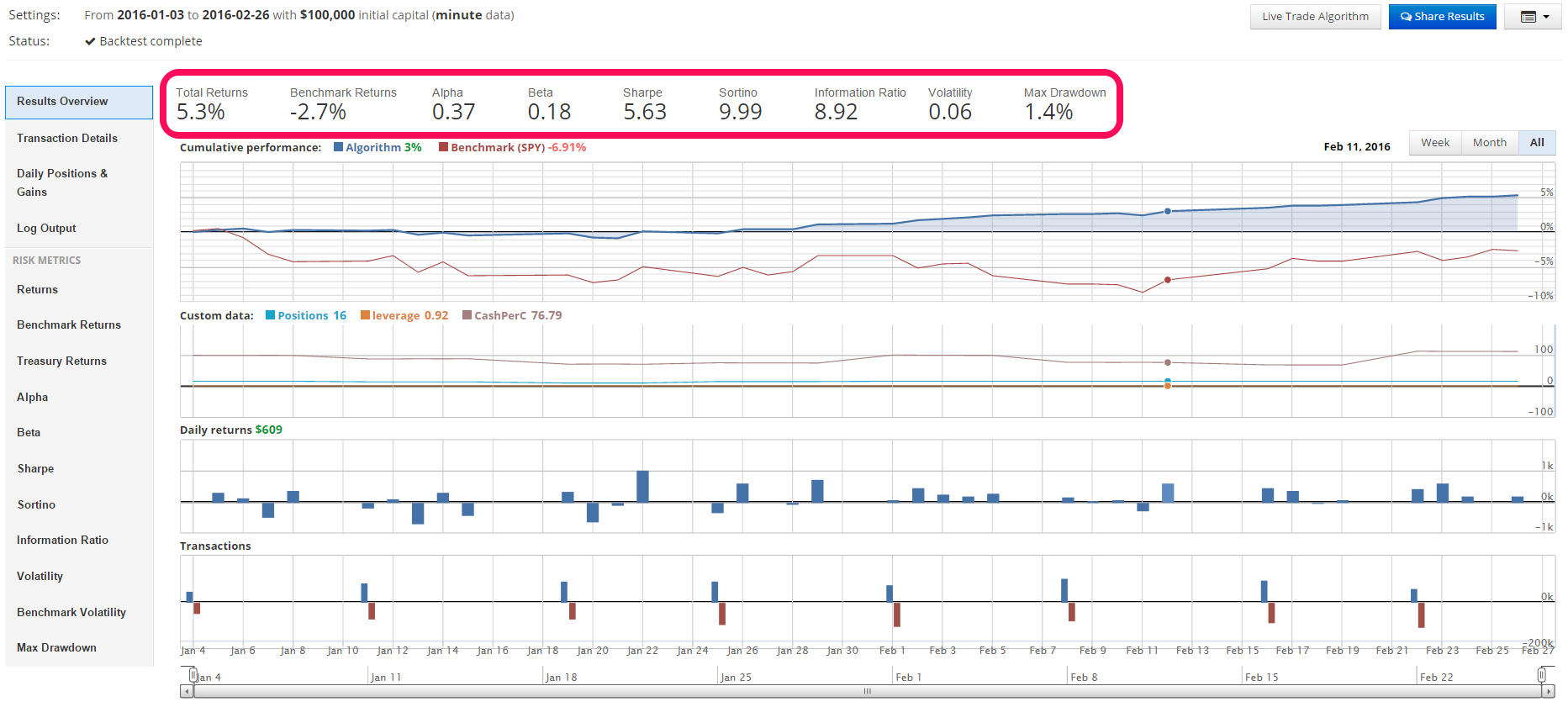
Post Outline * 4-Week Holding Period Strategy Update * 1-Week Holding Period Strategy Update (Target Leverage=1) * 1-Week Holding Period Strategy Updated (Target Leverage=2) 4-Week Holding Period Strategy Update Download the spreadsheet here. 1-Week Holding Period Strategy Update (Target Leverage=1) Results simulated using quantopian platform 1-Week Holding Period Strategy Update (Target Leverage=2) RESULTS SIMULATED USING QUANTOPIAN PLATFORM I'll post the components of each of the

READ MORE
Updating the Implied Volatility L/S Strategy (6/21/2016)
PythonQuant

Updating the Implied Volatility L/S Strategy (6/21/2016)

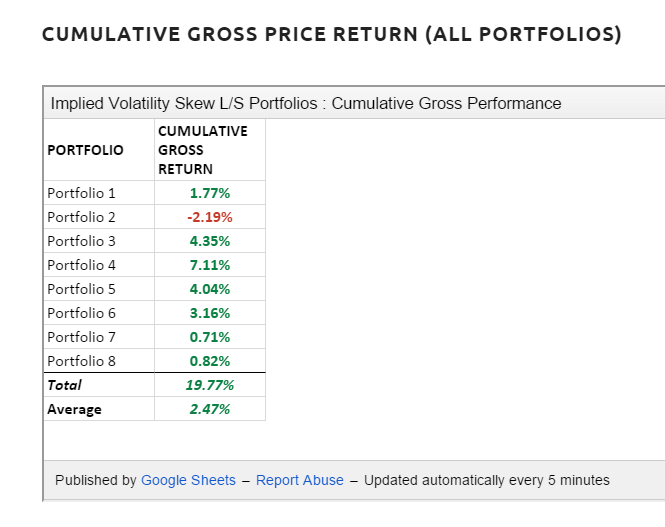
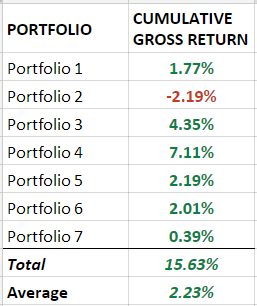
There are two versions of this strategy that I have previously tracked and reported. The original strategy consists of forming weekly portfolios each held for a period of four (4) weeks before being liquidated. The second strategy is a higher frequency version which forms weekly portfolios with a holding period of one (1) week. Thus far, both strategies have exceeded expectations. Their apparent theoretical success is so far beyond expectations it required much deeper investigation and better si

READ MORE
USING IMPLIED VOLATILITY TO PREDICT ETF RETURNS (6/04/16)
PythonQuant

USING IMPLIED VOLATILITY TO PREDICT ETF RETURNS (6/04/16)

To see the origin of this series click here In the paper that inspired this series "What Does Individual Option Volatility Smirk Tell Us About Future Equity Returns" the authors' research shows that their calculation of the Option Volatility Smirk is predictive of equity returns up to 4 weeks. Therefore, each week, I will calculate the Long/Short legs of a portfolio constructed by following their criteria as closely as possible. However this study will focus on ETF's as opposed to single name e

READ MORE
USING IMPLIED VOLATILITY TO PREDICT ETF RETURNS (5/31/16)
PythonQuant

USING IMPLIED VOLATILITY TO PREDICT ETF RETURNS (5/31/16)

To see the origin of this series click here In the paper that inspired this series "What Does Individual Option Volatility Smirk Tell Us About Future Equity Returns" the authors' research shows that their calculation of the Option Volatility Smirk is predictive of equity returns up to 4 weeks. Therefore, each week, I will calculate the Long/Short legs of a portfolio constructed by following their criteria as closely as possible. However this study will focus on ETF's as opposed to single name e

READ MORE
USING IMPLIED VOLATILITY TO PREDICT ETF RETURNS (5/21/16)
PythonQuant

USING IMPLIED VOLATILITY TO PREDICT ETF RETURNS (5/21/16)

FOR A DEEPER DIVE INTO ETF PERFORMANCE AND RELATIVE VALUE SUBSCRIBE TO THE ETF INTERNAL ANALYTICS PACKAGE HERE To see the origin of this series click here In the paper that inspired this series "What Does Individual Option Volatility Smirk Tell Us About Future Equity Returns" the authors' research shows that their calculation of the Option Volatility Smirk is predictive of equity returns up to 4 weeks. Therefore, each week, I will calculate the Long/Short legs of a portfolio constructed by fol

READ MORE
BACKTESTING THE IMPLIED VOLATILITY STRATEGY WITH QUANTOPIAN (5/20/16)
PythonQuant

BACKTESTING THE IMPLIED VOLATILITY STRATEGY WITH QUANTOPIAN (5/20/16)

FOR A DEEPER DIVE INTO ETF PERFORMANCE AND RELATIVE VALUE SUBSCRIBE TO THE ETF INTERNAL ANALYTICS PACKAGE HERE To see the origin of this series click here. To summarize, the strategy calculates a SKEW measure using ATM calls and OTM puts for a collection of ETF symbols. It then sorts the symbols into quintiles based on the SKEW factor. Using daily close/close log return calculations for this strategy has shown exceptional performance as can be seen here. However, translating a successful dail

READ MORE
USING IMPLIED VOLATILITY TO PREDICT ETF RETURNS (5/14/16)
PythonQuant

USING IMPLIED VOLATILITY TO PREDICT ETF RETURNS (5/14/16)

FOR A DEEPER DIVE INTO ETF PERFORMANCE AND RELATIVE VALUE SUBSCRIBE TO THE ETF INTERNAL ANALYTICS PACKAGE HERE To see the origin of this series click here In the paper that inspired this series "What Does Individual Option Volatility Smirk Tell Us About Future Equity Returns" the authors' research shows that their calculation of the Option Volatility Smirk is predictive of equity returns up to 4 weeks. Therefore, each week, I will calculate the Long/Short legs of a portfolio constructed by fol

READ MORE
COMPOSITE MACRO ETF WEEKLY ANALYTICS (5/14/2016)
PythonGlobal Markets

COMPOSITE MACRO ETF WEEKLY ANALYTICS (5/14/2016)

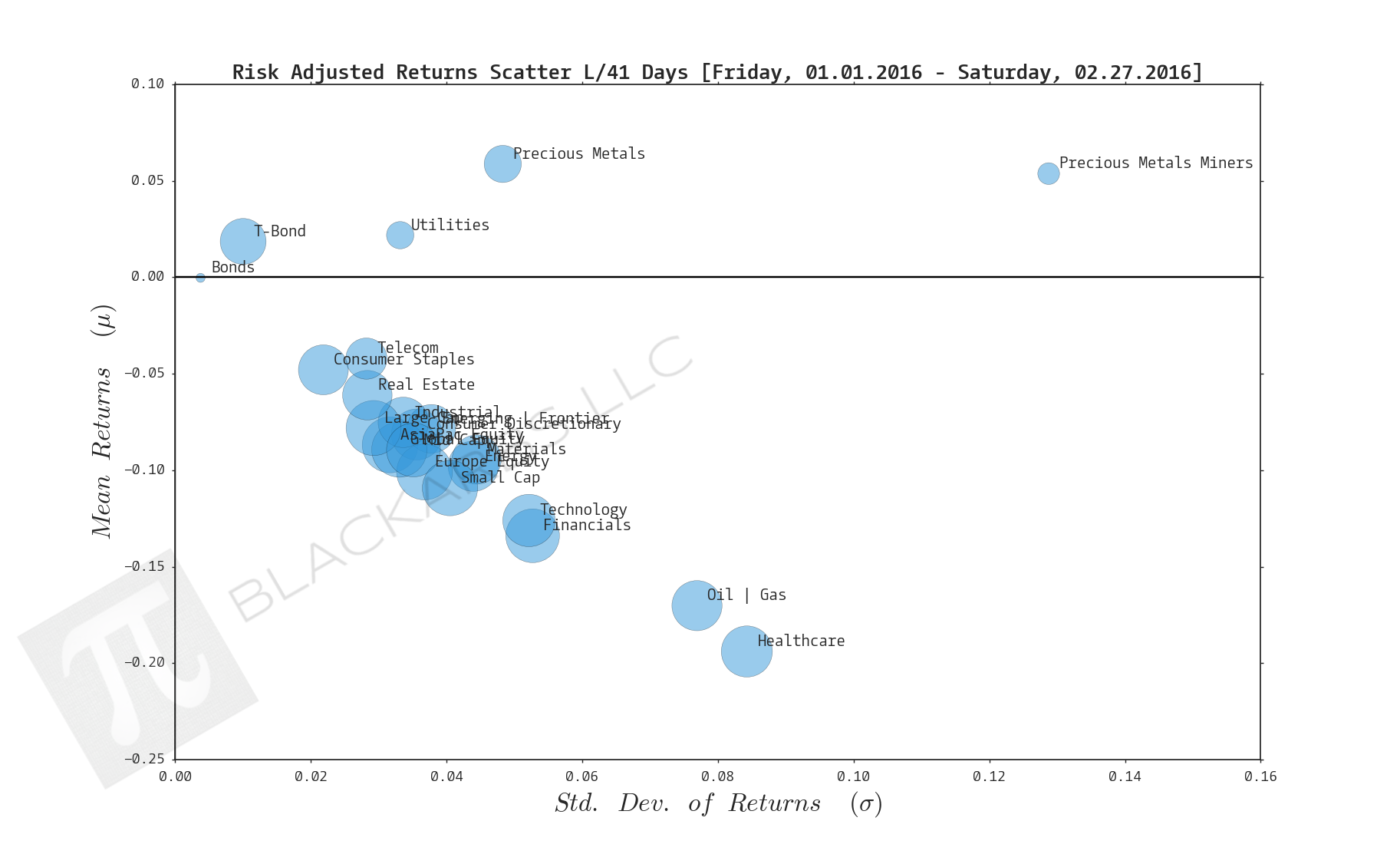
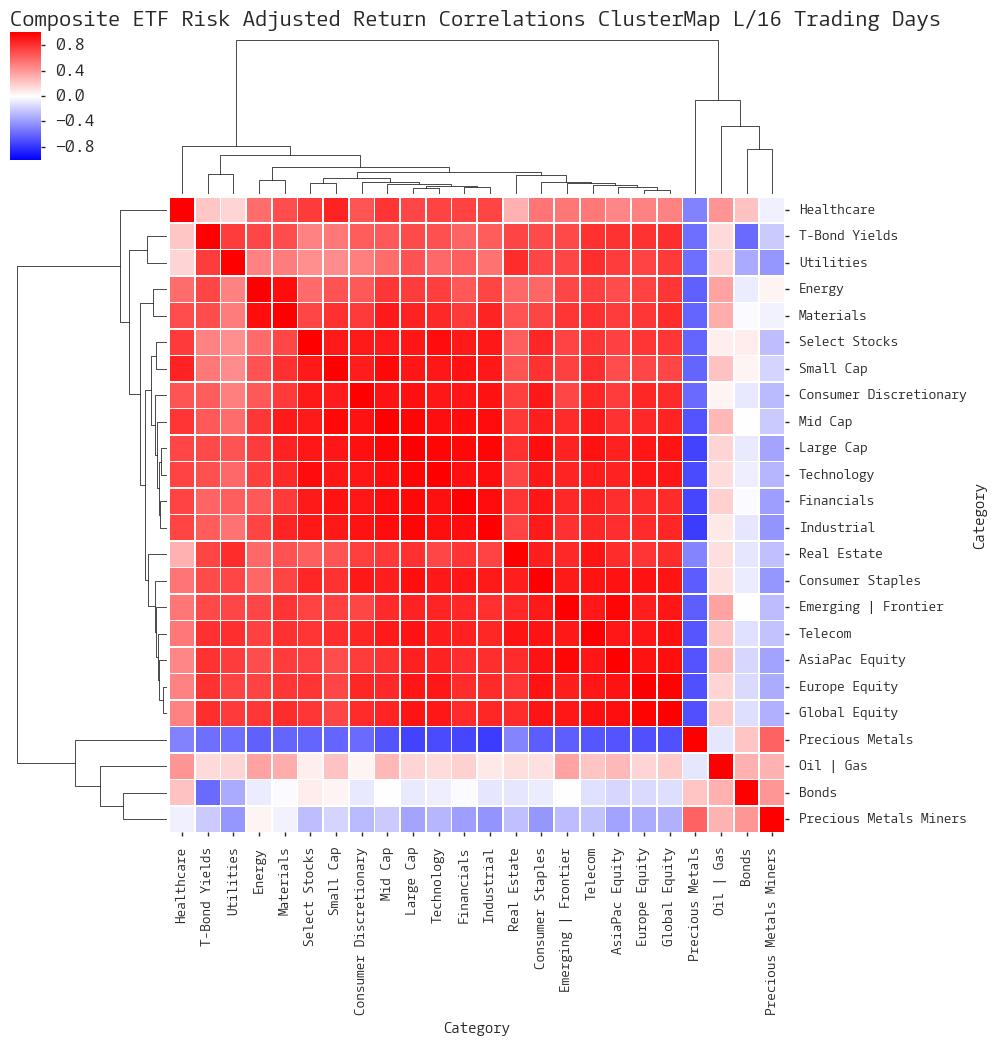
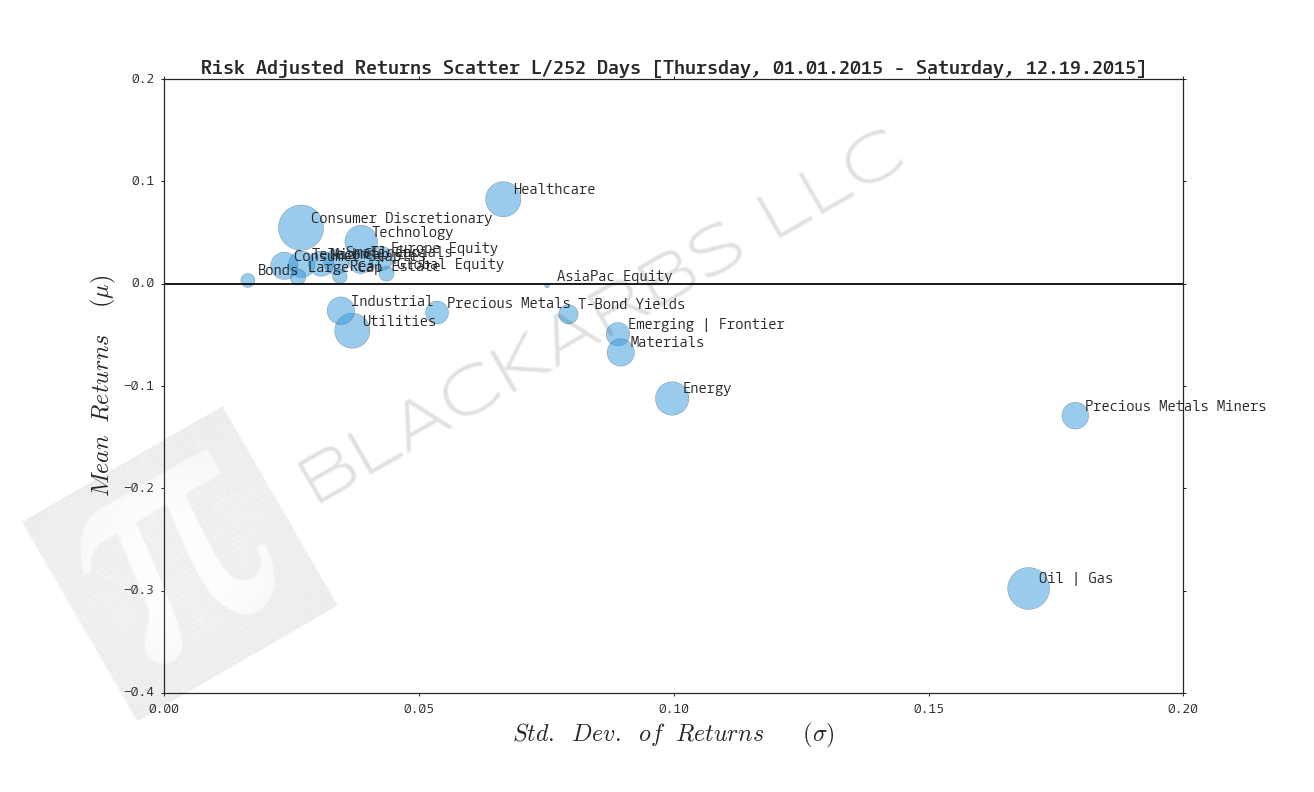
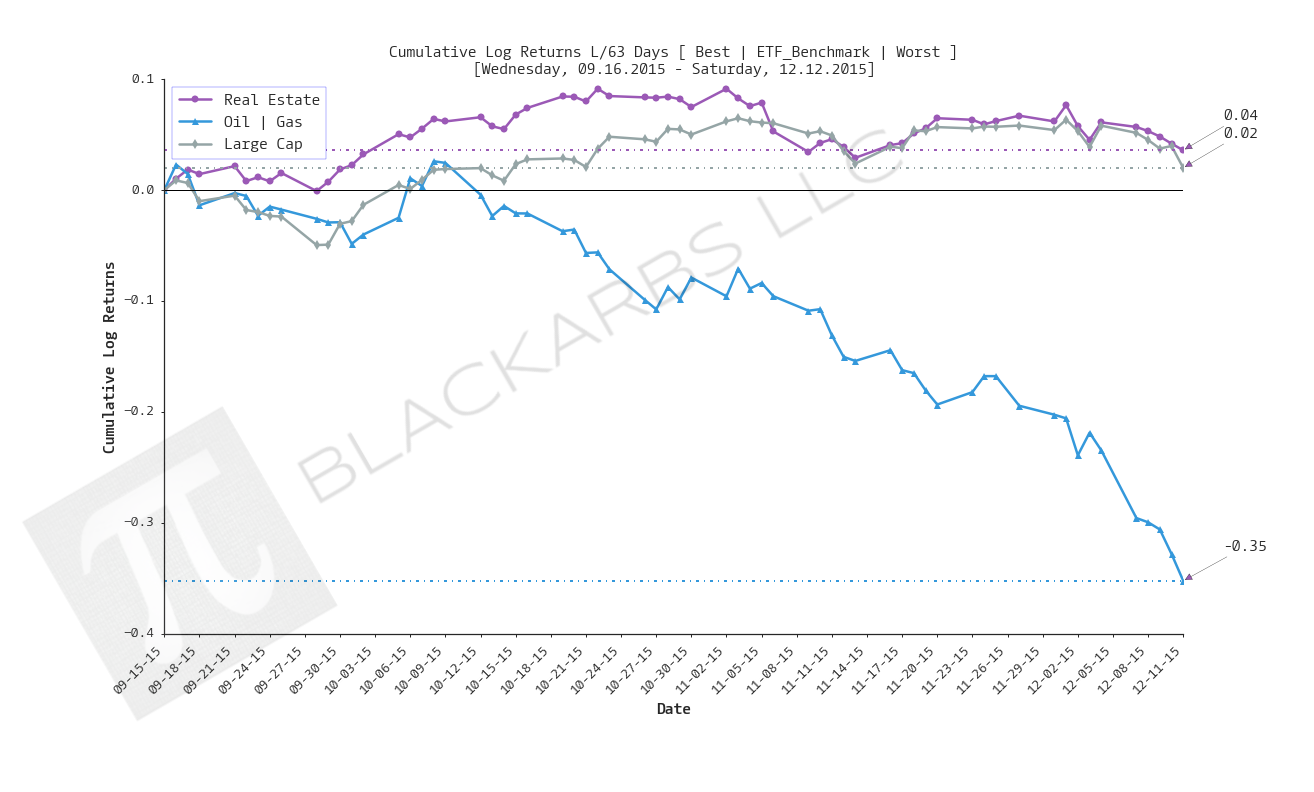
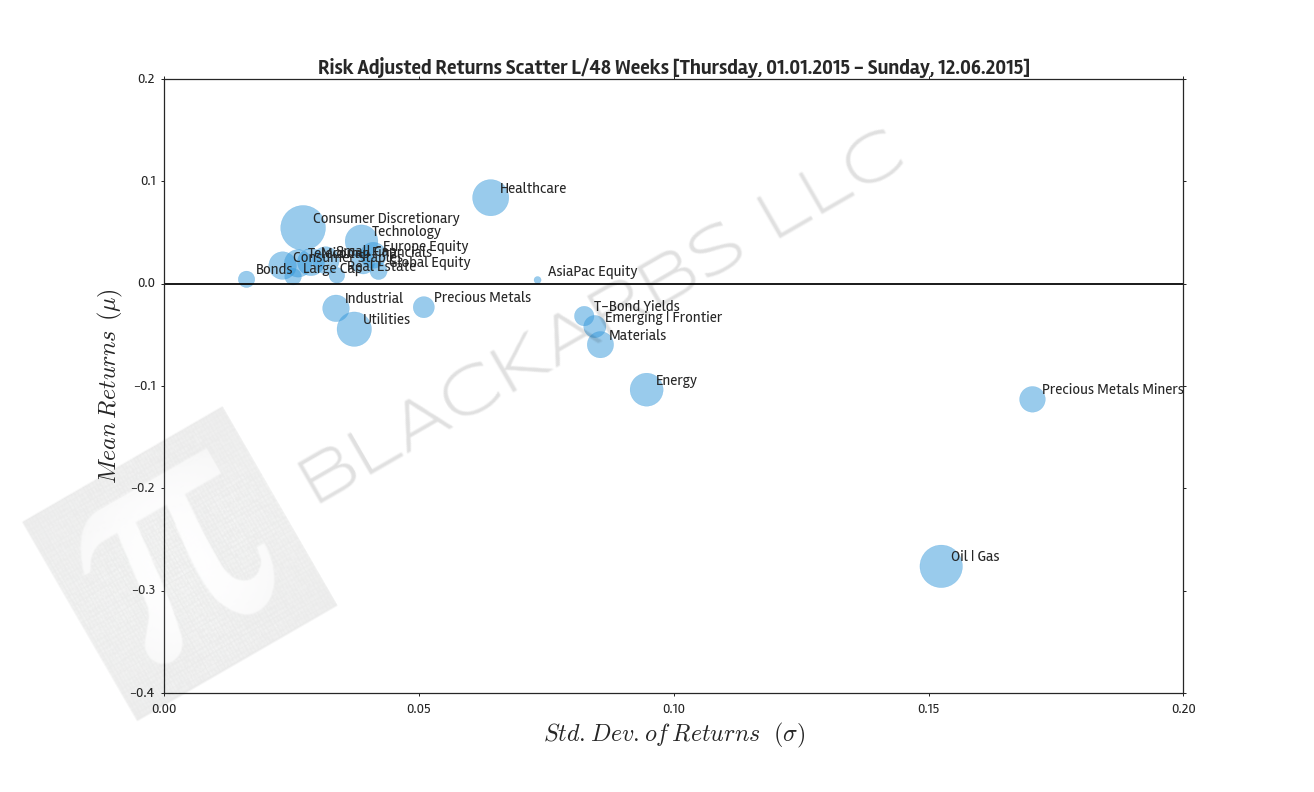
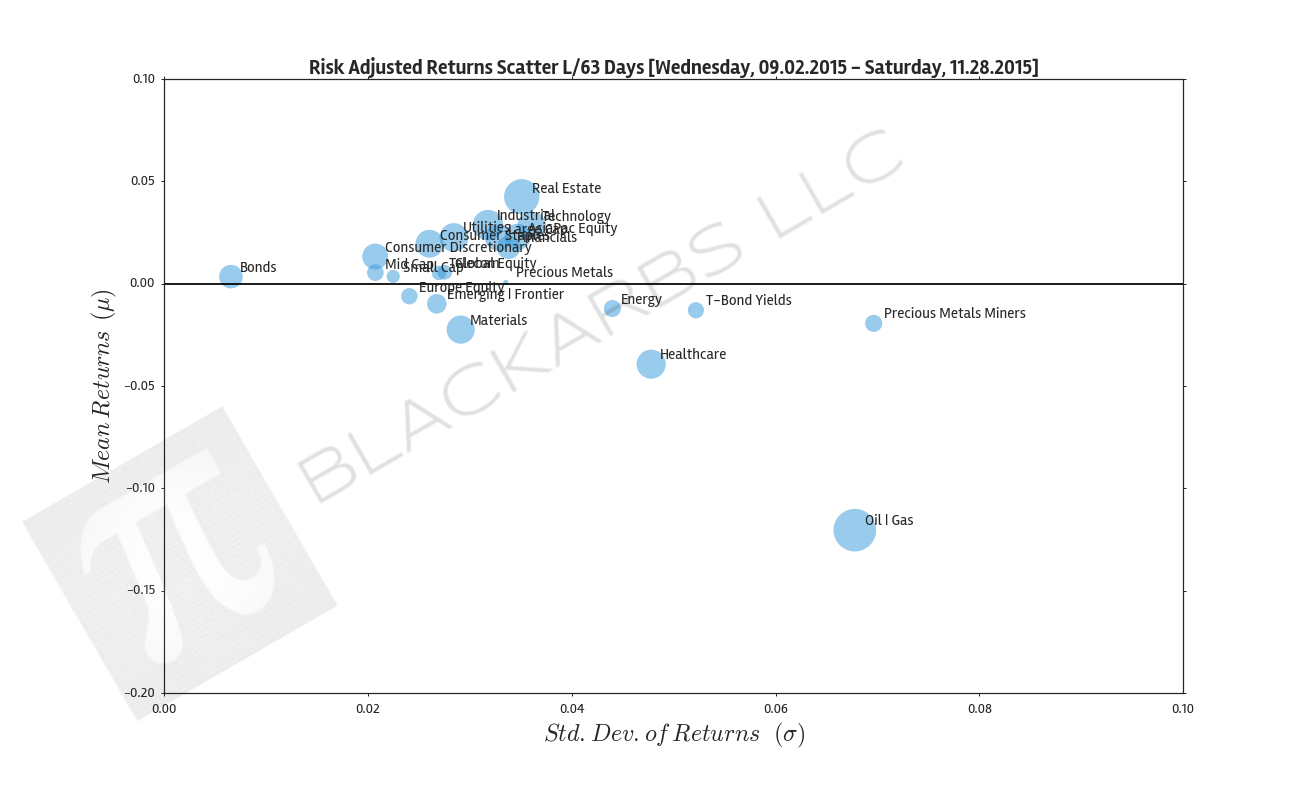
FOR A DEEPER DIVE INTO ETF PERFORMANCE AND RELATIVE VALUE SUBSCRIBE TO THE ETF INTERNAL ANALYTICS PACKAGE HERE LAYOUT (Organized by Time Period): Composite ETF Cumulative Returns Momentum Bar plot Composite ETF Cumulative Returns Line plot (best vs worst vs benchmark) Composite ETF Risk-Adjusted Returns Scatter plot (Std vs Mean) Composite ETF Risk-Adjusted Return Correlations Heatmap (Clusterplot) Implied Cost of Capital Estimates Composite ETF Cumulative Return Tables Notable Trends an

READ MORE
COMPOSITE MACRO ETF WEEKLY ANALYTICS (5/08/2016)
PythonGlobal Markets

COMPOSITE MACRO ETF WEEKLY ANALYTICS (5/08/2016)

FOR A DEEPER DIVE INTO ETF PERFORMANCE AND RELATIVE VALUE SUBSCRIBE TO THE ETF INTERNAL ANALYTICS PACKAGE HERE LAYOUT (Organized by Time Period): Composite ETF Cumulative Returns Momentum Bar plot Composite ETF Cumulative Returns Line plot (best vs worst vs benchmark) Composite ETF Risk-Adjusted Returns Scatter plot (Std vs Mean) Composite ETF Risk-Adjusted Return Correlations Heatmap (Clusterplot) Implied Cost of Capital Estimates Composite ETF Cumulative Return Tables Notable Trends an

READ MORE
USING IMPLIED VOLATILITY TO PREDICT ETF RETURNS (5/08/16)
PythonQuant

USING IMPLIED VOLATILITY TO PREDICT ETF RETURNS (5/08/16)

FOR A DEEPER DIVE INTO ETF PERFORMANCE AND RELATIVE VALUE SUBSCRIBE TO THE ETF INTERNAL ANALYTICS PACKAGE HERE To see the origin of this series click here In the paper that inspired this series "What Does Individual Option Volatility Smirk Tell Us About Future Equity Returns" the authors' research shows that their calculation of the Option Volatility Smirk is predictive of equity returns up to 4 weeks. Therefore, each week, I will calculate the Long/Short legs of a portfolio constructed by fol

READ MORE
USING IMPLIED VOLATILITY TO PREDICT ETF RETURNS (4/30/16)
PythonQuant

USING IMPLIED VOLATILITY TO PREDICT ETF RETURNS (4/30/16)

FOR A DEEPER DIVE INTO ETF PERFORMANCE AND RELATIVE VALUE SUBSCRIBE TO THE ETF INTERNAL ANALYTICS PACKAGE HERE To see the origin of this series click here In the paper that inspired this series "What Does Individual Option Volatility Smirk Tell Us About Future Equity Returns" the authors' research shows that their calculation of the Option Volatility Smirk is predictive of equity returns up to 4 weeks. Therefore, each week, I will calculate the Long/Short legs of a portfolio constructed by fol

READ MORE
COMPOSITE MACRO ETF WEEKLY ANALYTICS (4/30/2016)
PythonGlobal Markets

COMPOSITE MACRO ETF WEEKLY ANALYTICS (4/30/2016)

FOR A DEEPER DIVE INTO ETF PERFORMANCE AND RELATIVE VALUE SUBSCRIBE TO THE ETF INTERNAL ANALYTICS PACKAGE HERE LAYOUT (Organized by Time Period): Composite ETF Cumulative Returns Momentum Bar plot Composite ETF Cumulative Returns Line plot (best vs worst vs benchmark) Composite ETF Risk-Adjusted Returns Scatter plot (Std vs Mean) Composite ETF Risk-Adjusted Return Correlations Heatmap (Clusterplot) Implied Cost of Capital Estimates Composite ETF Cumulative Return Tables Notable Trends an

READ MORE
USING IMPLIED VOLATILITY TO PREDICT ETF RETURNS (4/24/16)
PythonQuant

USING IMPLIED VOLATILITY TO PREDICT ETF RETURNS (4/24/16)

FOR A DEEPER DIVE INTO ETF PERFORMANCE AND RELATIVE VALUE SUBSCRIBE TO THE ETF INTERNAL ANALYTICS PACKAGE HERE To see the origin of this series click here In the paper that inspired this series "What Does Individual Option Volatility Smirk Tell Us About Future Equity Returns" the authors' research shows that their calculation of the Option Volatility Smirk is predictive of equity returns up to 4 weeks. Therefore, each week, I will calculate the Long/Short legs of a portfolio constructed by fol

READ MORE
Exploring the Relationship Between SPY and TLT
PythonQuant

Exploring the Relationship Between SPY and TLT

In this post I examine the relationship between the SPY and TLT ETFs. This can be considered Part 2.5 of my series exploring the 2-Asset Leveraged ETF portfolio of UPRO and TMF. Thus far I've posted results of the strategy using two implementations: "Inverse Risk-Parity" and "Risk-Parity". I've also covered some key concepts behind investing in leveraged ETFs including convexity, and beta-slippage/decay. Now we can explore the strengths and weaknesses of the strategy. The strategy works because

READ MORE
USING IMPLIED VOLATILITY TO PREDICT ETF RETURNS (4/17/16)
PythonQuant

USING IMPLIED VOLATILITY TO PREDICT ETF RETURNS (4/17/16)

FOR A DEEPER DIVE INTO ETF PERFORMANCE AND RELATIVE VALUE SUBSCRIBE TO THE ETF INTERNAL ANALYTICS PACKAGE HERE To see the origin of this series click here In the paper that inspired this series "What Does Individual Option Volatility Smirk Tell Us About Future Equity Returns" the authors' research shows that their calculation of the Option Volatility Smirk is predictive of equity returns up to 4 weeks. Therefore, each week, I will calculate the Long/Short legs of a portfolio constructed by fol

READ MORE
COMPOSITE MACRO ETF WEEKLY ANALYTICS (4/17/2016)
PythonGlobal Markets

COMPOSITE MACRO ETF WEEKLY ANALYTICS (4/17/2016)

FOR A DEEPER DIVE INTO ETF PERFORMANCE AND RELATIVE VALUE SUBSCRIBE TO THE ETF INTERNAL ANALYTICS PACKAGE HERE LAYOUT (Organized by Time Period): Composite ETF Cumulative Returns Momentum Bar plot Composite ETF Cumulative Returns Line plot (best vs worst vs benchmark) Composite ETF Risk-Adjusted Returns Scatter plot (Std vs Mean) Composite ETF Risk-Adjusted Return Correlations Heatmap (Clusterplot) Implied Cost of Capital Estimates Composite ETF Cumulative Return Tables Notable Trends an

READ MORE
BACKTESTING THE IMPLIED VOLATILITY STRATEGY WITH QUANTOPIAN (4/09/16)
PythonQuant

BACKTESTING THE IMPLIED VOLATILITY STRATEGY WITH QUANTOPIAN (4/09/16)

To see the origin of this series click here. To summarize, the strategy calculates a SKEW measure using ATM calls and OTM puts for a collection of ETF symbols. It then sorts the symbols into quintiles based on the SKEW factor. Using daily close/close log return calculations for this strategy has shown exceptional performance as can be seen here. However, translating a successful daily strategy with no transaction costs and perfect trading fills into a robust strategy that can execute and perfo

READ MORE
A Dead Simple 2-Asset Portfolio that Crushes the S&P500 (Part 2)
PythonQuant

A Dead Simple 2-Asset Portfolio that Crushes the S&P500 (Part 2)

In Part 1, and Part 1.5 I introduced a simple 2-asset portfolio that substantially outperformed the SPY ETF since 2009. In Part 1 I examined the performance of an "inverse risk-parity" approach where the ETF with the largest volatility contribution to the portfolio was weighted more heavily. In Part 1.5 I examined the performance of the actual "risk-parity" approach, where the ETF with the smallest volatility contribution is weighted more heavily. In this post I will examine some of the conceptu

READ MORE
A Dead Simple 2-Asset Portfolio that Crushes the S&P500 (Part 1.5)
PythonQuant

A Dead Simple 2-Asset Portfolio that Crushes the S&P500 (Part 1.5)

In Part 1 of this series I shared a simple strategy which showed outsized performance relative to the SPY ETF since 2009. I made a small error in the implementation. The previous portfolio was not rebalanced according to a risk-parity framework. It was actually the inverse. The strategy was rebalanced such that the ETF responsible for the highest percentage of the portfolio's volatility was weighted more heavily! Surprisingly this error did nothing to substantially alter the performance of the p

READ MORE
USING IMPLIED VOLATILITY TO PREDICT ETF RETURNS (4/09/16)
PythonQuant

USING IMPLIED VOLATILITY TO PREDICT ETF RETURNS (4/09/16)

FOR A DEEPER DIVE INTO ETF PERFORMANCE AND RELATIVE VALUE SUBSCRIBE TO THE ETF INTERNAL ANALYTICS PACKAGE HERE To see the origin of this series click here In the paper that inspired this series "What Does Individual Option Volatility Smirk Tell Us About Future Equity Returns" the authors' research shows that their calculation of the Option Volatility Smirk is predictive of equity returns up to 4 weeks. Therefore, each week, I will calculate the Long/Short legs of a portfolio constructed by fol

READ MORE
COMPOSITE MACRO ETF WEEKLY ANALYTICS (4/09/2016)
PythonGlobal Markets

COMPOSITE MACRO ETF WEEKLY ANALYTICS (4/09/2016)

Blog RSS FOR A DEEPER DIVE INTO ETF PERFORMANCE AND RELATIVE VALUE SUBSCRIBE TO THE ETF INTERNAL ANALYTICS PACKAGE HERE LAYOUT (Organized by Time Period): Composite ETF Cumulative Returns Momentum Bar plot Composite ETF Cumulative Returns Line plot Composite ETF Risk-Adjusted Returns Scatter plot (Std vs Mean) Composite ETF Risk-Adjusted Return Correlations Heatmap (Clusterplot) Implied Cost of Capital Estimates Composite ETF Cumulative Return Tables Notable Trends and Observati

READ MORE
A Dead Simple 2-Asset Portfolio that Crushes the S&P500 (Part 1)
PythonQuant

A Dead Simple 2-Asset Portfolio that Crushes the S&P500 (Part 1)

I'm going to share a portfolio with you that has absolutely annihilated the performance of the market (as proxied by SPY) since the recovery began in 2009*. The strategy has not had a down year since. This portfolio maintains constant exposure, has 1 un-optimized parameter and wins on a risk-adjusted basis even after considering reasonable transaction costs. I can't claim credit for the general idea. I found it in the comments section while reading a SeekingAlpha article written by Jonathan Kin

READ MORE
USING IMPLIED VOLATILITY TO PREDICT ETF RETURNS (4/02/16)
PythonQuant

USING IMPLIED VOLATILITY TO PREDICT ETF RETURNS (4/02/16)

FOR A DEEPER DIVE INTO ETF PERFORMANCE AND RELATIVE VALUE SUBSCRIBE TO THE ETF INTERNAL ANALYTICS PACKAGE HERE To see the origin of this series click here In the paper that inspired this series "What Does Individual Option Volatility Smirk Tell Us About Future Equity Returns" the authors' research shows that their calculation of the Option Volatility Smirk is predictive of equity returns up to 4 weeks. Therefore, each week, I will calculate the Long/Short legs of a portfolio constructed by fol

READ MORE
COMPOSITE MACRO ETF WEEKLY ANALYTICS (4/02/2016)
PythonGlobal Markets

COMPOSITE MACRO ETF WEEKLY ANALYTICS (4/02/2016)

Blog RSS FOR A DEEPER DIVE INTO ETF PERFORMANCE AND RELATIVE VALUE SUBSCRIBE TO THE ETF INTERNAL ANALYTICS PACKAGE HERE LAYOUT (Organized by Time Period): Composite ETF Cumulative Returns Momentum Bar plot Composite ETF Cumulative Returns Line plot Composite ETF Risk-Adjusted Returns Scatter plot (Std vs Mean) Composite ETF Risk-Adjusted Return Correlations Heatmap (Clusterplot) Implied Cost of Capital Estimates Composite ETF Cumulative Return Tables Notable Trends and Observat

READ MORE
Using ETF Internal Analytics to Identify Mean Reversion Opportunities (python)
PythonQuant

Using ETF Internal Analytics to Identify Mean Reversion Opportunities (python)

FOR A DEEPER DIVE INTO ETF PERFORMANCE AND RELATIVE VALUE SUBSCRIBE TO THE ETF INTERNAL ANALYTICS PACKAGE HERE Since I started producing the following graphic for the ETF Internal Analytics product, I found the weekly return bin information compelling. I became curious about whether there was an opportunity to be exploited in the distribution patterns. Blackarbs ETF Internal Analytics Sample for SPY I distilled all the questions I had into two: 1. Does the percentage of ETF component stocks

READ MORE
USING IMPLIED VOLATILITY TO PREDICT ETF RETURNS (3/29/16)
PythonQuant

USING IMPLIED VOLATILITY TO PREDICT ETF RETURNS (3/29/16)

FOR A DEEPER DIVE INTO ETF PERFORMANCE AND RELATIVE VALUE SUBSCRIBE TO THE ETF INTERNAL ANALYTICS PACKAGE HERE To see the origin of this series click here In the paper that inspired this series ("What Does Individual Option Volatility Smirk Tell Us About Future Equity Returns") the authors' research shows that their calculation of the Option Volatility Smirk is predictive of equity returns up to 4 weeks. Therefore, each week, I will calculate the Long/Short legs of a portfolio constructed by f

READ MORE
COMPOSITE MACRO ETF WEEKLY ANALYTICS (3/19/2016)
PythonGlobal Markets

COMPOSITE MACRO ETF WEEKLY ANALYTICS (3/19/2016)

FOR A DEEPER DIVE INTO ETF PERFORMANCE AND RELATIVE VALUE SUBSCRIBE TO THE ETF INTERNAL ANALYTICS PACKAGE HERE LAYOUT (Organized by Time Period): Composite ETF Cumulative Returns Momentum Bar plot Composite ETF Cumulative Returns Line plot Composite ETF Risk-Adjusted Returns Scatter plot (Std vs Mean) Composite ETF Risk-Adjusted Return Correlations Heatmap (Clusterplot) Implied Cost of Capital Estimates Composite ETF Cumulative Return Tables Notable Trends and Observations COMP

READ MORE
PythonQuant

USING IMPLIED VOLATILITY TO PREDICT ETF RETURNS (3/19/16)

FOR A DEEPER DIVE INTO ETF PERFORMANCE AND RELATIVE VALUE SUBSCRIBE TO THE ETF INTERNAL ANALYTICS PACKAGE HERE To see the origin of this series click here In the paper that inspired this series ("What Does Individual Option Volatility Smirk Tell Us About Future Equity Returns") the authors' research shows that their calculation of the Option Volatility Smirk is predictive of equity returns up to 4 weeks. Therefore, each week, I will calculate the Long/Short legs of a portfolio constructed by f

READ MORE
USING IMPLIED VOLATILITY TO PREDICT ETF RETURNS (3/14/16)
PythonQuant

USING IMPLIED VOLATILITY TO PREDICT ETF RETURNS (3/14/16)

FOR A DEEPER DIVE INTO ETF PERFORMANCE AND RELATIVE VALUE SUBSCRIBE TO THE ETF INTERNAL ANALYTICS PACKAGE HERE To see the origin of this series click here In the paper that inspired this series ("What Does Individual Option Volatility Smirk Tell Us About Future Equity Returns") the authors' research shows that their calculation of the Option Volatility Smirk is predictive of equity returns up to 4 weeks. Therefore, each week, I will calculate the Long/Short legs of a portfolio constructed by f

READ MORE
USING IMPLIED VOLATILITY TO PREDICT ETF RETURNS (3/05/16)
PythonGlobal Markets

USING IMPLIED VOLATILITY TO PREDICT ETF RETURNS (3/05/16)

#block-yui_3_17_2_2_1457211500463_15952 .social-icons-style-border .sqs-svg-icon--wrapper { box-shadow: 0 0 0 2px inset; border: none; } FOR A DEEPER DIVE INTO ETF PERFORMANCE AND RELATIVE VALUE SUBSCRIBE TO THE ETF INTERNAL ANALYTICS PACKAGE HERE To see the origin of this series click here In the paper that inspired this series ("What Does Individual Option Volatility Smirk Tell Us About Future Equity Returns") the authors' research shows that their calculation of the Option Volatility Smir

READ MORE
COMPOSITE MACRO ETF WEEKLY ANALYTICS (3/05/2016)
Global MarketsPython

COMPOSITE MACRO ETF WEEKLY ANALYTICS (3/05/2016)

FOR A DEEPER DIVE INTO ETF PERFORMANCE AND RELATIVE VALUE SUBSCRIBE TO THE ETF INTERNAL ANALYTICS PACKAGE HERE LAYOUT (Organized by Time Period): Composite ETF Cumulative Returns Momentum Bar plot Composite ETF Cumulative Returns Line plot Composite ETF Risk-Adjusted Returns Scatter plot (Std vs Mean) Composite ETF Risk-Adjusted Return Correlations Heatmap (Clusterplot) Implied Cost of Capital Estimates Composite ETF Cumulative Return Tables Notable Trends and Observations COMP

READ MORE
BACKTESTING THE IMPLIED VOLATILITY STRATEGY WITH QUANTOPIAN (2/27/16)
PythonQuant

BACKTESTING THE IMPLIED VOLATILITY STRATEGY WITH QUANTOPIAN (2/27/16)

#block-yui_3_17_2_5_1456621692348_14798 .social-icons-style-border .sqs-svg-icon--wrapper { box-shadow: 0 0 0 2px inset; border: none; } FOR A DEEPER DIVE INTO ETF PERFORMANCE AND RELATIVE VALUE SUBSCRIBE TO THE ETF INTERNAL ANALYTICS PACKAGE HERE To see the origin of this series click here. To summarize, the strategy calculates a SKEW measure using ATM calls and OTM puts for a collection of ETF symbols. It then sorts the symbols into quintiles based on the SKEW factor. Using daily close/cl

READ MORE
USING IMPLIED VOLATILITY TO PREDICT ETF RETURNS (2/27/16)
PythonGlobal Markets

USING IMPLIED VOLATILITY TO PREDICT ETF RETURNS (2/27/16)

#block-yui_3_17_2_1_1456604859059_182762 .social-icons-style-border .sqs-svg-icon--wrapper { box-shadow: 0 0 0 2px inset; border: none; } FOR A DEEPER DIVE INTO ETF PERFORMANCE AND RELATIVE VALUE SUBSCRIBE TO THE ETF INTERNAL ANALYTICS PACKAGE HERE To see the origin of this series click here In the paper that inspired this series ("What Does Individual Option Volatility Smirk Tell Us About Future Equity Returns") the authors' research shows that their calculation of the Option Volatility Smi

READ MORE
COMPOSITE MACRO ETF WEEKLY ANALYTICS (2/27/2016)
Global MarketsPython

COMPOSITE MACRO ETF WEEKLY ANALYTICS (2/27/2016)

FOR A DEEPER DIVE INTO ETF PERFORMANCE AND RELATIVE VALUE SUBSCRIBE TO THE ETF INTERNAL ANALYTICS PACKAGE HERE LAYOUT (Organized by Time Period): Notable Trends and Observations Composite ETF Cumulative Returns Momentum Bar plot Composite ETF Cumulative Returns Line plot Composite ETF Risk-Adjusted Returns Scatter plot (Std vs Mean) Composite ETF Risk-Adjusted Return Correlations Heatmap (Clusterplot) Implied Cost of Capital Estimates Composite ETF Cumulative Return Tables COMP

READ MORE
USING IMPLIED VOLATILITY TO PREDICT ETF RETURNS (2/20/16)
Global MarketsPython

USING IMPLIED VOLATILITY TO PREDICT ETF RETURNS (2/20/16)

#block-yui_3_17_2_3_1456020426677_22579 .social-icons-style-border .sqs-svg-icon--wrapper { box-shadow: 0 0 0 2px inset; border: none; } FOR A DEEPER DIVE INTO ETF PERFORMANCE AND RELATIVE VALUE SUBSCRIBE TO THE ETF INTERNAL ANALYTICS PACKAGE HERE To see the origin of this series click here In the paper that inspired this series ("What Does Individual Option Volatility Smirk Tell Us About Future Equity Returns") the authors' research shows that their calculation of the Option Volatility Smir

READ MORE
COMPOSITE MACRO ETF WEEKLY ANALYTICS (2/20/2016)
PythonGlobal Markets

COMPOSITE MACRO ETF WEEKLY ANALYTICS (2/20/2016)

#block-yui_3_17_2_2_1456020426677_173171 .social-icons-style-border .sqs-svg-icon--wrapper { box-shadow: 0 0 0 2px inset; border: none; } FOR A DEEPER DIVE INTO ETF PERFORMANCE AND RELATIVE VALUE SUBSCRIBE TO THE ETF INTERNAL ANALYTICS PACKAGE HERE LAYOUT (Organized by Time Period): Composite ETF Cumulative Returns Momentum Bar plot Composite ETF Cumulative Returns Line plot Composite ETF Risk-Adjusted Returns Scatter plot (Std vs Mean) Composite ETF Risk-Adjusted Return Correlations

READ MORE
Backtesting the Implied Volatility Strategy with Quantopian (2/17/16)
PythonQuant

Backtesting the Implied Volatility Strategy with Quantopian (2/17/16)

#block-yui_3_17_2_3_1455744353210_9420 .social-icons-style-border .sqs-svg-icon--wrapper { box-shadow: 0 0 0 2px inset; border: none; } To see the origin of this series click here. I've been tracking this strategy for ~7 weeks now and it appears to have substance. To summarize, the strategy calculates a SKEW measure using ATM calls and OTM puts for a collection of ETF symbols. It then sorts the symbols into quintiles based on the SKEW metric. Using daily close/close return calculations for th

READ MORE
USING IMPLIED VOLATILITY TO PREDICT ETF RETURNS (2/13/16)
Global MarketsPython

USING IMPLIED VOLATILITY TO PREDICT ETF RETURNS (2/13/16)

#block-yui_3_17_2_4_1455397888451_24737 .social-icons-style-border .sqs-svg-icon--wrapper { box-shadow: 0 0 0 2px inset; border: none; } FOR A DEEPER DIVE INTO ETF PERFORMANCE AND RELATIVE VALUE SUBSCRIBE TO THE ETF INTERNAL ANALYTICS PACKAGE HERE To see the origin of this series click here In the paper that inspired this series ("What Does Individual Option Volatility Smirk Tell Us About Future Equity Returns") the authors' research shows that their calculation of the Option Volatility Smir

READ MORE
COMPOSITE MACRO ETF WEEKLY ANALYTICS (2/13/2016)
Global MarketsPython

COMPOSITE MACRO ETF WEEKLY ANALYTICS (2/13/2016)

#block-yui_3_17_2_4_1455394346404_17847 .social-icons-style-border .sqs-svg-icon--wrapper { box-shadow: 0 0 0 2px inset; border: none; } FOR A DEEPER DIVE INTO ETF PERFORMANCE AND RELATIVE VALUE SUBSCRIBE TO THE ETF INTERNAL ANALYTICS PACKAGE HERE LAYOUT (Organized by Time Period): Composite ETF Cumulative Returns Momentum Bar plot Composite ETF Cumulative Returns Line plot Composite ETF Risk-Adjusted Returns Scatter plot (Std vs Mean) Composite ETF Risk-Adjusted Return Correlations

READ MORE
USING IMPLIED VOLATILITY TO PREDICT ETF RETURNS (2/06/16)
PythonGlobal Markets

USING IMPLIED VOLATILITY TO PREDICT ETF RETURNS (2/06/16)

To see the origin of this series click here In the paper that inspired this series ("What Does Individual Option Volatility Smirk Tell Us About Future Equity Returns") the authors' research shows that their calculation of the Option Volatility Smirk is predictive of equity returns up to 4 weeks. Therefore, each week, I will calculate the Long/Short legs of a portfolio constructed by following their criteria as closely as possible. However this study will focus on ETF's as opposed to single name

READ MORE
COMPOSITE MACRO ETF WEEKLY ANALYTICS (2/06/2016)
PythonQuant

COMPOSITE MACRO ETF WEEKLY ANALYTICS (2/06/2016)

FOR A DEEPER DIVE INTO ETF PERFORMANCE AND RELATIVE VALUE SUBSCRIBE TO THE ETF INTERNAL ANALYTICS PACKAGE HERE LAYOUT (Organized by Time Period): Composite ETF Cumulative Returns Momentum Bar plot Composite ETF Cumulative Returns Line plot Composite ETF Risk-Adjusted Returns Scatter plot (Std vs Mean) Composite ETF Risk-Adjusted Return Correlations Heatmap (Clusterplot) Implied Cost of Capital Estimates Composite ETF Cumulative Return Tables Notable Trends and Observations COMP

READ MORE
Implied Volatility Skew Strategy Mid-Week Update Using Python (2/03/2016)
PythonQuant

Implied Volatility Skew Strategy Mid-Week Update Using Python (2/03/2016)

To see this weekend's prediction click here. Overall this strategy has been impressive in its trial run over the last 4.5 weeks. I figured, given the volatility and uncertainty in the broad markets this week I'd like to see a mid-week update of the strategy using Python and the BarChart OnDemand API. To see my original article on the basics of using the BarChart OnDemand API click here. First I import the basic modules needed to execute the script: From there I define a couple convenience fun

READ MORE
USING IMPLIED VOLATILITY TO PREDICT ETF RETURNS (1/30/16)
PythonGlobal Markets

USING IMPLIED VOLATILITY TO PREDICT ETF RETURNS (1/30/16)

To see the origin of this series click here In the paper that inspired this series ("What Does Individual Option Volatility Smirk Tell Us About Future Equity Returns") the authors' research shows that their calculation of the Option Volatility Smirk is predictive of equity returns up to 4 weeks. Therefore, each week, I will calculate the Long/Short legs of a portfolio constructed by following their criteria as closely as possible. However this study will focus on ETF's as opposed to single name

READ MORE
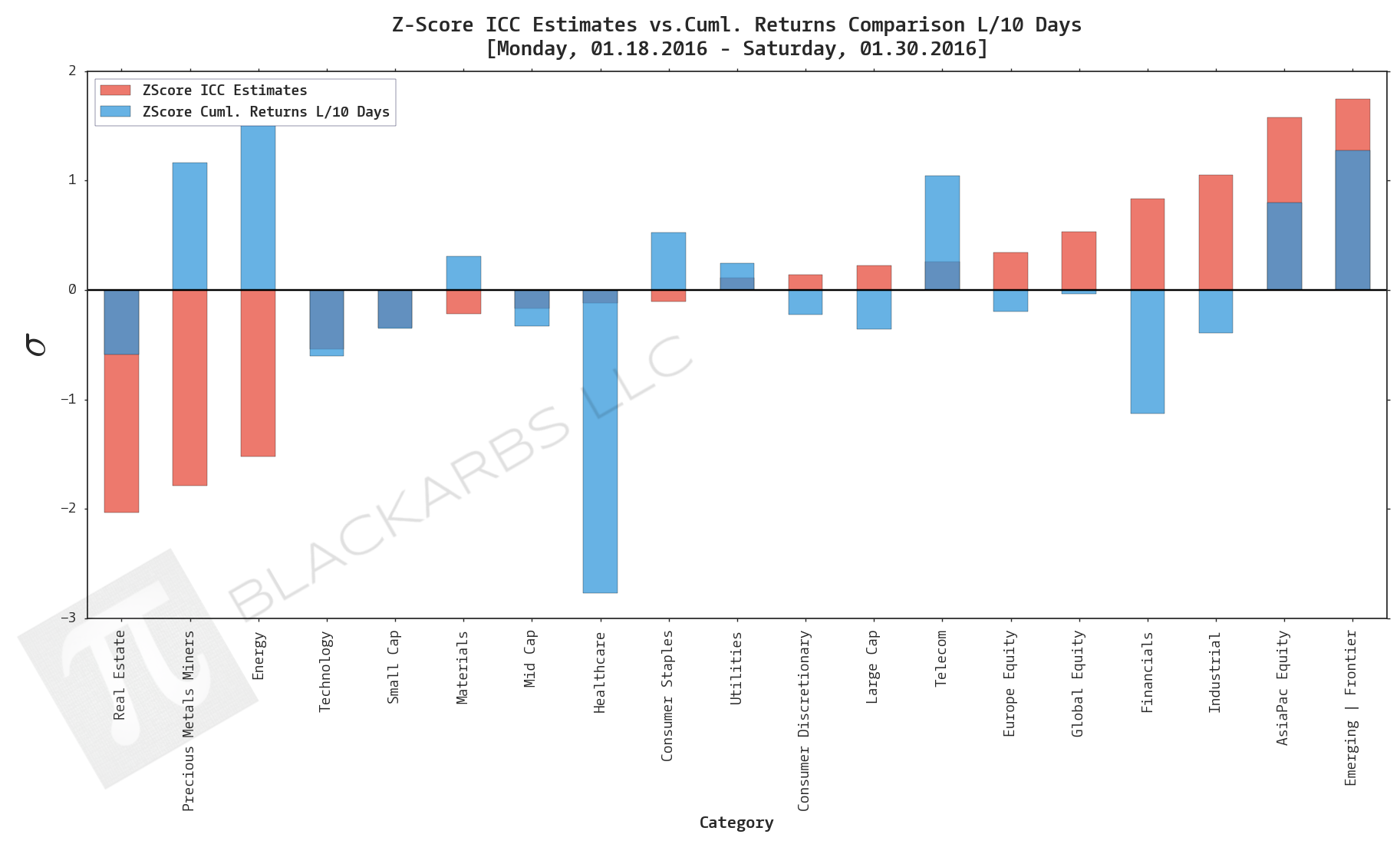
COMPOSITE MACRO ETF WEEKLY IMPLIED COST-OF-CAPITAL ESTIMATES VS. CUMULATIVE RETURNS (1/30/16)
PythonGlobal Markets

COMPOSITE MACRO ETF WEEKLY IMPLIED COST-OF-CAPITAL ESTIMATES VS. CUMULATIVE RETURNS (1/30/16)

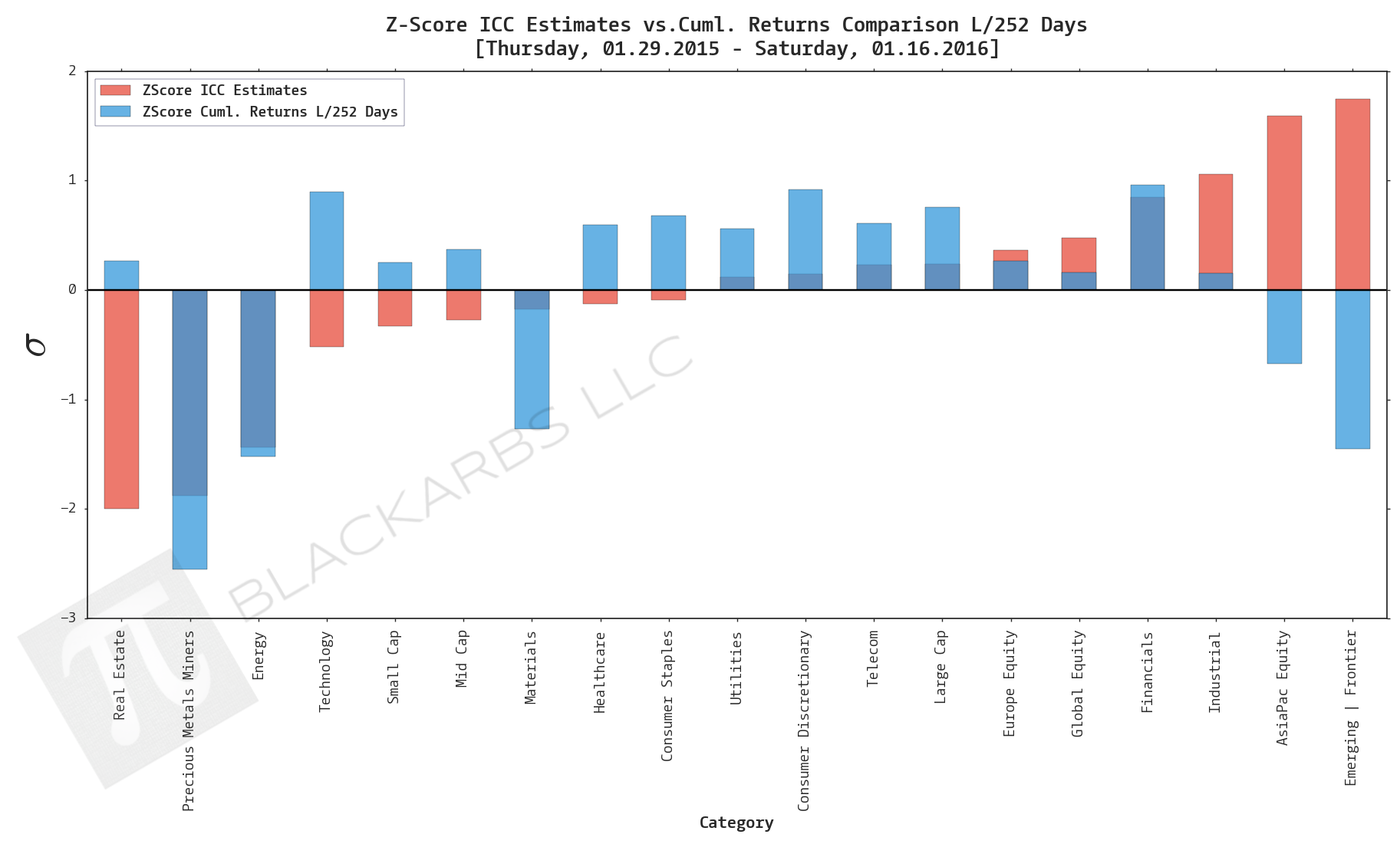
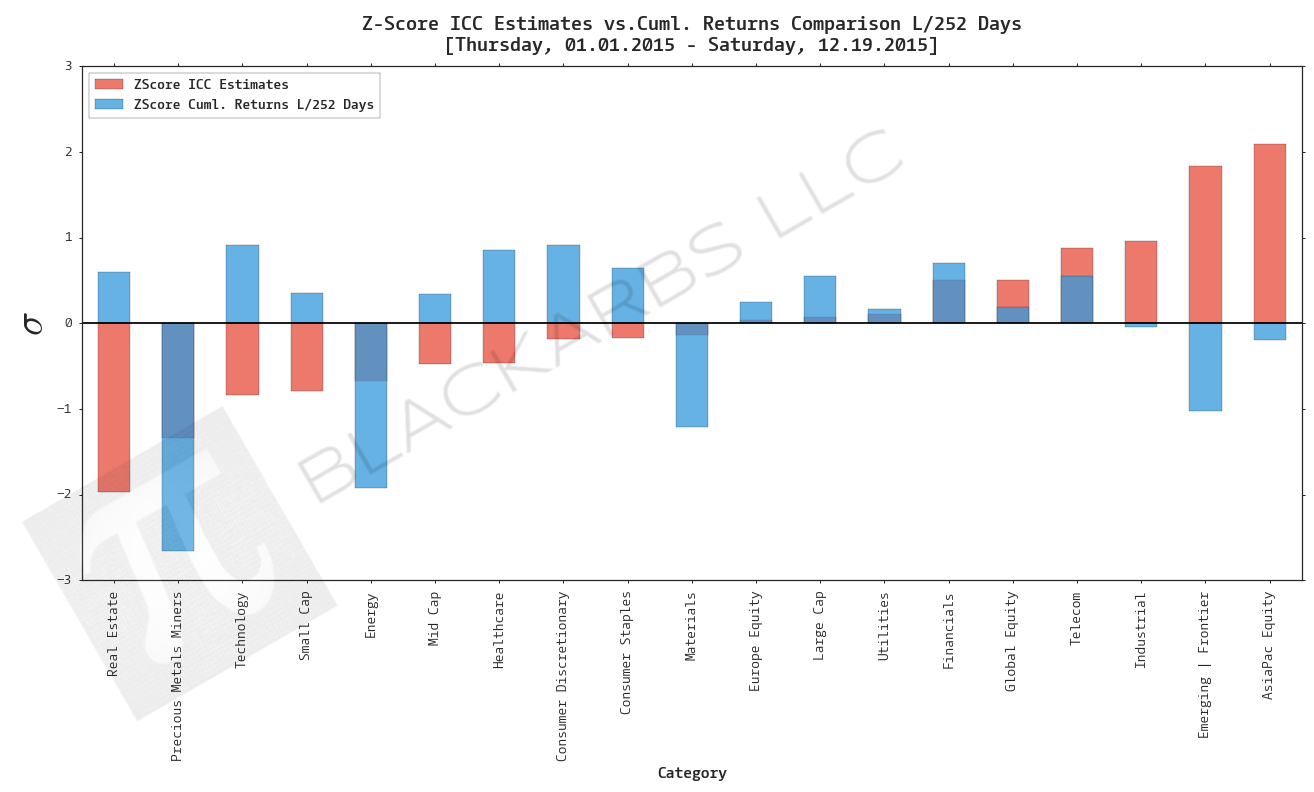
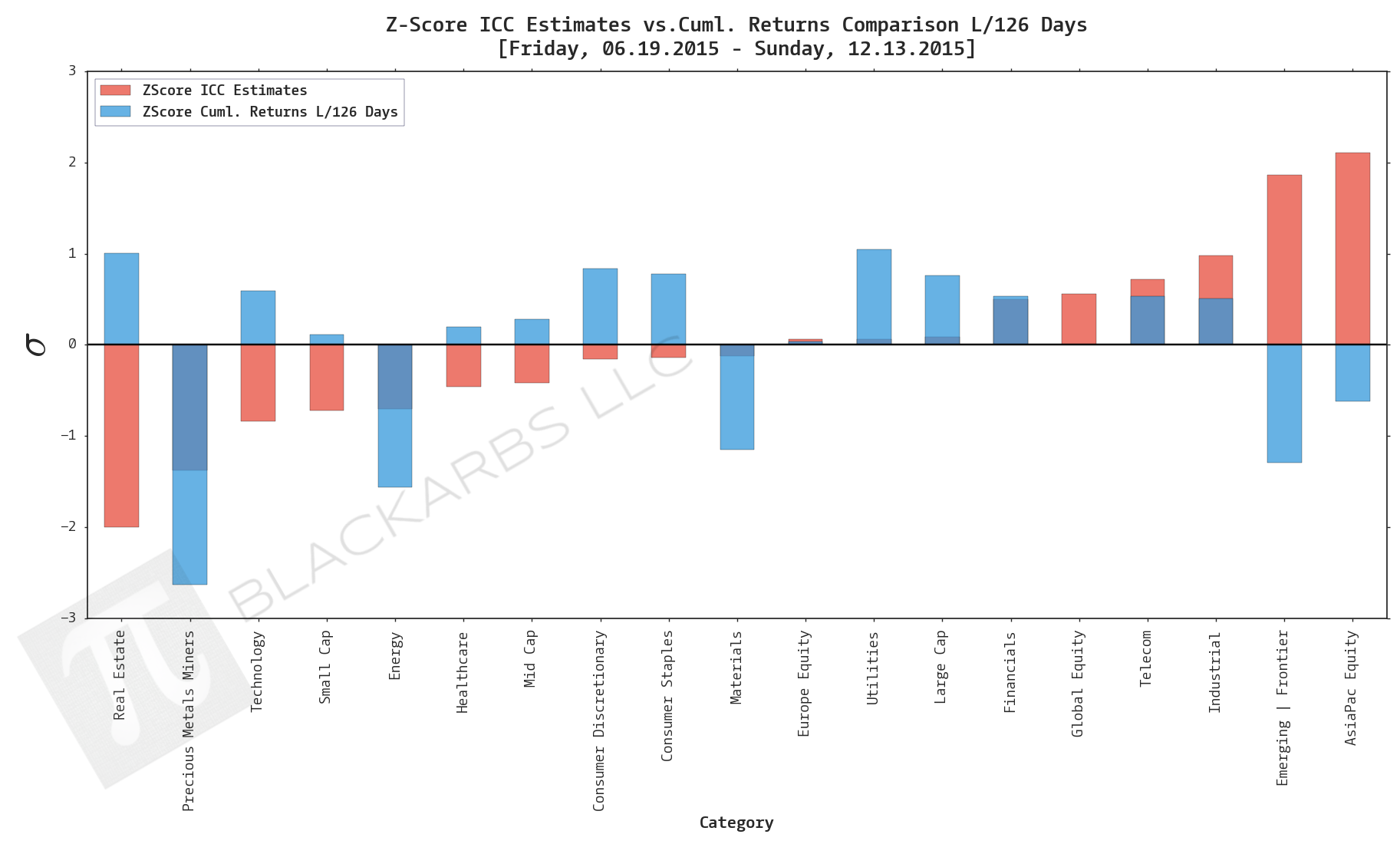
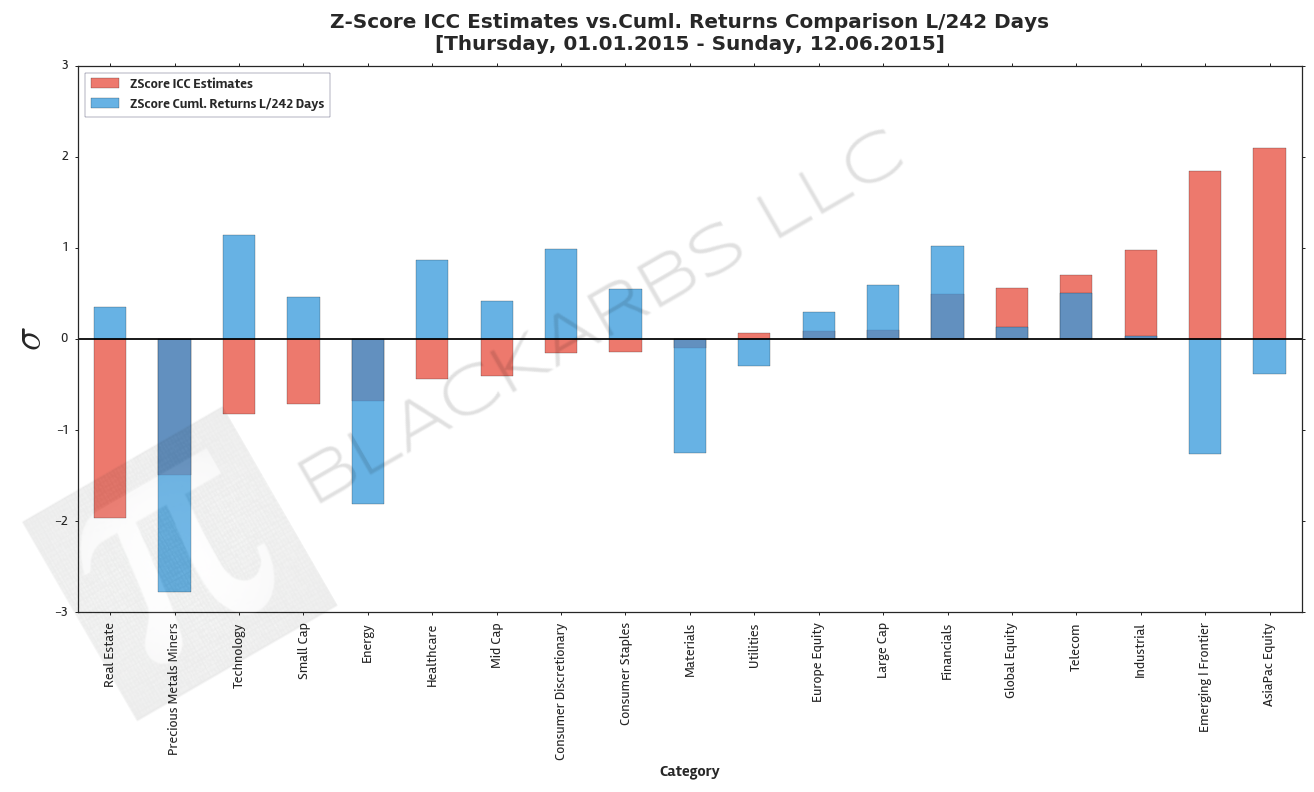
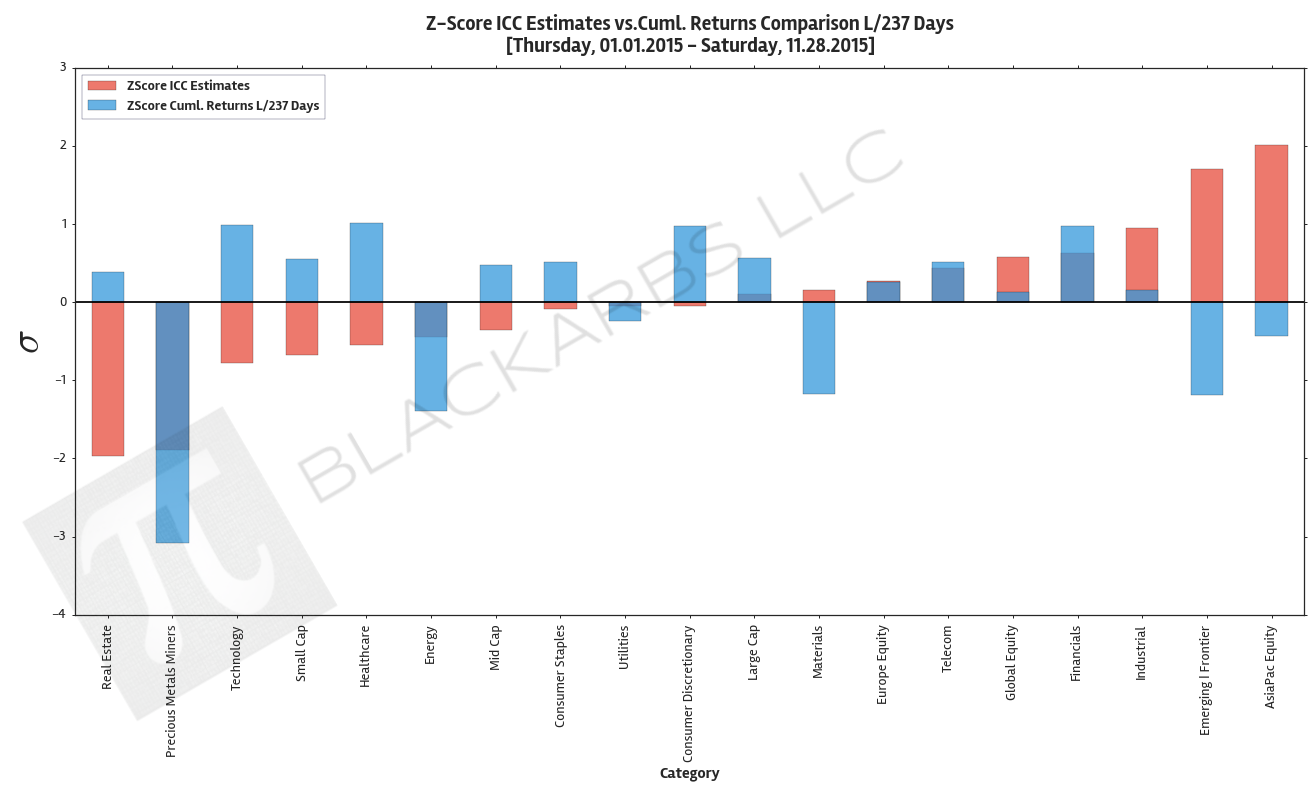
WHAT IS THE "IMPLIED COST OF CAPITAL (ICC)" MODEL? “In accounting and finance the implied cost of equity capital (ICC)—defined as the internal rate of return that equates the current stock price to discounted expected future dividends—is an increasingly popular class of proxies for the expected rate of equity returns. ” — CHARLES C. Y. WANG; an assistant professor of business administration in the Accounting and Management Unit at Harvard Business School The basic concept of the ICC model is

READ MORE
COMPOSITE MACRO ETF WEEKLY ANALYTICS (1/30/2016)
Global MarketsPython

COMPOSITE MACRO ETF WEEKLY ANALYTICS (1/30/2016)

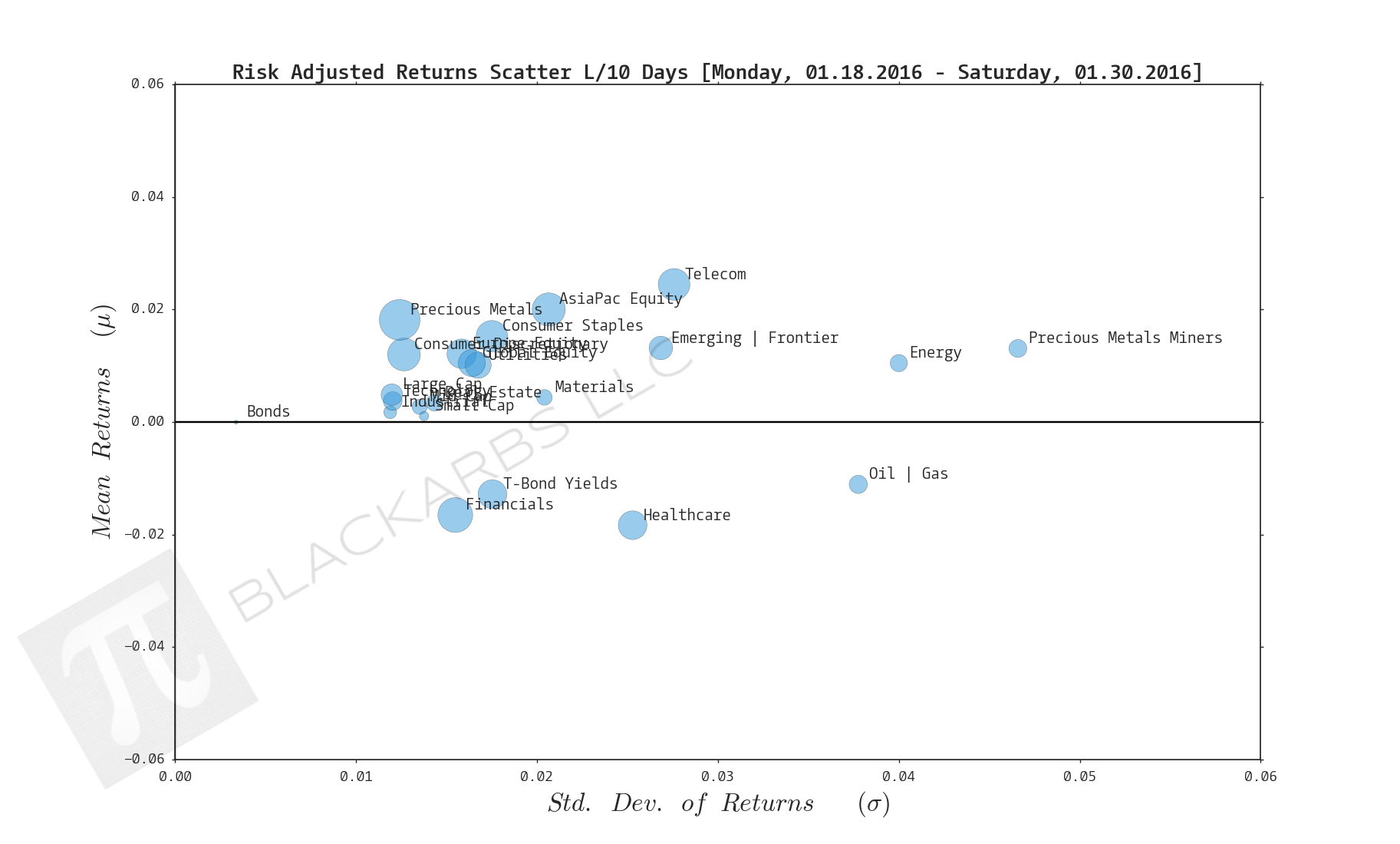
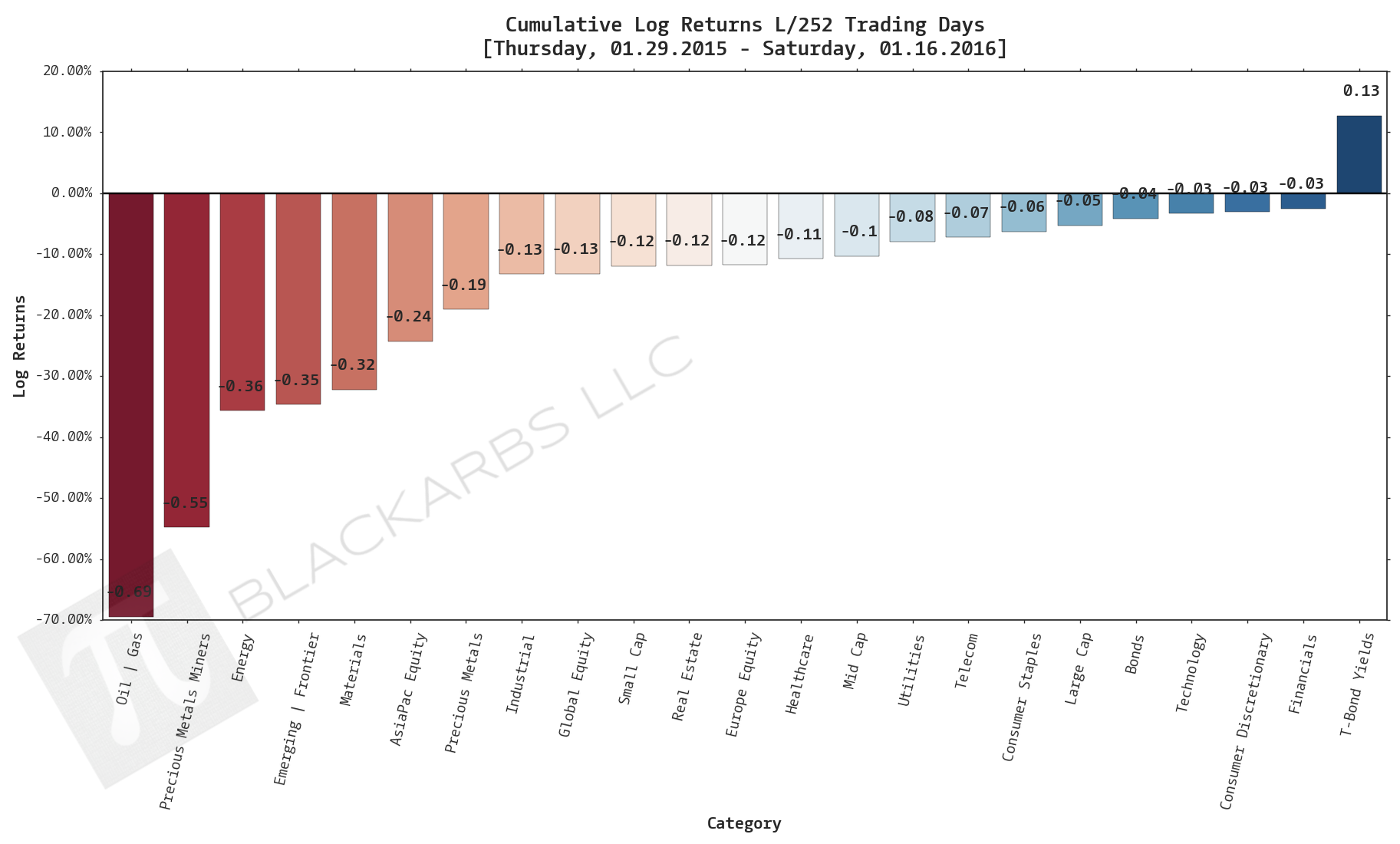
LAYOUT (Organized by Time Period): Composite ETF Cumulative Returns Momentum Bar plot Composite ETF Cumulative Returns Line plot Composite ETF Risk-Adjusted Returns Scatter plot (Std vs Mean) Composite ETF Risk-Adjusted Return Correlations Heatmap (Clusterplot) Composite ETF Cumulative Return Tables Notable Trends and Observations COMPOSITE ETF COMPONENTS: LAST 252 TRADING DAYS Click here for help understanding this chart Click here for help understanding this chart Click here

READ MORE
USING IMPLIED VOLATILITY TO PREDICT ETF RETURNS (1/23/16)
PythonGlobal Markets

USING IMPLIED VOLATILITY TO PREDICT ETF RETURNS (1/23/16)

To see the origin of this series click here In the paper that inspired this series ("What Does Individual Option Volatility Smirk Tell Us About Future Equity Returns") the authors' research shows that their calculation of the Option Volatility Smirk is predictive of equity returns up to 4 weeks. Therefore, each week, I will calculate the Long/Short legs of a portfolio constructed by following their criteria as closely as possible. However this study will focus on ETF's as opposed to single name

READ MORE
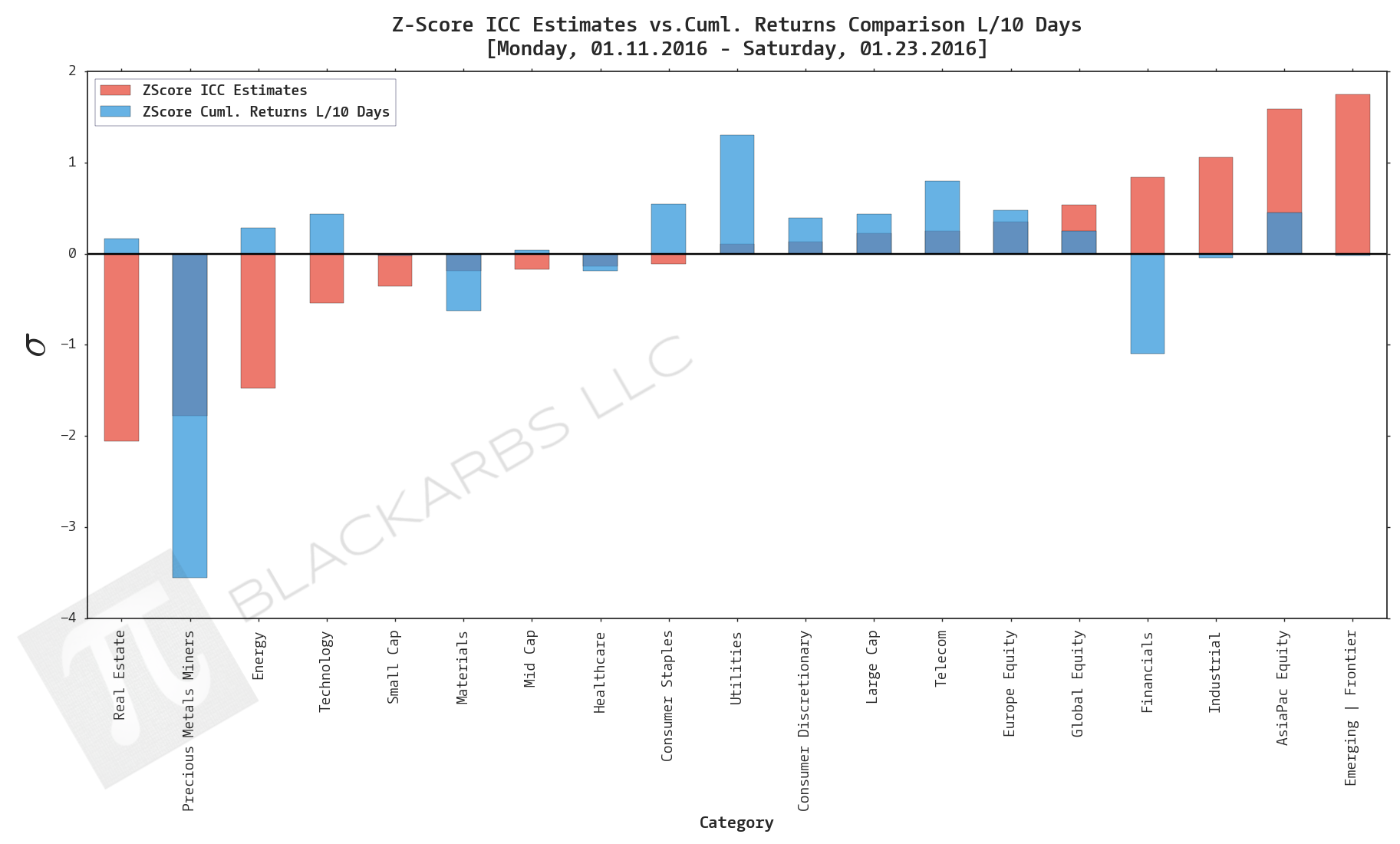
COMPOSITE MACRO ETF WEEKLY IMPLIED COST-OF-CAPITAL ESTIMATES VS. CUMULATIVE RETURNS (1/23/16)
PythonGlobal Markets

COMPOSITE MACRO ETF WEEKLY IMPLIED COST-OF-CAPITAL ESTIMATES VS. CUMULATIVE RETURNS (1/23/16)

WHAT IS THE "IMPLIED COST OF CAPITAL (ICC)" MODEL? “In accounting and finance the implied cost of equity capital (ICC)—defined as the internal rate of return that equates the current stock price to discounted expected future dividends—is an increasingly popular class of proxies for the expected rate of equity returns. ” — CHARLES C. Y. WANG; an assistant professor of business administration in the Accounting and Management Unit at Harvard Business School The basic concept of the ICC model is

READ MORE
COMPOSITE MACRO ETF WEEKLY ANALYTICS (1/23/2016)
Global MarketsPython

COMPOSITE MACRO ETF WEEKLY ANALYTICS (1/23/2016)

LAYOUT (Organized by Time Period): Composite ETF Cumulative Returns Momentum Bar plot Composite ETF Cumulative Returns Line plot Composite ETF Risk-Adjusted Returns Scatter plot (Std vs Mean) Composite ETF Risk-Adjusted Return Correlations Heatmap (Clusterplot) Composite ETF Cumulative Return Tables Notable Trends and Observations COMPOSITE ETF COMPONENTS: LAST 252 TRADING DAYS Click here for help understanding this chart Click here for help understanding this chart Click here

READ MORE
USING IMPLIED VOLATILITY TO PREDICT ETF RETURNS (1/17/16)
ResearchQuant

USING IMPLIED VOLATILITY TO PREDICT ETF RETURNS (1/17/16)

To see the origin of this series click here In the paper that inspired this series ("What Does Individual Option Volatility Smirk Tell Us About Future Equity Returns") the authors' research shows that their calculation of the Option Volatility Smirk is predictive of equity returns up to 4 weeks. Therefore, each week, I will calculate the Long/Short legs of a portfolio constructed by following their criteria as closely as possible. However this study will focus on ETF's as opposed to single name

READ MORE
COMPOSITE MACRO ETF WEEKLY IMPLIED COST-OF-CAPITAL ESTIMATES VS. CUMULATIVE RETURNS (1/16/16)
Global MarketsPython

COMPOSITE MACRO ETF WEEKLY IMPLIED COST-OF-CAPITAL ESTIMATES VS. CUMULATIVE RETURNS (1/16/16)

WHAT IS THE "IMPLIED COST OF CAPITAL (ICC)" MODEL? “In accounting and finance the implied cost of equity capital (ICC)—defined as the internal rate of return that equates the current stock price to discounted expected future dividends—is an increasingly popular class of proxies for the expected rate of equity returns. ” — CHARLES C. Y. WANG; an assistant professor of business administration in the Accounting and Management Unit at Harvard Business School The basic concept of the ICC model is

READ MORE
COMPOSITE MACRO ETF WEEKLY ANALYTICS (1/16/2016)
Global MarketsPython

COMPOSITE MACRO ETF WEEKLY ANALYTICS (1/16/2016)

LAYOUT (Organized by Time Period): Composite ETF Cumulative Returns Momentum Bar plot Composite ETF Cumulative Returns Line plot Composite ETF Risk-Adjusted Returns Scatter plot (Std vs Mean) Composite ETF Risk-Adjusted Return Correlations Heatmap (Clusterplot) Composite ETF Cumulative Return Tables Notable Trends and Observations COMPOSITE ETF COMPONENTS: LAST 252 TRADING DAYS Click here for help understanding this chart Click here for help understanding this chart Click here

READ MORE
USING IMPLIED VOLATILITY TO PREDICT EQUITY/ETF RETURNS (1/11/16)
PythonQuant

USING IMPLIED VOLATILITY TO PREDICT EQUITY/ETF RETURNS (1/11/16)

To see the origin of this series click here In the paper that inspired this series ("What Does Individual Option Volatility Smirk Tell Us About Future Equity Returns") the authors research shows that Option Volatility Smirk they calculate is predictive up to 4 weeks. Therefore, each week, I will calculate the Long/Short legs of a portfolio constructed by following their criteria as closely as possible. I will then track the results of the Long/Short portfolio, in equity returns, cumulatively fo

READ MORE
COMPOSITE MACRO ETF WEEKLY IMPLIED COST-OF-CAPITAL ESTIMATES VS. CUMULATIVE RETURNS (1/09/16)
Global MarketsPython

COMPOSITE MACRO ETF WEEKLY IMPLIED COST-OF-CAPITAL ESTIMATES VS. CUMULATIVE RETURNS (1/09/16)

WHAT IS THE "IMPLIED COST OF CAPITAL (ICC)" MODEL? “In accounting and finance the implied cost of equity capital (ICC)—defined as the internal rate of return that equates the current stock price to discounted expected future dividends—is an increasingly popular class of proxies for the expected rate of equity returns. ” — CHARLES C. Y. WANG; an assistant professor of business administration in the Accounting and Management Unit at Harvard Business School The basic concept of the ICC model is

READ MORE
COMPOSITE MACRO ETF WEEKLY ANALYTICS (1/09/2016)
Global MarketsPython

COMPOSITE MACRO ETF WEEKLY ANALYTICS (1/09/2016)

LAYOUT (Organized by Time Period): Composite ETF Cumulative Returns Momentum Bar plot Composite ETF Cumulative Returns Line plot Composite ETF Risk-Adjusted Returns Scatter plot (Std vs Mean) Composite ETF Risk-Adjusted Return Correlations Heatmap (Clusterplot) Composite ETF Cumulative Return Tables Notable Trends and Observations COMPOSITE ETF COMPONENTS: LAST 252 TRADING DAYS Click here for help understanding this chart Click here for help understanding this chart Click here

READ MORE
Using Implied Volatility to Predict Equity/ETF Returns
Equity AnalysisPython

Using Implied Volatility to Predict Equity/ETF Returns

During a discussion with an knowledgeable options trader, I was told the significance of interpreting the "Implied Volatility Skew" for stocks and given a paper to read for homework. To get a basic understanding of Implied Volatility Skew see this link here. The paper I was told to read was "What Does Individual Option Volatility Smirk Tell Us About Future Equity Returns" by Yuhang Xing, Xiaoyan Zhang and Rui Zhao. In their paper they show empirically, using their SKEW measure, allowed one to p

READ MORE
COMPOSITE MACRO ETF WEEKLY IMPLIED COST-OF-CAPITAL ESTIMATES VS. CUMULATIVE RETURNS (1/02/16)
Global MarketsPython

COMPOSITE MACRO ETF WEEKLY IMPLIED COST-OF-CAPITAL ESTIMATES VS. CUMULATIVE RETURNS (1/02/16)

WHAT IS THE "IMPLIED COST OF CAPITAL (ICC)" MODEL? “In accounting and finance the implied cost of equity capital (ICC)—defined as the internal rate of return that equates the current stock price to discounted expected future dividends—is an increasingly popular class of proxies for the expected rate of equity returns. ” — CHARLES C. Y. WANG; an assistant professor of business administration in the Accounting and Management Unit at Harvard Business School The basic concept of the ICC model is

READ MORE
COMPOSITE MACRO ETF WEEKLY ANALYTICS (1/02/2016)
Global MarketsPython

COMPOSITE MACRO ETF WEEKLY ANALYTICS (1/02/2016)

LAYOUT (Organized by Time Period): Composite ETF Cumulative Returns Momentum Bar plot Composite ETF Cumulative Returns Line plot Composite ETF Risk-Adjusted Returns Scatter plot (Std vs Mean) Composite ETF Risk-Adjusted Return Correlations Heatmap (Clusterplot) Composite ETF Cumulative Return Tables Notable Trends and Observations COMPOSITE ETF COMPONENTS: LAST 252 TRADING DAYS Click here for help understanding this chart Click here for help understanding this chart Click here

READ MORE
COMPOSITE MACRO ETF WEEKLY IMPLIED COST-OF-CAPITAL ESTIMATES VS. CUMULATIVE RETURNS (12/26/15)
Global MarketsQuant

COMPOSITE MACRO ETF WEEKLY IMPLIED COST-OF-CAPITAL ESTIMATES VS. CUMULATIVE RETURNS (12/26/15)

WHAT IS THE "IMPLIED COST OF CAPITAL (ICC)" MODEL? “In accounting and finance the implied cost of equity capital (ICC)—defined as the internal rate of return that equates the current stock price to discounted expected future dividends—is an increasingly popular class of proxies for the expected rate of equity returns. ” — CHARLES C. Y. WANG; an assistant professor of business administration in the Accounting and Management Unit at Harvard Business School The basic concept of the ICC model is

READ MORE
PythonQuant

COMPOSITE MACRO ETF WEEKLY ANALYTICS (12/26/2015)

LAYOUT (Organized by Time Period): Composite ETF Cumulative Returns Momentum Bar plot Composite ETF Cumulative Returns Line plot Composite ETF Risk-Adjusted Returns Scatter plot (Std vs Mean) Composite ETF Risk-Adjusted Return Correlations Heatmap (Clusterplot) Composite ETF Cumulative Return Tables Notable Trends and Observations COMPOSITE ETF COMPONENTS: LAST 252 TRADING DAYS Click here for help understanding this chart Click here for help understanding this chart Click here

READ MORE
GET FREE FINANCIAL DATA W/ PYTHON (EARNINGS ESTIMATES-FROM YAHOO FINANCE)
PythonEquity Analysis

GET FREE FINANCIAL DATA W/ PYTHON (EARNINGS ESTIMATES-FROM YAHOO FINANCE)

Today I present a simple function to extract Earnings Estimates from Yahoo Finance. If you have any questions feel free to leave it in the comments. This code uses Python 3 on Windows 8.1 but could be easily adapted for Python 2 by changing the 'urllib' import. First we import the necessary packages into our programming environment. I also suppress warnings for the deprecation warning for the Pandas "Dataframe.convert_objects()"method within the scraper function that follows. This function t

READ MORE
COMPOSITE MACRO ETF WEEKLY IMPLIED COST-OF-CAPITAL ESTIMATES VS. CUMULATIVE RETURNS (12/19/15)
Global MarketsPython

COMPOSITE MACRO ETF WEEKLY IMPLIED COST-OF-CAPITAL ESTIMATES VS. CUMULATIVE RETURNS (12/19/15)

WHAT IS THE "IMPLIED COST OF CAPITAL (ICC)" MODEL? “In accounting and finance the implied cost of equity capital (ICC)—defined as the internal rate of return that equates the current stock price to discounted expected future dividends—is an increasingly popular class of proxies for the expected rate of equity returns. ” — CHARLES C. Y. WANG; an assistant professor of business administration in the Accounting and Management Unit at Harvard Business School The basic concept of the ICC model is

READ MORE
COMPOSITE MACRO ETF WEEKLY ANALYTICS (12/19/2015)
PythonGlobal Markets

COMPOSITE MACRO ETF WEEKLY ANALYTICS (12/19/2015)

LAYOUT (Organized by Time Period): Composite ETF Cumulative Returns Momentum Bar plot Composite ETF Cumulative Returns Line plot Composite ETF Risk-Adjusted Returns Scatter plot (Std vs Mean) Composite ETF Risk-Adjusted Return Correlations Heatmap (Clusterplot) Composite ETF Cumulative Return Tables Notable Trends and Observations COMPOSITE ETF COMPONENTS: LAST 252 TRADING DAYS Click here for help understanding this chart Click here for help understanding this chart Click here

READ MORE
COMPOSITE MACRO ETF WEEKLY IMPLIED COST-OF-CAPITAL ESTIMATES VS. CUMULATIVE RETURNS (12/13/15)
PythonGlobal Markets

COMPOSITE MACRO ETF WEEKLY IMPLIED COST-OF-CAPITAL ESTIMATES VS. CUMULATIVE RETURNS (12/13/15)

WHAT IS THE "IMPLIED COST OF CAPITAL (ICC)" MODEL? “In accounting and finance the implied cost of equity capital (ICC)—defined as the internal rate of return that equates the current stock price to discounted expected future dividends—is an increasingly popular class of proxies for the expected rate of equity returns. ” — CHARLES C. Y. WANG; an assistant professor of business administration in the Accounting and Management Unit at Harvard Business School The basic concept of the ICC model is

READ MORE
COMPOSITE MACRO ETF WEEKLY ANALYTICS (12/13/2015)
Global MarketsPython

COMPOSITE MACRO ETF WEEKLY ANALYTICS (12/13/2015)

LAYOUT (Organized by Time Period): Composite ETF Cumulative Returns Momentum Bar plot Composite ETF Cumulative Returns Line plot Composite ETF Risk-Adjusted Returns Scatter plot (Std vs Mean) Composite ETF Risk-Adjusted Return Correlations Heatmap (Clusterplot) Composite ETF Cumulative Return Tables Notable Trends and Observations COMPOSITE ETF COMPONENTS: YEAR-TO-DATE LAST 247 TRADING DAYS Click here for help understanding this Chart Click here for help understanding this Char

READ MORE
COMPOSITE MACRO ETF WEEKLY IMPLIED COST-OF-CAPITAL ESTIMATES VS. CUMULATIVE RETURNS (12/06/15)
PythonGlobal Markets

COMPOSITE MACRO ETF WEEKLY IMPLIED COST-OF-CAPITAL ESTIMATES VS. CUMULATIVE RETURNS (12/06/15)

WHAT IS THE "IMPLIED COST OF CAPITAL (ICC)" MODEL? “In accounting and finance the implied cost of equity capital (ICC)—defined as the internal rate of return that equates the current stock price to discounted expected future dividends—is an increasingly popular class of proxies for the expected rate of equity returns. ” — CHARLES C. Y. WANG; an assistant professor of business administration in the Accounting and Management Unit at Harvard Business School The basic concept of the ICC model is

READ MORE
COMPOSITE MACRO ETF WEEKLY ANALYTICS (12/06/2015)
Global MarketsPython

COMPOSITE MACRO ETF WEEKLY ANALYTICS (12/06/2015)

LAYOUT (Organized by Time Period): Composite ETF Cumulative Returns Momentum Bar plot and associated Tables Composite ETF Cumulative Returns Line plot Composite ETF Risk-Adjusted Returns Scatter plot (Std vs Mean) Composite ETF Risk-Adjusted Return Correlations Heatmap (Clusterplot) COMPOSITE ETF COMPONENTS: YEAR-TO-DATE LAST 242 TRADING DAYS Click here for help understanding this Chart Click here for help understanding this Chart Click here for help understanding this Chart Clic

READ MORE
COMPOSITE MACRO ETF WEEKLY IMPLIED COST-OF-CAPITAL ESTIMATES VS. CUMULATIVE RETURNS (11/28/15)
PythonGlobal Markets

COMPOSITE MACRO ETF WEEKLY IMPLIED COST-OF-CAPITAL ESTIMATES VS. CUMULATIVE RETURNS (11/28/15)

WHAT IS THE "IMPLIED COST OF CAPITAL (ICC)" MODEL? “In accounting and finance the implied cost of equity capital (ICC)—defined as the internal rate of return that equates the current stock price to discounted expected future dividends—is an increasingly popular class of proxies for the expected rate of equity returns. ” — CHARLES C. Y. WANG; an assistant professor of business administration in the Accounting and Management Unit at Harvard Business School The basic concept of the ICC model is

READ MORE
COMPOSITE MACRO ETF WEEKLY ANALYTICS (11/28/2015)
PythonGlobal Markets

COMPOSITE MACRO ETF WEEKLY ANALYTICS (11/28/2015)

NEW LAYOUT (Organized by Time Period): Composite ETF Cumulative Returns Momentum Bar plot and associated Tables Composite ETF Cumulative Returns Line plot Composite ETF Risk-Adjusted Returns Scatter plot (Std vs Mean) Composite ETF Risk-Adjusted Return Correlations Heatmap (Clusterplot) COMPOSITE ETF COMPONENTS: YEAR-TO-DATE LAST 237 TRADING DAYS Click here for help understanding this Chart Click here for help understanding this Chart Click here for help understanding this Chart

READ MORE
COMPOSITE MACRO ETF WEEKLY IMPLIED COST-OF-CAPITAL ESTIMATES VS. CUMULATIVE RETURNS (11/21/15)
PythonGlobal Markets

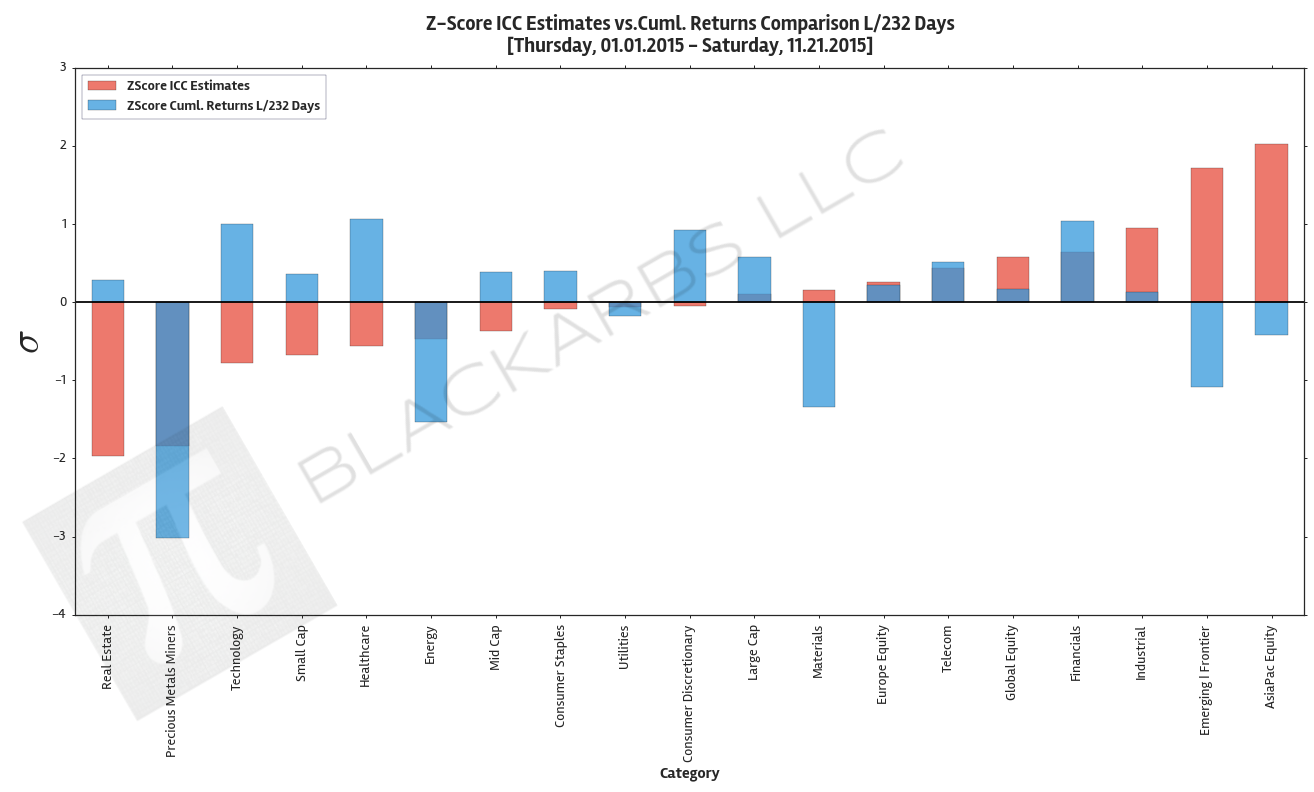
COMPOSITE MACRO ETF WEEKLY IMPLIED COST-OF-CAPITAL ESTIMATES VS. CUMULATIVE RETURNS (11/21/15)

WHAT IS THE "IMPLIED COST OF CAPITAL (ICC)" MODEL? “In accounting and finance the implied cost of equity capital (ICC)—defined as the internal rate of return that equates the current stock price to discounted expected future dividends—is an increasingly popular class of proxies for the expected rate of equity returns. ” — CHARLES C. Y. WANG; an assistant professor of business administration in the Accounting and Management Unit at Harvard Business School The basic concept of the ICC model is

READ MORE
COMPOSITE MACRO ETF WEEKLY ANALYTICS (11/21/2015)
PythonGlobal Markets

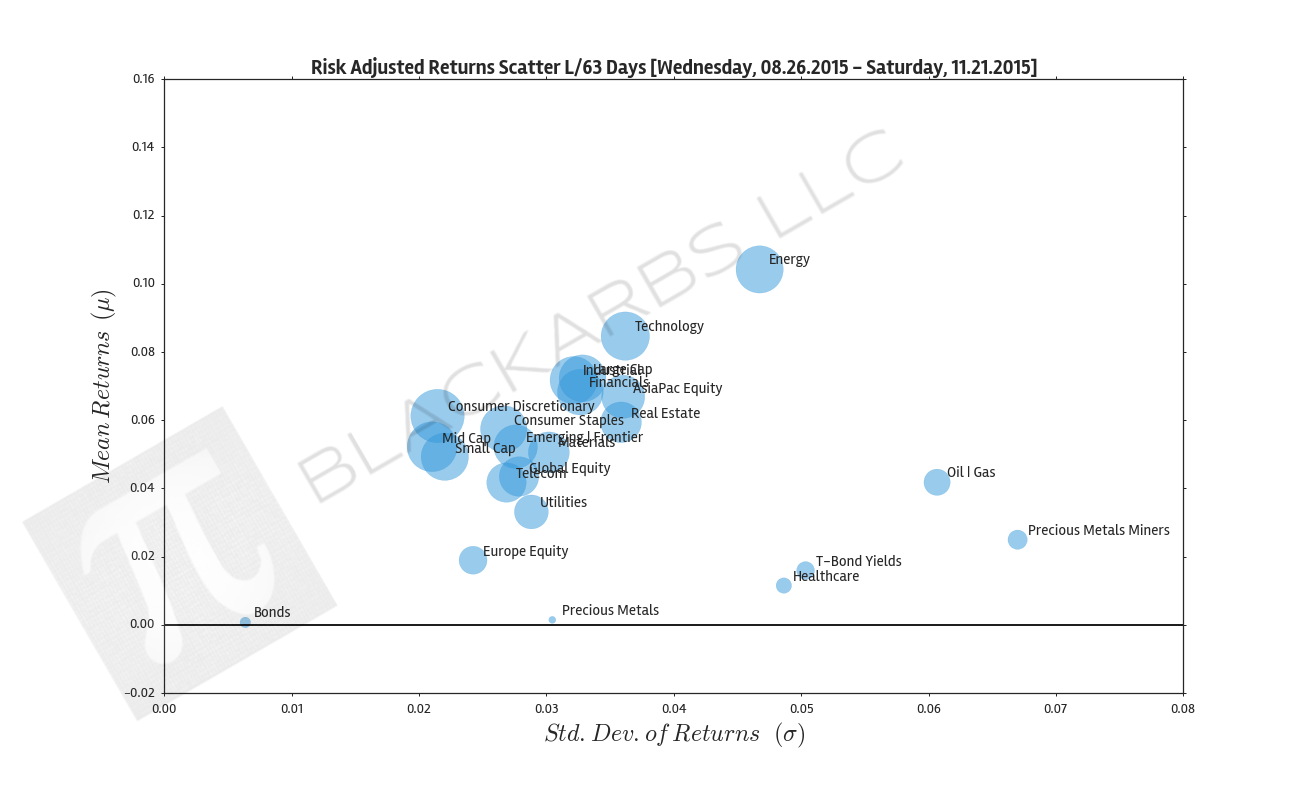
COMPOSITE MACRO ETF WEEKLY ANALYTICS (11/21/2015)

NEW LAYOUT (Organized by Time Period): Composite ETF Cumulative Returns Momentum Bar plot and associated Tables Composite ETF Cumulative Returns Line plot Composite ETF Risk-Adjusted Returns Scatter plot (Std vs Mean) Composite ETF Risk-Adjusted Return Correlations Heatmap (Clusterplot) COMPOSITE ETF COMPONENTS: YEAR-TO-DATE LAST 232 TRADING DAYS Click here for help understanding this Chart Click here for help understanding this Chart Click here for help understanding this Chart

READ MORE
COMPOSITE MACRO ETF WEEKLY IMPLIED COST-OF-CAPITAL ESTIMATES VS. CUMULATIVE RETURNS (11/14/15)
PythonGlobal Markets

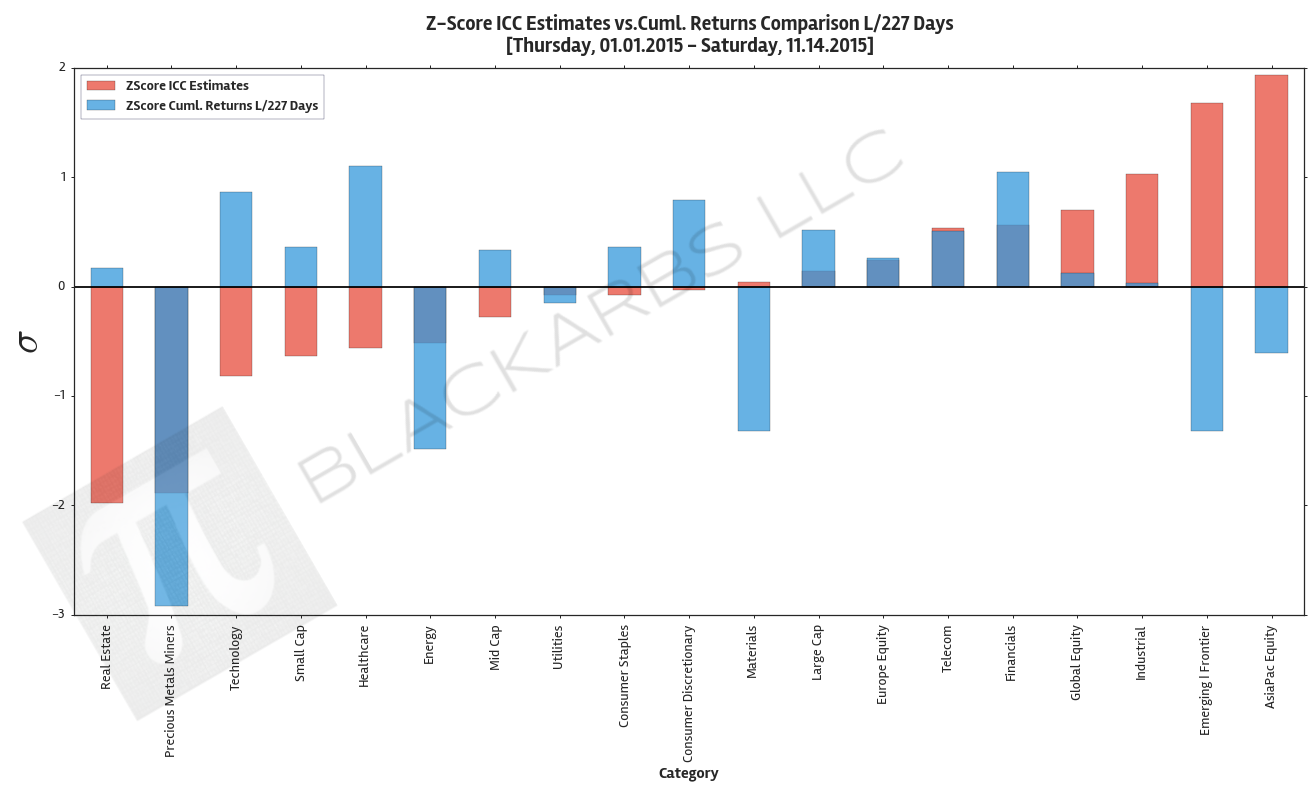
COMPOSITE MACRO ETF WEEKLY IMPLIED COST-OF-CAPITAL ESTIMATES VS. CUMULATIVE RETURNS (11/14/15)

WHAT IS THE "IMPLIED COST OF CAPITAL (ICC)" MODEL? “In accounting and finance the implied cost of equity capital (ICC)—defined as the internal rate of return that equates the current stock price to discounted expected future dividends—is an increasingly popular class of proxies for the expected rate of equity returns. ” — CHARLES C. Y. WANG; an assistant professor of business administration in the Accounting and Management Unit at Harvard Business School The basic concept of the ICC model is

READ MORE
COMPOSITE MACRO ETF WEEKLY ANALYTICS (11/14/2015)
PythonGlobal Markets

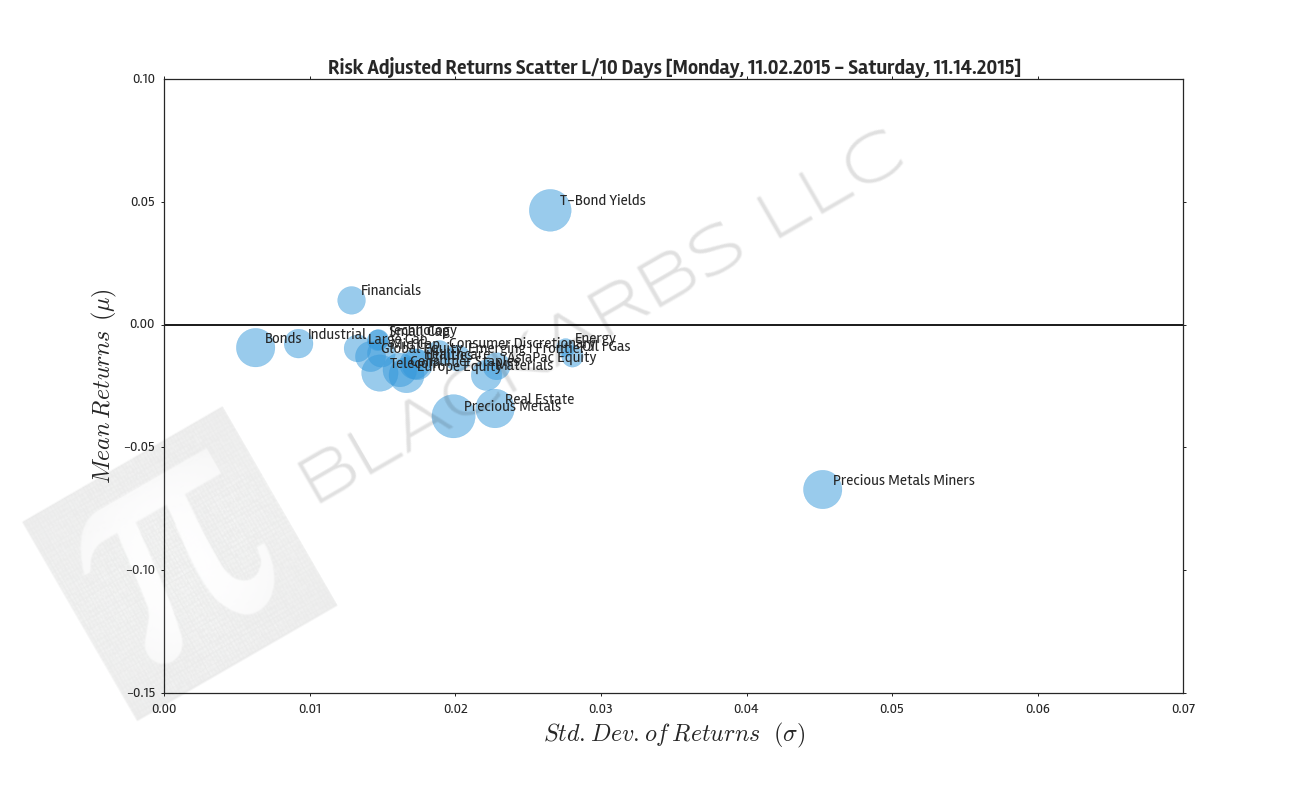
COMPOSITE MACRO ETF WEEKLY ANALYTICS (11/14/2015)

NEW LAYOUT (Organized by Time Period): Composite ETF Cumulative Returns Momentum Bar plot and associated Tables Composite ETF Cumulative Returns Line plot Composite ETF Risk-Adjusted Returns Scatter plot (Std vs Mean) Composite ETF Risk-Adjusted Return Correlations Heatmap (Clusterplot) Composite ETF Components: YEAR-TO-DATE LAST 227 TRADING DAYS Click here for help understanding this Chart Click here for help understanding this Chart Click here for help understanding this Chart

READ MORE
Global MarketsPython

COMPOSITE MACRO ETF WEEKLY IMPLIED COST OF CAPITAL ESTIMATES vs. CUMULATIVE RETURNS (11/07/15)

WHAT IS THE "IMPLIED COST OF CAPITAL (ICC)" MODEL? “In accounting and finance the implied cost of equity capital (ICC)—defined as the internal rate of return that equates the current stock price to discounted expected future dividends—is an increasingly popular class of proxies for the expected rate of equity returns. ” — CHARLES C. Y. WANG; an assistant professor of business administration in the Accounting and Management Unit at Harvard Business School The basic concept of the ICC model is

READ MORE
COMPOSITE MACRO ETF WEEKLY ANALYTICS (11/07/2015)
Global MarketsPython

COMPOSITE MACRO ETF WEEKLY ANALYTICS (11/07/2015)

NEW LAYOUT: Composite ETF Cumulative Returns Momentum Bar plot and associated Tables Composite ETF Cumulative Returns Line plot Composite ETF Risk-Adjusted Returns Scatter plot (Std vs Mean) Composite ETF Risk-Adjusted Return Correlations Heatmap (Clusterplot) YEAR-TO-DATE LAST 222 TRADING DAYS Click here for help understanding this Chart Click here for help understanding this Chart Click here for help understanding this Chart Click here for help understanding this Chart LAST 63

READ MORE
COMPOSITE MACRO ETF IMPLIED COST OF CAPITAL ESTIMATES
PythonGlobal Markets

COMPOSITE MACRO ETF IMPLIED COST OF CAPITAL ESTIMATES

Earlier this year I used to publish a bi-weekly article using the "Implied Cost of Capital" model as an ETF relative value estimation tool. Unfortunately State Street began reporting obvious erroneous data points and eventually stopped providing certain fundamental data altogether. As a result I had to suspend publishing of my ICC estimates. Well thanks to YCharts.com and their excellent site I was able to find the requisite data needed to begin publishing my model estimates again. what is th

READ MORE
COMPOSITE MACRO ETF WEEKLY ANALYTICS (10/31/2015)
Global MarketsPython

COMPOSITE MACRO ETF WEEKLY ANALYTICS (10/31/2015)

NEW LAYOUT: Going forward I will be testing a new organizational format for the charts. I have created a chart description page which details how each plot type is commonly interpreted (used). I will provide a link to the chart description page in the caption of each chart. The primary change is all the chart types will be grouped by the referenced time period. It is my hope that grouping the data this way will allow for easier analysis. Each time period grouping will display the charts in the

READ MORE
COMPOSITE MACRO ETF WEEKLY ANALYTICS (10/25/2015)
Global MarketsPython

COMPOSITE MACRO ETF WEEKLY ANALYTICS (10/25/2015)

COMPOSITE ETF CUMULATIVE RETURN MOMENTUM These charts show the sum (cumulative) of the daily returns of each composite ETF over the specified period. The daily return is calculated as the log of the percent change between daily adjusted close prices. These charts help determine asset class return momentum. This is important because momentum is arguably the strongest and most persistent market anomaly. Poorly performing asset classes are likely to continue under performing while outperforming a

READ MORE
Global MarketsPython

COMPOSITE MACRO ETF WEEKLY ANALYTICS (10/18/2015)

COMPOSITE ETF CUMULATIVE RETURN MOMENTUM These charts show the sum (cumulative) of the daily returns of each composite ETF over the specified period. The daily return is calculated as the log of the percent change between daily adjusted close prices. These charts help determine asset class return momentum. This is important because momentum is arguably the strongest and most persistent market anomaly. Poorly performing asset classes are likely to continue under performing while outperforming a

READ MORE
Global MarketsPython

COMPOSITE MACRO ETF WEEKLY ANALYTICS (10/10/2015)

COMPOSITE ETF CUMULATIVE RETURN MOMENTUM These charts show the sum (cumulative) of the daily returns of each composite ETF over the specified period. The daily return is calculated as the log of the percent change between daily adjusted close prices. These charts help determine asset class return momentum. This is important because momentum is arguably the strongest and most persistent market anomaly. Poorly performing asset classes are likely to continue under performing while outperforming a

READ MORE
Global MarketsPython

COMPOSITE MACRO ETF WEEKLY ANALYTICS (10/04/2015)

COMPOSITE ETF CUMULATIVE RETURN MOMENTUM These charts show the sum (cumulative) of the daily returns of each composite ETF over the specified period. The daily return is calculated as the log of the percent change between daily adjusted close prices. These charts help determine asset class return momentum. This is important because momentum is arguably the strongest and most persistent market anomaly. Poorly performing asset classes are likely to continue under performing while outperforming a

READ MORE
Equity AnalysisPython

Could SPY ETF Component Participation Have Alerted Us to Sell (Hedge) Prior to the Recent Market Downturn?

This is the Python Code version of a guest post presented here on RectitudeMarket.com. If you would like to read the analysis without the Python code please click the link above. To market pundits and casual observers the recent correction in equity markets appeared as a surprise. Overall headline economic data was positive at best and mixed at worst. Domestically, capital markets had been looking ‘ok’ while most of the major volatility was taking place abroad in emerging markets, and commodity

READ MORE
Global MarketsPython

COMPOSITE MACRO ETF WEEKLY ANALYTICS (9/28/2015)

COMPOSITE ETF CUMULATIVE RETURN MOMENTUM These charts show the sum (cumulative) of the daily returns of each composite ETF over the specified period. The daily return is calculated as the log of the percent change between daily adjusted close prices. These charts help determine asset class return momentum. This is important because momentum is arguably the strongest and most persistent market anomaly. Poorly performing asset classes are likely to continue under performing while outperforming a

READ MORE
EducationEquity Analysis

Guest Post Previously Featured on RectitudeMarket.com (09/02/2015)

**Note: This post already appeared as a guest post on rectitudemarket.com. The reason I'm posting this article when it is 'outdated', is twofold. 1) I think it's beneficial to review previous works especially when one has the benefit of hindsight. This helps us determine the accuracy and bias of the research presented. 2) I further introduce the concept of conditional cumulative returns, which adds insight to what happens to our securities' returns given some other event occurring. In this case,

READ MORE
Global MarketsPython

COMPOSITE MACRO ETF WEEKLY ANALYTICS (9/20/2015)

COMPOSITE ETF CUMULATIVE RETURN MOMENTUM These charts show the sum (cumulative) of the daily returns of each composite ETF over the specified period. The daily return is calculated as the log of the percent change between daily adjusted close prices. These charts help determine asset class return momentum. This is important because momentum is arguably the strongest and most persistent market anomaly. Poorly performing asset classes are likely to continue under performing while outperforming a

READ MORE
Global MarketsPython

COMPOSITE MACRO ETF WEEKLY ANALYTICS (9/14/2015)

COMPOSITE ETF CUMULATIVE RETURN MOMENTUM These charts show the sum (cumulative) of the daily returns of each composite ETF over the specified period. The daily return is calculated as the log of the percent change between daily adjusted close prices. These charts help determine asset class return momentum. This is important because momentum is arguably the strongest and most persistent market anomaly. Poorly performing asset classes are likely to continue under performing while outperforming a

READ MORE
Composite Macro ETF Weekly Analytics (8/30/2015)
Global MarketsQuant

Composite Macro ETF Weekly Analytics (8/30/2015)

COMPOSITE ETF CUMULATIVE RETURN MOMENTUM These charts show the sum (cumulative) of the daily returns of each composite ETF over the specified period. The daily return is calculated as the log of the percent change between daily adjusted close prices. These charts help determine asset class return momentum. This is important because momentum is arguably the strongest and most persistent market anomaly. Poorly performing asset classes are likely to continue under performing while outperforming a

READ MORE
Was David Woo Right; Was the Selloff Exacerbated by Risk Parity Strategies?
Global MarketsFixed Income

Was David Woo Right; Was the Selloff Exacerbated by Risk Parity Strategies?

Today after the close Bloomberg TV had David Woo, Managing Director and Head of Global Rates and Currencies Research at Bank of America/Merrill Lynch, on to provide some insight regarding recent market action. More specifically, he addressed how Chinese and American markets are linked. He dropped a lot of gems during his segment but one point really struck a chord with me. He said that the recent selloff has likely been exacerbated by "Risk Parity Guys". If you're unfamiliar with 'risk parity'

READ MORE
COMPOSITE MACRO ETF CUMULATIVE RETURN MOMENTUM (08.23.2015)
PythonQuant

COMPOSITE MACRO ETF CUMULATIVE RETURN MOMENTUM (08.23.2015)

Here is the updated list of composite ETF components. LAST 1260 TRADING DAYS (5 YEARS) Source: Yahoo Finance LAST 504 TRADING DAYS (2 YEARS) Source: Yahoo Finance LAST 252 TRADING DAYS (1 YEAR) Source: Yahoo Finance LAST 126 TRADING DAYS (6 MONTHS) Source: Yahoo Finance LAST 63 TRADING DAYS (3 MONTHS) Source: Yahoo Finance LAST 21 TRADING DAYS (1 MONTH) Source: Yahoo Finance LAST 10 TRADING DAYS Source: Yahoo Finance Blog RSS #block-yui_3_17_2_2_1440420671029_16964 .social-i

READ MORE
PythonResearch

Get Free Financial Data w/ Python (State street ETF Holdings - SPY)

One issue I frequently encounter during my research is the need to compare an individual stock, or collection of stocks vs its ETF benchmark. To do this I need accurate ETF holdings data. Generally this information is located on the ETF provider's website. However, this information is often inconvenient to access. Most websites including the ETF provider will do something like the following, where they only show the top 10 holdings, when what we really need is accessible only by clicking the hi

READ MORE
Equity AnalysisPython

Composite Macro ETF Cumulative Return Momentum (08.16.2015)

Here are the updated ETF components I'm using to construct the ETF composites. Last 504 Trading Days Composite ETF Cumulative Returns Last 252 Trading Days Composite ETF Cumulative Returns Last 126 Trading Days Composite ETF Cumulative Returns Last 63 Trading Days Composite ETF Cumulative Returns last 21 Trading days Composite ETF Cumulative Returns Last 10 Trading days Composite ETF Cumulative Returns Blog RSS #block-yui_3_17_2_4_1439677863749_22267

READ MORE
Price Dispersion as a Smart Money Indicator
Equity AnalysisQuant

Price Dispersion as a Smart Money Indicator

Before I get into the topic at hand, let me say I have not seen the following stock price data interpreted or studied like I am about to show you. As far as I am aware my approach is unique in that it is not overly complicated, can be generalized across a large cross section of asset class ETFs, and makes intuitive sense regarding market structure. Before I introduce the chart it is important that I clarify some definitions. What is Price Dispersion? I'm sure this may have many meanings amon

READ MORE
Composite Equity ETF Analysis (8/10/2015)
Equity AnalysisResearch

Composite Equity ETF Analysis (8/10/2015)

While I continue to update the ICC Valuation methodology I plan to post more of the custom charts I use to gain insight into current market structure, momentum, and relative value. Updated Composite ETF List Best vs Worst Performing ETF Composite L/252 Days Best vs Worst Performing ETF Composite L/63 Days Best vs Worst Performing ETF Composite L/21 Days BarPlot Cumulative Returns L/4 Weeks Z - Score Average Risk-Adjusted Returns L/21 Days

READ MORE
European Sovereign Debt Crisis Redux, What's the Playbook?
Global MarketsResearch

European Sovereign Debt Crisis Redux, What's the Playbook?

I wrote this post originally as a guest feature on RectitudeMarket.com. Check out the website for great investment ideas and original analysis. Now that Greece has officially rejected austerity it’s time to examine our 2011 playbook to get some clues as to what might happen. More importantly depending on your timeframe there should be plenty of strategic and tactical strategies for profit due to the increase in volatility. Let’s compare EUR/USD, Treasury yields, EU yield spreads, and other Dev

READ MORE
How do Bank Stocks Perform During Periods of Rising Rates? (Python Code Version)
PythonQuant

How do Bank Stocks Perform During Periods of Rising Rates? (Python Code Version)

This is the Python version of a guest article that originally appeared on RectitudeMarket.com. In this version I include the Python code used to generate the anaylsis. This subject has garnered a healthy debate among market participants in recent weeks. Conventional wisdom says that banks and the financial sector overall should benefit from a rising rate environment. The story goes that bank profitability is inextricably linked to `Net Interest Margin (NIM)`. If rates are rising, it is assumed

READ MORE
How Volatile Are US Treasury Bond Yields?
PythonQuant

How Volatile Are US Treasury Bond Yields?

The volatility in global bond markets have generated quite the discussion among market participants. So much so that BlackRock has indicated publicly that their old risk models need to be redone. BlackRock was speaking specifically about the European sovereign bond market but in light of the recent volatility in US treasuries I wanted to contextualize what's happening domestically. Especially considering I went out on a limb regarding the relative-value offered by the US long bond I thought thi

READ MORE
Composite Sector ETF Valuation Report [6.15.2015]
Equity AnalysisPython

Composite Sector ETF Valuation Report [6.15.2015]

Check out the updated IPython Notebook where I take a look at changes and trends in ETF valuations using the Implied Cost of Capital model. To learn more about the model and the methodology used see here and here. For reference here is a Table of Contents, but due to some technical issues the TOC is not working properly on the nbviewer.org page. I'll keep working to fix it for the next issue.

READ MORE
COMPOSITE SECTOR ETF VALUATION UPDATED [5.24.2015]
Equity AnalysisGlobal Markets

COMPOSITE SECTOR ETF VALUATION UPDATED [5.24.2015]

Check out my updated IPython Notebook where I take a look at changes and trends in ETF valuations using the Implied Cost of Capital model. To learn more about the model and the methodology used see here and here. Composite Sector ETF Valuation updated [5.24.2015]

READ MORE
Composite Sector ETF Valuation updated [5.10.2015]
Equity AnalysisGlobal Markets

Composite Sector ETF Valuation updated [5.10.2015]

Check out my updated IPython Notebook where I take a look at changes and trends in ETF valuations using the Implied Cost of Capital model. To learn more about the model and the methodology used see here and here. Composite Sector ETF Valuation updated [5.10.2015]

READ MORE
Equity AnalysisQuant

Sector ETF Valuation Using the Implied Cost of Capital (ICC) Model

This post is part of a series examining the ICC model's use as a valuation tool. I first introduced the topic in this post, where I outlined the following: * how I calculate the ICC formula for use in this sector ETF relative valuation model * my assumptions for the model * expected model output and sanity check * why and how I use the model results to enhance my investing Recently I expanded on the subject by detailing the Python code I use to run the analysis along with my interpretation

READ MORE
EducationPython

How to get Free Intraday Stock Data from Netfonds

Daily stock data is everywhere for free. Yahoo, Google, and Quandl all provide useful daily stock prices for basic number crunching. However computational analysis for intraday stock data is much harder to find. In fact, Intraday stock data can be very expensive. So what is a cost conscious quant supposed to do? The Norwegian website Netfonds.no provides free intraday data on stocks and ETF's on the NYSE, Nasdaq, and Amex exchanges. They provide up to 5 days of trade/bid/offer data. I wrote som

READ MORE
Equity AnalysisResearch

How I use Implied Cost of Capital (ICC) as a market valuation tool

What is Implied Cost of Capital? I love the intuition behind the model although I don't use it as proxy for expected returns. I use it as a relative value measure to identify analyst/institutional sentiment between different market sectors at a point in time. The actual calculation of the measure can be somewhat complex and involved. The below equation is the common form of the ICC model. As an active trader my primary concern is practical application and implementation so I simplified an

READ MORE
Swiss FX Shock
Global MarketsResearch

Swiss FX Shock

On January 15, 2015 the Swiss National Bank (SNB) shocked the world with a surprise break away from the Euro peg which caused a cataclysmic revaluation of the relative value of the Euro and Polish Zloty. Some context: During the summer/fall of 2011, in response to the European debt crisis the SNB stunned FX traders ~2.5 years ago when it announced it would peg it's currency to the Euro in an attempt to neutralize the Swiss Franc's (CHF) rapid appreciation due to its safe haven status. The SNB d

READ MORE
Equity AnalysisGlobal Markets

Is Canada a short?

In previous blog posts, I've discussed my bearish stance on the Canadian economy as expressed through ( EWC, FXC ) due to the collapse in global oil prices. My original hypothesis was Canada is a resource/energy based economy and declining oil prices would make the 'expensive' oil produced in the oil sands less attractive economically from a producer/investment standpoint. Let's explore that thesis a little more and see if it's validated by facts. Alberta, Canada contains the 'oil sands' depos

READ MORE
EducationResearch

What I'm Watching ( Week of 12.29.14 )

This week it's simple. I'm watching/waiting for volume to reenter the market and confirm or reject last week's holiday action. Last week ( SPY, DIA, QQQ ) all traded to new 52 week highs with my short target ( EWC ) bouncing significantly in sympathy. ( OIL ) price action appears to have moderated a little in terms of downside volatility; buyers and sellers that remained haven't shown conviction one way or the other yet. There is good reason to be skeptical of last week's broad market moves.

READ MORE
Global MarketsEquity Analysis

What I'm Watching ( Week of 12.15.14 )

Canada iShares ( EWC ) Canadian assets are facing major headwinds in the current environment. 1. The fall in global oil prices hurt producers' bottom line. Alberta is bracing for a decline in GDP into next year as a result. Click for links to articles. Quarter of new Canadian oil projects vulnerable if oil falls below US$80: IEA With oil trading below US$60, provinces brace for impact of global oil price shock The above chart shows that there are some producers' breakeven Oil price as low

READ MORE
Equity AnalysisEducation

What I Saw ( Week of 12.8.14 )

Tuesday of this week I expressed a mildly bearish sentiment regarding the broad market. Based on stock market internals including weakening market participation, the duration and velocity of the near vertical bounce off of the October lows it seemed increasingly likely that we would see some profit taking and some sort of correction. Let's see if this estimation was validated by the market. I would say it looks like market participants did decide it was a good time for profit taking/risk reduct

READ MORE
Equity AnalysisResearch

What I'm Watching ( Week of 12-8-14 )

How long does equity optimism last without correction? Over the weekend I examined the market internals and came away mildly bearish at these levels. Extreme optimism and lack of participation among the broad indexes make this a week ripe for profit taking and I've been aggressive with my trailing stops etc during the last 2 trading sessions. When will OIL finally bounce? Have investors finally capitulated? I'm short oil via the Inverse ETF SCO ( wish I had more size ) however this has been a

READ MORE
ResearchEquity Analysis

What I Saw ( Week of 12.1.14 )

1. Do the airline stocks and oil continue to trend strongly in opposite directions? ANSWER: Simply put, mostly yes. The below chart shows the following stocks ( OIL, AAL, ALK, JBLU, UAL ) relative to the broader market ( SPY ) over the last 5 days. Out of the 4 airline stocks chosen here, only ALK underperformed the market. Using OIL as a proxy for oil, investor sentiment is still negative, and some airlines stocks are continuing to benefit from the plunging price. 2. Do we see a continuation

READ MORE
Equity AnalysisResearch

What I'm Watching ( Week of 12.1.2014 )

1. Do the airline stocks and oil continue to trend strongly in opposite directions? 2. Do we see a continuation of last week's sell off in small caps and does that translate to a mini correction? 3. When risk (high beta small caps/high yield) is sold do we see a continued bid in Utilities and Consumer Staples? 4. Keeping an eye out on high yield bonds ( HYG ) and Investment grade corporate bonds ( LQD ) for clues... What are you watching this week?

READ MORE
Project Update_iVC Reporting Engine
QuantiVC Grades

Project Update_iVC Reporting Engine

Still working industriously behind the scenes I thought to take some time and give a progress report. Good news is the iVC Reporting Engine is almost fully operational. I've been able to automate the following processes: Data Collection: I have two methods to obtain public company filings from the SEC via Python scripts. * The primary method I use leverages the excellent services of the free (for now) data provider, Quandl.com. They aggregate and distribute data from several primary sources i

READ MORE
Walking the Path takes time...
Equity AnalysisQuant

Walking the Path takes time...

Readers, I have been away somewhat after my declaration of providing more useful and interesting content. Why is that? Am I being hypocritical or something worse? The answer is neither. The essence of the Blackarbs mission is to continuously find ways to add value to investors anywhere and everywhere they may be. Born out of that mission is the iVC report which has helped a few portfolio managers, and private investors (including myself) make prudent well timed investments in value creating st

READ MORE
Stocks - Post Earnings UPDATE (week of July 21, 2014)
Equity AnalysisResearch

Stocks - Post Earnings UPDATE (week of July 21, 2014)

Let's take a look at how the previously graded stocks have performed over the last ~10 days. Please note this is a raw analysis in that these stocks reported at different times last week, so cumulative performance may be affected by the date they reported in addition to other factors. returns comparisons The key take away for me regarding this chart is that most of the returns on this extremely short time scale cluster between +/- 5%. There are a couple relatively 'extreme' movements by this

READ MORE
Equity AnalysisiVC Report

Stocks - Pre Earnings Equity Grade (week of 07.21.14)

With the iVC reports showing some preliminary promise, I thought it would be worthwhile to begin tracking any potential predictive ability of the grading system. It's late so it's likely I'll have to update this post with better prose after I get some sleep. See this week's pre-earnings grades below. The reports are available for sale through the shop.

READ MORE
Why I'm Bullish on Facebook (FB) Long Term
Equity AnalysisResearch

Why I'm Bullish on Facebook (FB) Long Term

I am bullish on FB because I believe the firm's strategic vision is sound and recent moves have put FB in a position to build on and maintain a competitive advantage well into the future. There are 4 keys to my thesis: 1. FB is the current market leader in the social networking space 2. FB has just begun to monetize its user base and ad platform 3. Whatsapp's potential value is much greater than 19 billion paid 4. Mobile technology industry will continue to grow globally Facebook is the un

READ MORE
The Return
Researchequity

The Return

It's been a while since I've updated the blog and with good reason. Like any worthwhile business the foundation on which it's built must be thoroughly researched, well planned, and ruthlessly executed. With that in mind, I've been away building other pieces of the foundation which I will be unveiling over the next week or so. Be on the lookout for the upcoming BlackArbs flagship product titled the "iVC Report" (Identify Value Creators). This report is designed to assist retail and professional i

READ MORE
3d Systems_Follow the Leader
Equity AnalysisResearch

3d Systems_Follow the Leader

I'll keep this short and sweet. 3d systems is still the undisputed king of the mountain in the 3d printing industry. They generate more revenue, more gross profit, more operating profit and more net income than all their competitors. See my updated report which includes their most recent 3rd quarter results and additional analysis. 3d Systems (DDD)_updated for Q32013 from Brian Christopher

READ MORE
Stay Long Stocks Until...
Researchfederal reserve

Stay Long Stocks Until...

...the Fed stops buying Bonds. It's as simple as that. The Fed has committed to purchasing $45 billion in treasuries and $40 billion in MBS per month for the foreseeable future. That's a run rate of ~1 trillion a year! The "Fed put" is real and I can prove it. Look at the following chart. US Federal Reserve Total Assets data by YCharts The plot starts on 11/25/2008 or the beginning of the first Quantitative Easing program (QE1). We can see there is a clear relationship between the Federal Rese

READ MORE
3d Printer Wars - An Industry Primer
Research3D

3d Printer Wars - An Industry Primer

Here is a presentation I created focusing on the Additive Manufacturing Industry aka the 3d Printing Industry. I will examine individual firms within the 3d printing industry in an ongoing effort to look for potential profit opportunities in this revolutionary space. 3d Printer Wars - An Industry Primer from Brian Christopher

READ MORE
Stock Callsequity

My First Stock Call

2010 - A year or so after my first "professional" foray into finance failed I had been upset, disillusioned and burned out. At the time I questioned my whole interest in capital markets. Was my B.S. in Economics (no pun intended) worth it? Why did I bother with such a specialized degree? I had grown up with a passionate interest in what I commonly refer to as the ‘greatest game on earth’. As a developing youth I had innumerable questions about the ‘game’-- how it was played, who were the player

READ MORE