Tag: ETF

Blackarbs Retirement Strategy Algorithm Debut (Part 1)
PythonQuant

Blackarbs Retirement Strategy Algorithm Debut (Part 1)

Join the growing Blackarbs Research Group Discord community here Get access to the strategy that has returned 48% in live trading since this article was written here (Updated: 2024-Mar-02) Mission Recap Blackarbs current mission is to create automated strategies with the goal of beating the market with superior risk adjusted returns. Originally, I wanted to illuminate some of the more hidden aspects of markets and investing that I found interesting and of value. Over time, that goal crystall

READ MORE
Is it Possible to Know the Daily High or Low Intraday with 80% Accuracy?
PythonQuant

Is it Possible to Know the Daily High or Low Intraday with 80% Accuracy?

Introduction This is an old concept concerning the opening range. The idea is that the opening range often sets the day’s high or low within the first hour of cash equities trading (9:30 am - 10:30 am EST). Recently a trader on Youtube made the claim that you can know with 88% probability the high or low of the day after the first hour of trading. He managed to successfully repopularize the idea of using the opening range in a a more specific way than other methods. In this article I set out t

READ MORE
Synthetic ETF Data Generation (Part-2) - Gaussian Mixture Models
PythonQuant

Synthetic ETF Data Generation (Part-2) - Gaussian Mixture Models

This post is a summary of a more detailed Jupyter (IPython) notebook where I demonstrate a method of using Python, Scikit-Learn and Gaussian Mixture Models to generate realistic looking return series. In this post we will compare real ETF returns versus synthetic realizations. To evaluate the similarity of the real and synthetic returns we will compare the following: * visual inspection * histogram comparisons * descriptive statistics * correlations * autocorrelations The data set we will

READ MORE
A Dead Simple 2-Asset Portfolio that Crushes the S&P500 (Part 4)
PythonQuant

A Dead Simple 2-Asset Portfolio that Crushes the S&P500 (Part 4)

For newsletter subscribers this post is best viewed directly on my blog. Recap In Part 3 of the series we reviewed the relationship between returns and correlation of the 2-asset portfolio UPRO and TMF. The basic equal weight strategy was very compelling in terms of total return and CAGR. However, the strategy is susceptible to large drawdowns, especially in situations where US equities and long term bonds are out favor, for example in the 2015 and 2018 periods. We also went over some prototy

READ MORE
A Dead Simple 2-Asset Portfolio that Crushes the S&P500 (Part 3)
PythonQuant

A Dead Simple 2-Asset Portfolio that Crushes the S&P500 (Part 3)

Recap This is an update to the original blog series that explored a simple strategy of being long UPRO and TMF in equal weight, inverse volatility and inverse-inverse volatility. This strategy crushed the cumulative and risk-adjusted returns of the benchmark SPY etf. However through our research we determined that this strategy is heavily dependent on the correlation between the two assets. This strategy works best when correlations are positive and prices are trending positively, however, theo

READ MORE
Synthetic Data Generation (Part-1) - Block Bootstrapping
PythonQuant

Synthetic Data Generation (Part-1) - Block Bootstrapping

Outline * Introduction * An Alternative Solution? * Notebook Description and Links * Conclusions * Future Work * Resources and Links Introduction Data is at the core of quantitative research. The problem is history only has one path. Thus we are limited in our studies by the single historical path that a particular asset has taken. In order to gather more data, more asset data is collected and at higher and higher resolutions, however the main problem still exists; one historical path

READ MORE
Download Intraday Stock Data with IEX and Parquet
Pythondata

Download Intraday Stock Data with IEX and Parquet

Post Outline * Why IEX? * Why Parquet? * System Outline * Code * Links WHY IEX? IEX is a relatively new exchange (founded in 2012). For our purposes, what makes them different from other exchanges is they provide a robust FREE API to query their stock exchange data. As a result we can leverage the pandas-datareader framework to query IEX data quite simply. WHY PARQUET? I don't use Hadoop, however Parquet is a great storage format within the pandas ecosystem as well. It is fast, s

READ MORE
Mixture Model Trading (Part 2 - Gaussian Mixtures)
PythonQuant

Mixture Model Trading (Part 2 - Gaussian Mixtures)

Post Outline * Introduction * Links * Notebook * Next Steps Introduction This is the beginning of a three part series that I completed towards the end of 2017 as a learning module for Quantinsti.com. The purpose of the series is to demonstrate a research workflow focused around the theory and application of mixture models as the core framework behind a algorithmic trading strategy. Below is a quote taken from the README of the github repo: “The primary goal of this repo is to demonstrat

READ MORE
Mixture Model Trading (Part 1 - Motivation)
PythonQuant

Mixture Model Trading (Part 1 - Motivation)

Post Outline * Introduction * Links * Notebook * Next Steps Introduction This is the beginning of a three part series that I completed towards the end of 2017 as a learning module for Quantinsti.com. The purpose of the series is to demonstrate a research workflow focused around the theory and application of mixture models as the core framework behind a algorithmic trading strategy. Below is a quote taken from the README of the github repo: I will be presenting each of the notebooks

READ MORE
How To Get Free Intraday Options Data With Pandas-DataReader
PythonResearch

How To Get Free Intraday Options Data With Pandas-DataReader

Post Outline * Purpose * Intuitive explanation * Code * Next Steps Purpose This is a simple reference article for readers that might wonder where I get/got my options data from. In this regard I would like to shout out the contributors to the pandas-datareader, without their efforts this process would be much more complex. Intuitive Explanation So this code consists of three components. The first is the actual script that wraps the pandas-datareader functions and downloads the options

READ MORE
Exploring Our Scraped Options Data Bid-Ask Spreads (Part-2)
PythonResearch

Exploring Our Scraped Options Data Bid-Ask Spreads (Part-2)

Post Outline * Notes on Part-2 * The Data * Bid-Ask Spread Analysis * How Do Aggregate Bid-Ask Spreads Vary with Days To Expiration? * How Do Bid-Ask Spreads Vary with Volume? * How Do Bid-Ask Spreads Vary with Volatility? * Summary Conclusions Notes on Part-2 Some astute readers in the comments noted that analysis based on the absolute difference in bid-ask price is not robust when considering the price of the underlying option and can lead to spurious conclusions. They recomme

READ MORE
Exploring Our Scraped Options Data Bid-Ask Spreads
PythonResearch

Exploring Our Scraped Options Data Bid-Ask Spreads

Post Outline * The Objective * The Data * Basic Data Analysis * Bid-Ask Spread Analysis * How Do Aggregate Bid-Ask Spreads Vary with Days To Expiration? * How Do Bid-Ask Spreads Vary with Volume? * How Do Bid-Ask Spreads Vary with Volatility? * Summary Conclusions The Objective Compared to the equity market, the options market is a level up in complexity. For each symbol there are multiple expiration dates, strike prices for each expiration date, implied volatilities, and that'

READ MORE
How to Build a Sequential Option Scraper with Python and Requests
PythonResearch

How to Build a Sequential Option Scraper with Python and Requests

Post Outline * Recap * The Problem * The Solution * Barchart Scraper Class * Barchart Parser Class * Utility Functions * Putting it all together * The Simple Trick * Next Steps Recap In the previous post I revealed a web scraping trick that allows us to defeat AJAX/JavaScript based web pages and extract the tables we need. We also covered how to use that trick to scrape a large volume of options prices quickly and asynchronously using the combination of aiohttp and asyncio. The Pr

READ MORE
How to Scrape and Parse 600 ETF Options in 10 mins with Python and Asyncio
PythonResearch

How to Scrape and Parse 600 ETF Options in 10 mins with Python and Asyncio

Post Outline * Intro * Disclaimers * The Secret to Scraping AJAX Sites * The async_option_scraper script * first_async_scraper class * expirys class * xp_async_scraper class * last_price_scraper class * The option_parser Module * The Implementation Script * References Intro This is Part 1 of a new series I'm doing in semi real-time to build a functional options data dashboard using Python. There are many underlying motivations to attempt this, and several challenges to imp

READ MORE
Can We Use Mixture Models to Predict Market Bottoms? (Part 2)
PythonResearch

Can We Use Mixture Models to Predict Market Bottoms? (Part 2)

Post Outline * Recap * Model Update * Model Testing * Model Results * Conclusions * Code Recap In the previous post I gave a basic "proof" of concept, where we designed a trading strategy using Sklearn's implementation of Gaussian mixture models. The strategy attempts to predict an asset's return distribution such that returns that fall outside the predicted distribution are considered outliers and likely to mean revert. It showed some promise but had many areas in need of improvement.

READ MORE
Can We Use Mixture Models to Predict Market Bottoms?
EducationPython

Can We Use Mixture Models to Predict Market Bottoms?

Post Outline * Recap * Hypothesis * Strategy * Conclusion * Caveats and Areas of Exploration * References Recap In Part 1 we learned about Hidden Markov Models and their application using a toy example involving a lazy pet dog. In Part 2 we learned about the expectation-maximization algorithm, K-Means, and how Mixture Models improve on K-Means weaknesses. If you still have some questions or fuzzy understanding about these topics, I would recommend reviewing the prior posts. In those po

READ MORE
Aggregating Free Options Data with Python
PythonQuant

Aggregating Free Options Data with Python

Post Outline * Motivation * Code Requirements * Creating our Scraper Class * Aggregating the Data * Github Gist Code * Disclaimers Motivation This year I implemented a simulated trading strategy based on the research paper titled "What Does Individual Option Volatility Smirk Tell Us About Future Equity Returns" by Yuhang Xing, Xiaoyan Zhang and Rui Zhao. The authors show that their SKEW factor has predictive power for equity returns for up to 6 months. Because historical options data

READ MORE
COMPOSITE MACRO ETF WEEKLY ANALYTICS (5/14/2016)
PythonGlobal Markets

COMPOSITE MACRO ETF WEEKLY ANALYTICS (5/14/2016)

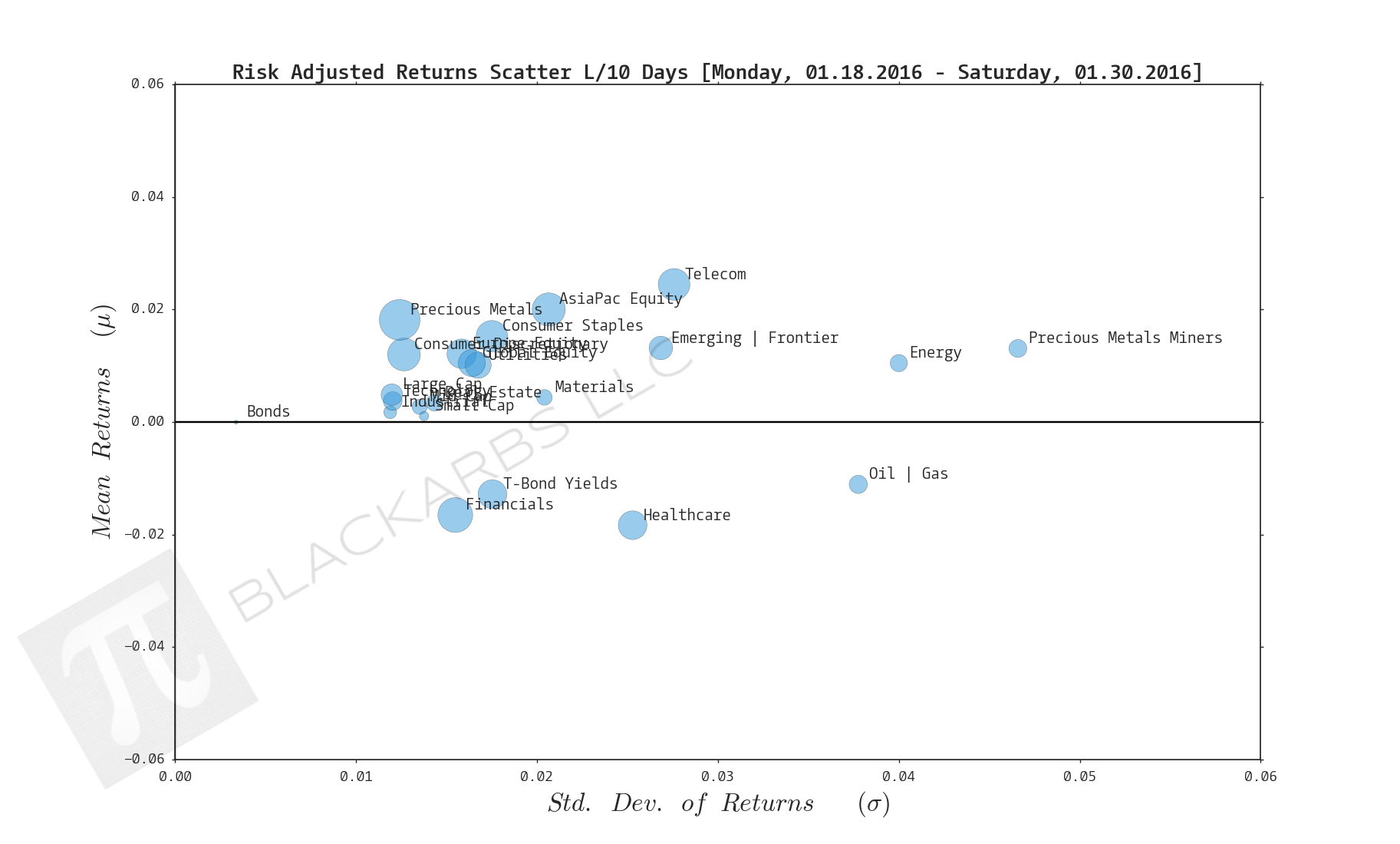
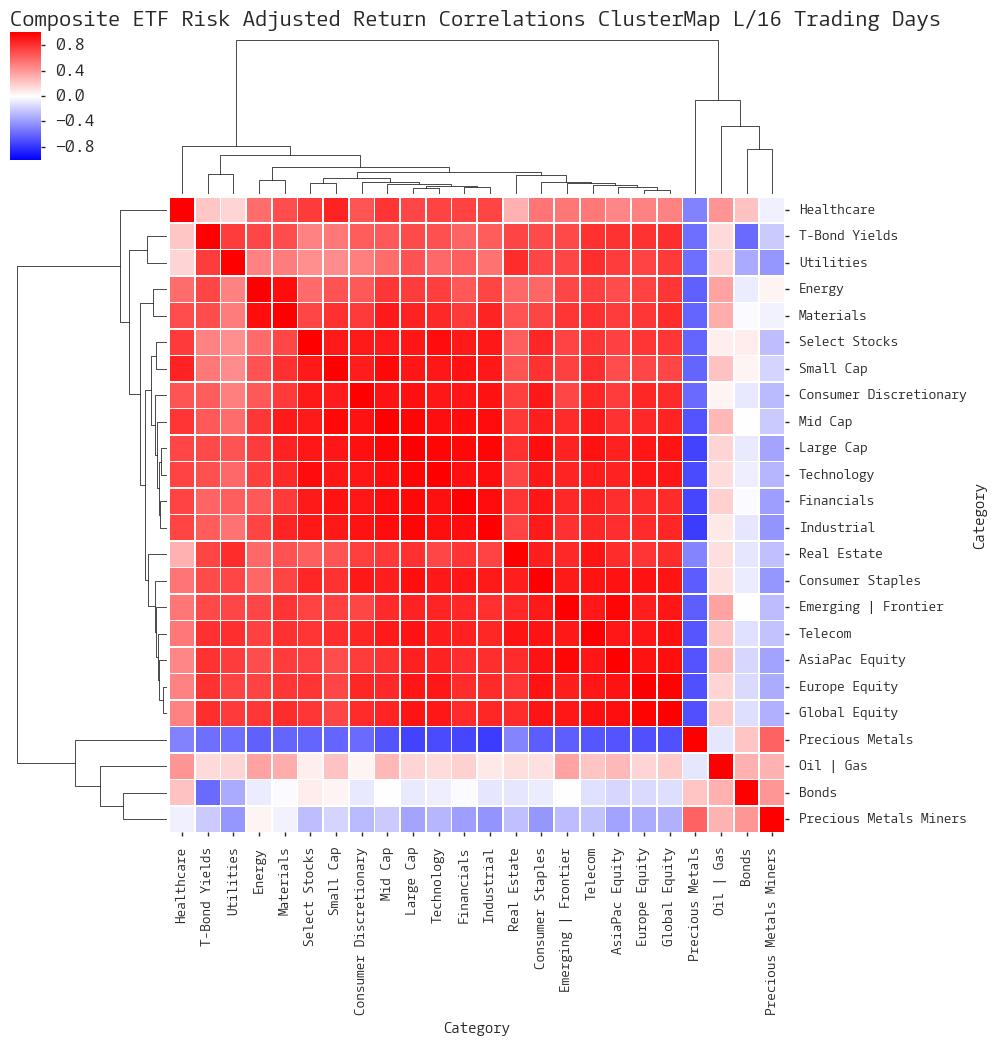
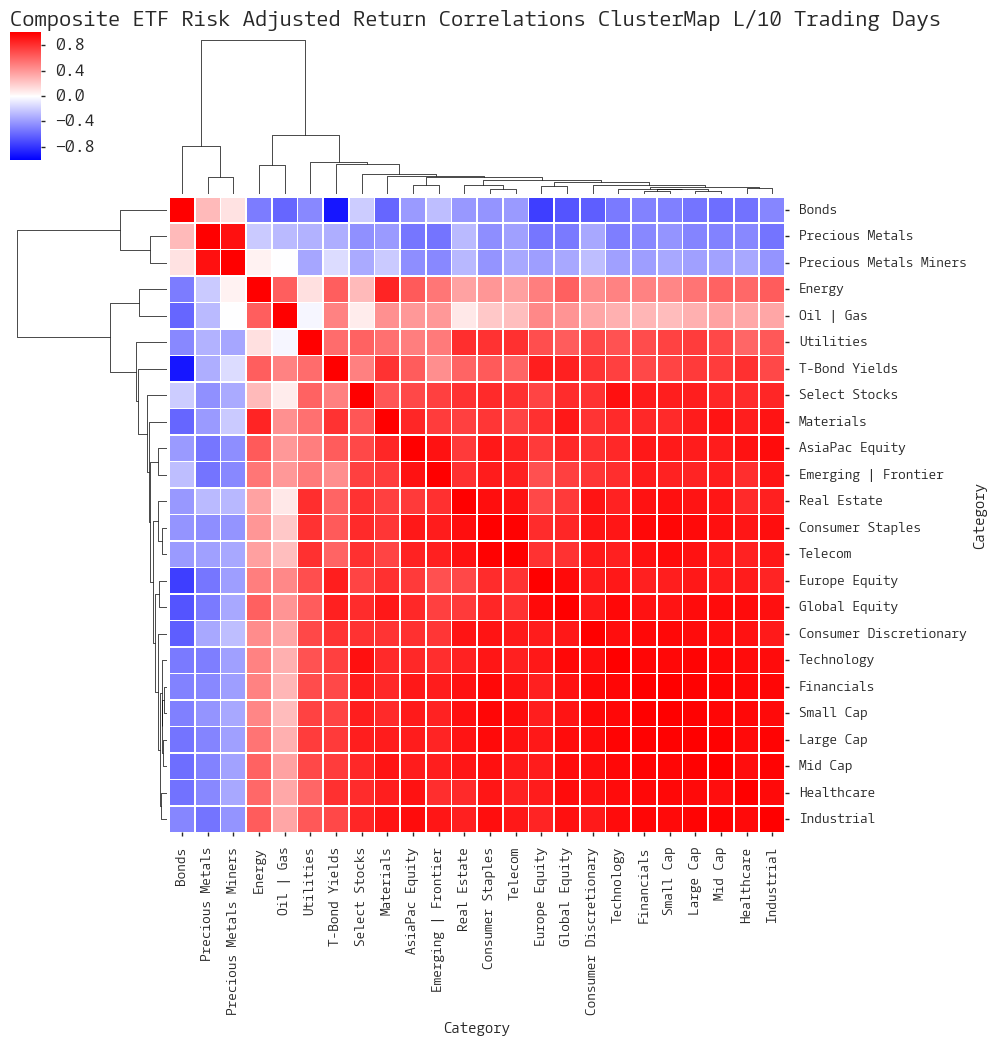
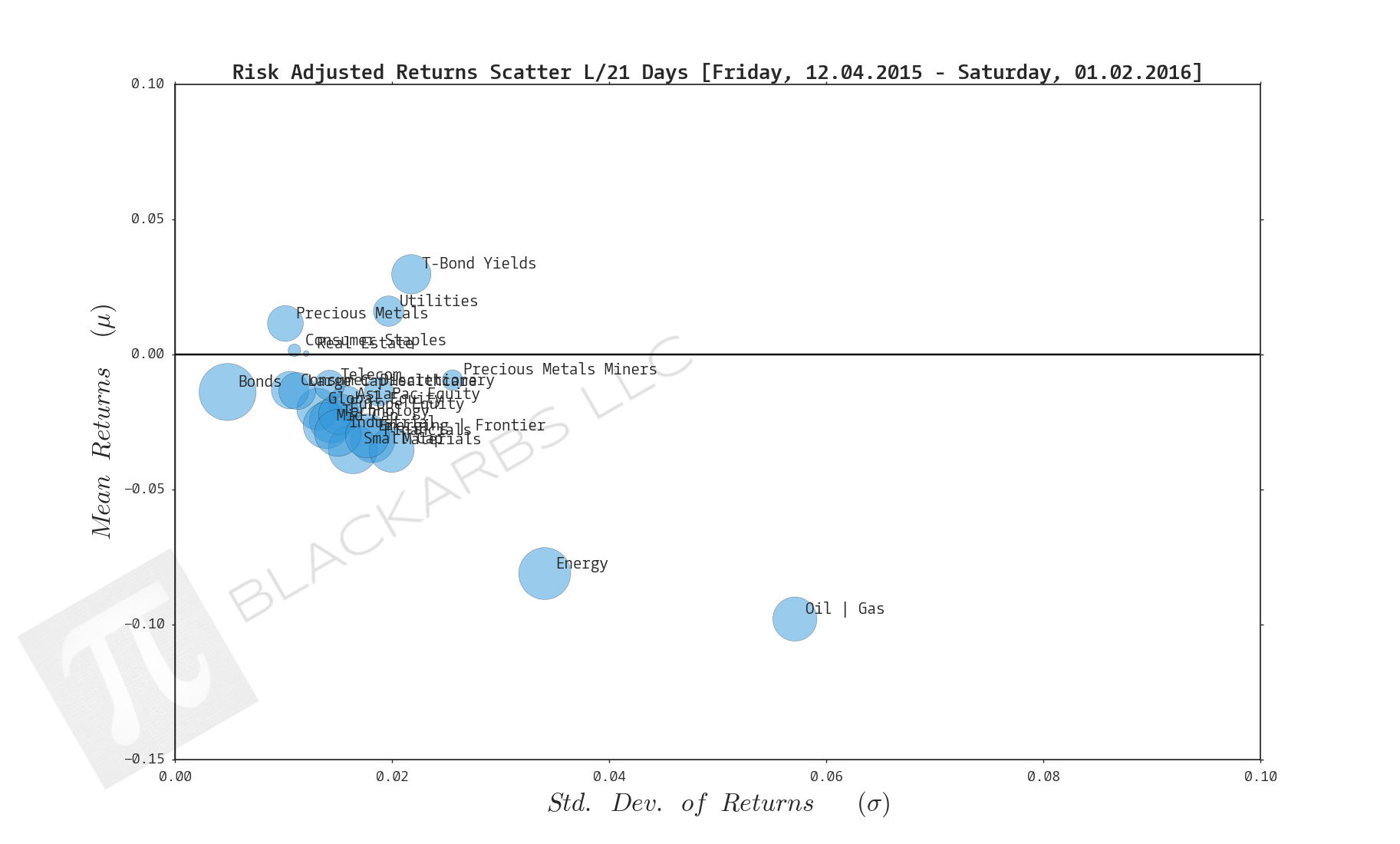
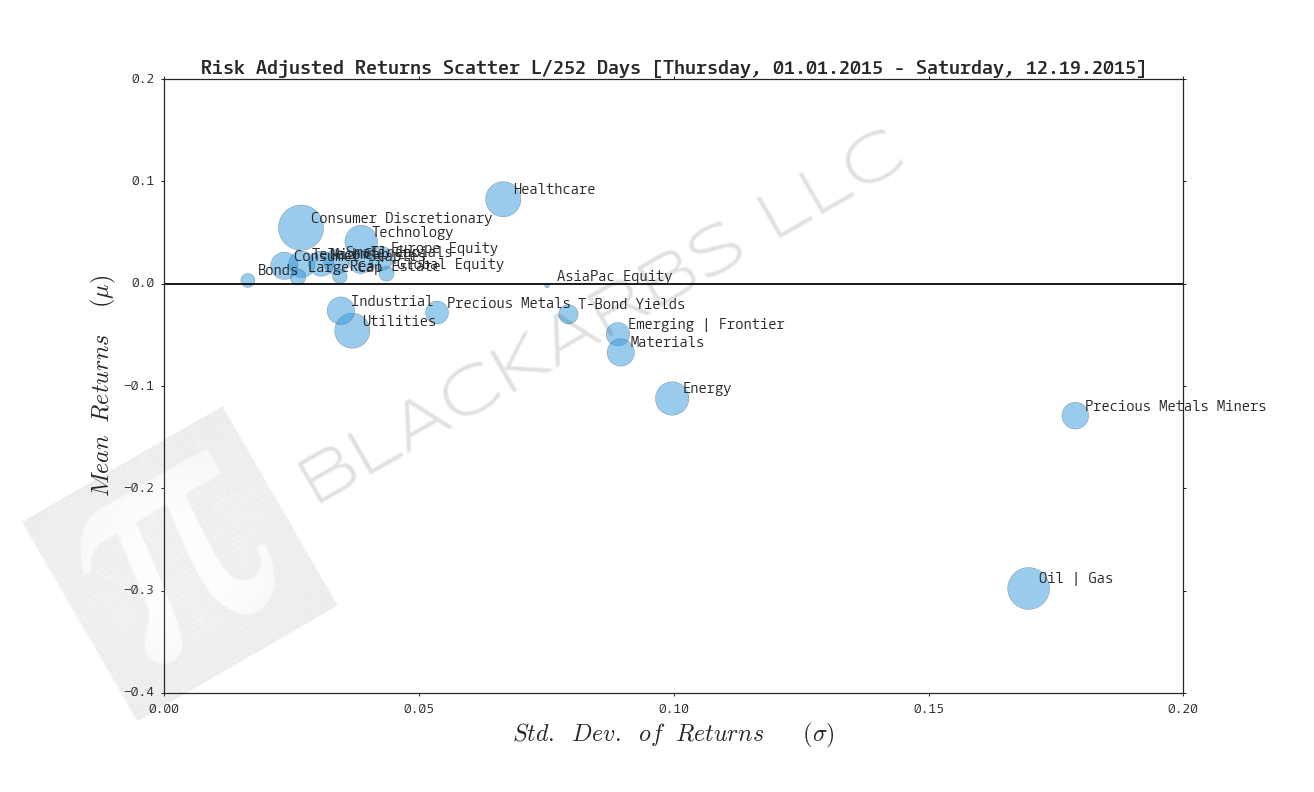
FOR A DEEPER DIVE INTO ETF PERFORMANCE AND RELATIVE VALUE SUBSCRIBE TO THE ETF INTERNAL ANALYTICS PACKAGE HERE LAYOUT (Organized by Time Period): Composite ETF Cumulative Returns Momentum Bar plot Composite ETF Cumulative Returns Line plot (best vs worst vs benchmark) Composite ETF Risk-Adjusted Returns Scatter plot (Std vs Mean) Composite ETF Risk-Adjusted Return Correlations Heatmap (Clusterplot) Implied Cost of Capital Estimates Composite ETF Cumulative Return Tables Notable Trends an

READ MORE
COMPOSITE MACRO ETF WEEKLY ANALYTICS (5/08/2016)
PythonGlobal Markets

COMPOSITE MACRO ETF WEEKLY ANALYTICS (5/08/2016)

FOR A DEEPER DIVE INTO ETF PERFORMANCE AND RELATIVE VALUE SUBSCRIBE TO THE ETF INTERNAL ANALYTICS PACKAGE HERE LAYOUT (Organized by Time Period): Composite ETF Cumulative Returns Momentum Bar plot Composite ETF Cumulative Returns Line plot (best vs worst vs benchmark) Composite ETF Risk-Adjusted Returns Scatter plot (Std vs Mean) Composite ETF Risk-Adjusted Return Correlations Heatmap (Clusterplot) Implied Cost of Capital Estimates Composite ETF Cumulative Return Tables Notable Trends an

READ MORE
COMPOSITE MACRO ETF WEEKLY ANALYTICS (4/30/2016)
PythonGlobal Markets

COMPOSITE MACRO ETF WEEKLY ANALYTICS (4/30/2016)

FOR A DEEPER DIVE INTO ETF PERFORMANCE AND RELATIVE VALUE SUBSCRIBE TO THE ETF INTERNAL ANALYTICS PACKAGE HERE LAYOUT (Organized by Time Period): Composite ETF Cumulative Returns Momentum Bar plot Composite ETF Cumulative Returns Line plot (best vs worst vs benchmark) Composite ETF Risk-Adjusted Returns Scatter plot (Std vs Mean) Composite ETF Risk-Adjusted Return Correlations Heatmap (Clusterplot) Implied Cost of Capital Estimates Composite ETF Cumulative Return Tables Notable Trends an

READ MORE
Exploring the Relationship Between SPY and TLT
PythonQuant

Exploring the Relationship Between SPY and TLT

In this post I examine the relationship between the SPY and TLT ETFs. This can be considered Part 2.5 of my series exploring the 2-Asset Leveraged ETF portfolio of UPRO and TMF. Thus far I've posted results of the strategy using two implementations: "Inverse Risk-Parity" and "Risk-Parity". I've also covered some key concepts behind investing in leveraged ETFs including convexity, and beta-slippage/decay. Now we can explore the strengths and weaknesses of the strategy. The strategy works because

READ MORE
COMPOSITE MACRO ETF WEEKLY ANALYTICS (4/17/2016)
PythonGlobal Markets

COMPOSITE MACRO ETF WEEKLY ANALYTICS (4/17/2016)

FOR A DEEPER DIVE INTO ETF PERFORMANCE AND RELATIVE VALUE SUBSCRIBE TO THE ETF INTERNAL ANALYTICS PACKAGE HERE LAYOUT (Organized by Time Period): Composite ETF Cumulative Returns Momentum Bar plot Composite ETF Cumulative Returns Line plot (best vs worst vs benchmark) Composite ETF Risk-Adjusted Returns Scatter plot (Std vs Mean) Composite ETF Risk-Adjusted Return Correlations Heatmap (Clusterplot) Implied Cost of Capital Estimates Composite ETF Cumulative Return Tables Notable Trends an

READ MORE
A Dead Simple 2-Asset Portfolio that Crushes the S&P500 (Part 2)
PythonQuant

A Dead Simple 2-Asset Portfolio that Crushes the S&P500 (Part 2)

In Part 1, and Part 1.5 I introduced a simple 2-asset portfolio that substantially outperformed the SPY ETF since 2009. In Part 1 I examined the performance of an "inverse risk-parity" approach where the ETF with the largest volatility contribution to the portfolio was weighted more heavily. In Part 1.5 I examined the performance of the actual "risk-parity" approach, where the ETF with the smallest volatility contribution is weighted more heavily. In this post I will examine some of the conceptu

READ MORE
A Dead Simple 2-Asset Portfolio that Crushes the S&P500 (Part 1.5)
PythonQuant

A Dead Simple 2-Asset Portfolio that Crushes the S&P500 (Part 1.5)

In Part 1 of this series I shared a simple strategy which showed outsized performance relative to the SPY ETF since 2009. I made a small error in the implementation. The previous portfolio was not rebalanced according to a risk-parity framework. It was actually the inverse. The strategy was rebalanced such that the ETF responsible for the highest percentage of the portfolio's volatility was weighted more heavily! Surprisingly this error did nothing to substantially alter the performance of the p

READ MORE
COMPOSITE MACRO ETF WEEKLY ANALYTICS (4/09/2016)
PythonGlobal Markets

COMPOSITE MACRO ETF WEEKLY ANALYTICS (4/09/2016)

Blog RSS FOR A DEEPER DIVE INTO ETF PERFORMANCE AND RELATIVE VALUE SUBSCRIBE TO THE ETF INTERNAL ANALYTICS PACKAGE HERE LAYOUT (Organized by Time Period): Composite ETF Cumulative Returns Momentum Bar plot Composite ETF Cumulative Returns Line plot Composite ETF Risk-Adjusted Returns Scatter plot (Std vs Mean) Composite ETF Risk-Adjusted Return Correlations Heatmap (Clusterplot) Implied Cost of Capital Estimates Composite ETF Cumulative Return Tables Notable Trends and Observati

READ MORE
A Dead Simple 2-Asset Portfolio that Crushes the S&P500 (Part 1)
PythonQuant

A Dead Simple 2-Asset Portfolio that Crushes the S&P500 (Part 1)

I'm going to share a portfolio with you that has absolutely annihilated the performance of the market (as proxied by SPY) since the recovery began in 2009*. The strategy has not had a down year since. This portfolio maintains constant exposure, has 1 un-optimized parameter and wins on a risk-adjusted basis even after considering reasonable transaction costs. I can't claim credit for the general idea. I found it in the comments section while reading a SeekingAlpha article written by Jonathan Kin

READ MORE
COMPOSITE MACRO ETF WEEKLY ANALYTICS (4/02/2016)
PythonGlobal Markets

COMPOSITE MACRO ETF WEEKLY ANALYTICS (4/02/2016)

Blog RSS FOR A DEEPER DIVE INTO ETF PERFORMANCE AND RELATIVE VALUE SUBSCRIBE TO THE ETF INTERNAL ANALYTICS PACKAGE HERE LAYOUT (Organized by Time Period): Composite ETF Cumulative Returns Momentum Bar plot Composite ETF Cumulative Returns Line plot Composite ETF Risk-Adjusted Returns Scatter plot (Std vs Mean) Composite ETF Risk-Adjusted Return Correlations Heatmap (Clusterplot) Implied Cost of Capital Estimates Composite ETF Cumulative Return Tables Notable Trends and Observat

READ MORE
Using ETF Internal Analytics to Identify Mean Reversion Opportunities (python)
PythonQuant

Using ETF Internal Analytics to Identify Mean Reversion Opportunities (python)

FOR A DEEPER DIVE INTO ETF PERFORMANCE AND RELATIVE VALUE SUBSCRIBE TO THE ETF INTERNAL ANALYTICS PACKAGE HERE Since I started producing the following graphic for the ETF Internal Analytics product, I found the weekly return bin information compelling. I became curious about whether there was an opportunity to be exploited in the distribution patterns. Blackarbs ETF Internal Analytics Sample for SPY I distilled all the questions I had into two: 1. Does the percentage of ETF component stocks

READ MORE
COMPOSITE MACRO ETF WEEKLY ANALYTICS (3/19/2016)
PythonGlobal Markets

COMPOSITE MACRO ETF WEEKLY ANALYTICS (3/19/2016)

FOR A DEEPER DIVE INTO ETF PERFORMANCE AND RELATIVE VALUE SUBSCRIBE TO THE ETF INTERNAL ANALYTICS PACKAGE HERE LAYOUT (Organized by Time Period): Composite ETF Cumulative Returns Momentum Bar plot Composite ETF Cumulative Returns Line plot Composite ETF Risk-Adjusted Returns Scatter plot (Std vs Mean) Composite ETF Risk-Adjusted Return Correlations Heatmap (Clusterplot) Implied Cost of Capital Estimates Composite ETF Cumulative Return Tables Notable Trends and Observations COMP

READ MORE
PythonQuant

USING IMPLIED VOLATILITY TO PREDICT ETF RETURNS (3/19/16)

FOR A DEEPER DIVE INTO ETF PERFORMANCE AND RELATIVE VALUE SUBSCRIBE TO THE ETF INTERNAL ANALYTICS PACKAGE HERE To see the origin of this series click here In the paper that inspired this series ("What Does Individual Option Volatility Smirk Tell Us About Future Equity Returns") the authors' research shows that their calculation of the Option Volatility Smirk is predictive of equity returns up to 4 weeks. Therefore, each week, I will calculate the Long/Short legs of a portfolio constructed by f

READ MORE
USING IMPLIED VOLATILITY TO PREDICT ETF RETURNS (3/14/16)
PythonQuant

USING IMPLIED VOLATILITY TO PREDICT ETF RETURNS (3/14/16)

FOR A DEEPER DIVE INTO ETF PERFORMANCE AND RELATIVE VALUE SUBSCRIBE TO THE ETF INTERNAL ANALYTICS PACKAGE HERE To see the origin of this series click here In the paper that inspired this series ("What Does Individual Option Volatility Smirk Tell Us About Future Equity Returns") the authors' research shows that their calculation of the Option Volatility Smirk is predictive of equity returns up to 4 weeks. Therefore, each week, I will calculate the Long/Short legs of a portfolio constructed by f

READ MORE
COMPOSITE MACRO ETF WEEKLY ANALYTICS (3/05/2016)
Global MarketsPython

COMPOSITE MACRO ETF WEEKLY ANALYTICS (3/05/2016)

FOR A DEEPER DIVE INTO ETF PERFORMANCE AND RELATIVE VALUE SUBSCRIBE TO THE ETF INTERNAL ANALYTICS PACKAGE HERE LAYOUT (Organized by Time Period): Composite ETF Cumulative Returns Momentum Bar plot Composite ETF Cumulative Returns Line plot Composite ETF Risk-Adjusted Returns Scatter plot (Std vs Mean) Composite ETF Risk-Adjusted Return Correlations Heatmap (Clusterplot) Implied Cost of Capital Estimates Composite ETF Cumulative Return Tables Notable Trends and Observations COMP

READ MORE
COMPOSITE MACRO ETF WEEKLY ANALYTICS (2/27/2016)
Global MarketsPython

COMPOSITE MACRO ETF WEEKLY ANALYTICS (2/27/2016)

FOR A DEEPER DIVE INTO ETF PERFORMANCE AND RELATIVE VALUE SUBSCRIBE TO THE ETF INTERNAL ANALYTICS PACKAGE HERE LAYOUT (Organized by Time Period): Notable Trends and Observations Composite ETF Cumulative Returns Momentum Bar plot Composite ETF Cumulative Returns Line plot Composite ETF Risk-Adjusted Returns Scatter plot (Std vs Mean) Composite ETF Risk-Adjusted Return Correlations Heatmap (Clusterplot) Implied Cost of Capital Estimates Composite ETF Cumulative Return Tables COMP

READ MORE
COMPOSITE MACRO ETF WEEKLY ANALYTICS (2/20/2016)
PythonGlobal Markets

COMPOSITE MACRO ETF WEEKLY ANALYTICS (2/20/2016)

#block-yui_3_17_2_2_1456020426677_173171 .social-icons-style-border .sqs-svg-icon--wrapper { box-shadow: 0 0 0 2px inset; border: none; } FOR A DEEPER DIVE INTO ETF PERFORMANCE AND RELATIVE VALUE SUBSCRIBE TO THE ETF INTERNAL ANALYTICS PACKAGE HERE LAYOUT (Organized by Time Period): Composite ETF Cumulative Returns Momentum Bar plot Composite ETF Cumulative Returns Line plot Composite ETF Risk-Adjusted Returns Scatter plot (Std vs Mean) Composite ETF Risk-Adjusted Return Correlations

READ MORE
Backtesting the Implied Volatility Strategy with Quantopian (2/17/16)
PythonQuant

Backtesting the Implied Volatility Strategy with Quantopian (2/17/16)

#block-yui_3_17_2_3_1455744353210_9420 .social-icons-style-border .sqs-svg-icon--wrapper { box-shadow: 0 0 0 2px inset; border: none; } To see the origin of this series click here. I've been tracking this strategy for ~7 weeks now and it appears to have substance. To summarize, the strategy calculates a SKEW measure using ATM calls and OTM puts for a collection of ETF symbols. It then sorts the symbols into quintiles based on the SKEW metric. Using daily close/close return calculations for th

READ MORE
COMPOSITE MACRO ETF WEEKLY ANALYTICS (2/13/2016)
Global MarketsPython

COMPOSITE MACRO ETF WEEKLY ANALYTICS (2/13/2016)

#block-yui_3_17_2_4_1455394346404_17847 .social-icons-style-border .sqs-svg-icon--wrapper { box-shadow: 0 0 0 2px inset; border: none; } FOR A DEEPER DIVE INTO ETF PERFORMANCE AND RELATIVE VALUE SUBSCRIBE TO THE ETF INTERNAL ANALYTICS PACKAGE HERE LAYOUT (Organized by Time Period): Composite ETF Cumulative Returns Momentum Bar plot Composite ETF Cumulative Returns Line plot Composite ETF Risk-Adjusted Returns Scatter plot (Std vs Mean) Composite ETF Risk-Adjusted Return Correlations

READ MORE
USING IMPLIED VOLATILITY TO PREDICT ETF RETURNS (2/06/16)
PythonGlobal Markets

USING IMPLIED VOLATILITY TO PREDICT ETF RETURNS (2/06/16)

To see the origin of this series click here In the paper that inspired this series ("What Does Individual Option Volatility Smirk Tell Us About Future Equity Returns") the authors' research shows that their calculation of the Option Volatility Smirk is predictive of equity returns up to 4 weeks. Therefore, each week, I will calculate the Long/Short legs of a portfolio constructed by following their criteria as closely as possible. However this study will focus on ETF's as opposed to single name

READ MORE
COMPOSITE MACRO ETF WEEKLY ANALYTICS (2/06/2016)
PythonQuant

COMPOSITE MACRO ETF WEEKLY ANALYTICS (2/06/2016)

FOR A DEEPER DIVE INTO ETF PERFORMANCE AND RELATIVE VALUE SUBSCRIBE TO THE ETF INTERNAL ANALYTICS PACKAGE HERE LAYOUT (Organized by Time Period): Composite ETF Cumulative Returns Momentum Bar plot Composite ETF Cumulative Returns Line plot Composite ETF Risk-Adjusted Returns Scatter plot (Std vs Mean) Composite ETF Risk-Adjusted Return Correlations Heatmap (Clusterplot) Implied Cost of Capital Estimates Composite ETF Cumulative Return Tables Notable Trends and Observations COMP

READ MORE
USING IMPLIED VOLATILITY TO PREDICT ETF RETURNS (1/30/16)
PythonGlobal Markets

USING IMPLIED VOLATILITY TO PREDICT ETF RETURNS (1/30/16)

To see the origin of this series click here In the paper that inspired this series ("What Does Individual Option Volatility Smirk Tell Us About Future Equity Returns") the authors' research shows that their calculation of the Option Volatility Smirk is predictive of equity returns up to 4 weeks. Therefore, each week, I will calculate the Long/Short legs of a portfolio constructed by following their criteria as closely as possible. However this study will focus on ETF's as opposed to single name

READ MORE
COMPOSITE MACRO ETF WEEKLY IMPLIED COST-OF-CAPITAL ESTIMATES VS. CUMULATIVE RETURNS (1/30/16)
PythonGlobal Markets

COMPOSITE MACRO ETF WEEKLY IMPLIED COST-OF-CAPITAL ESTIMATES VS. CUMULATIVE RETURNS (1/30/16)

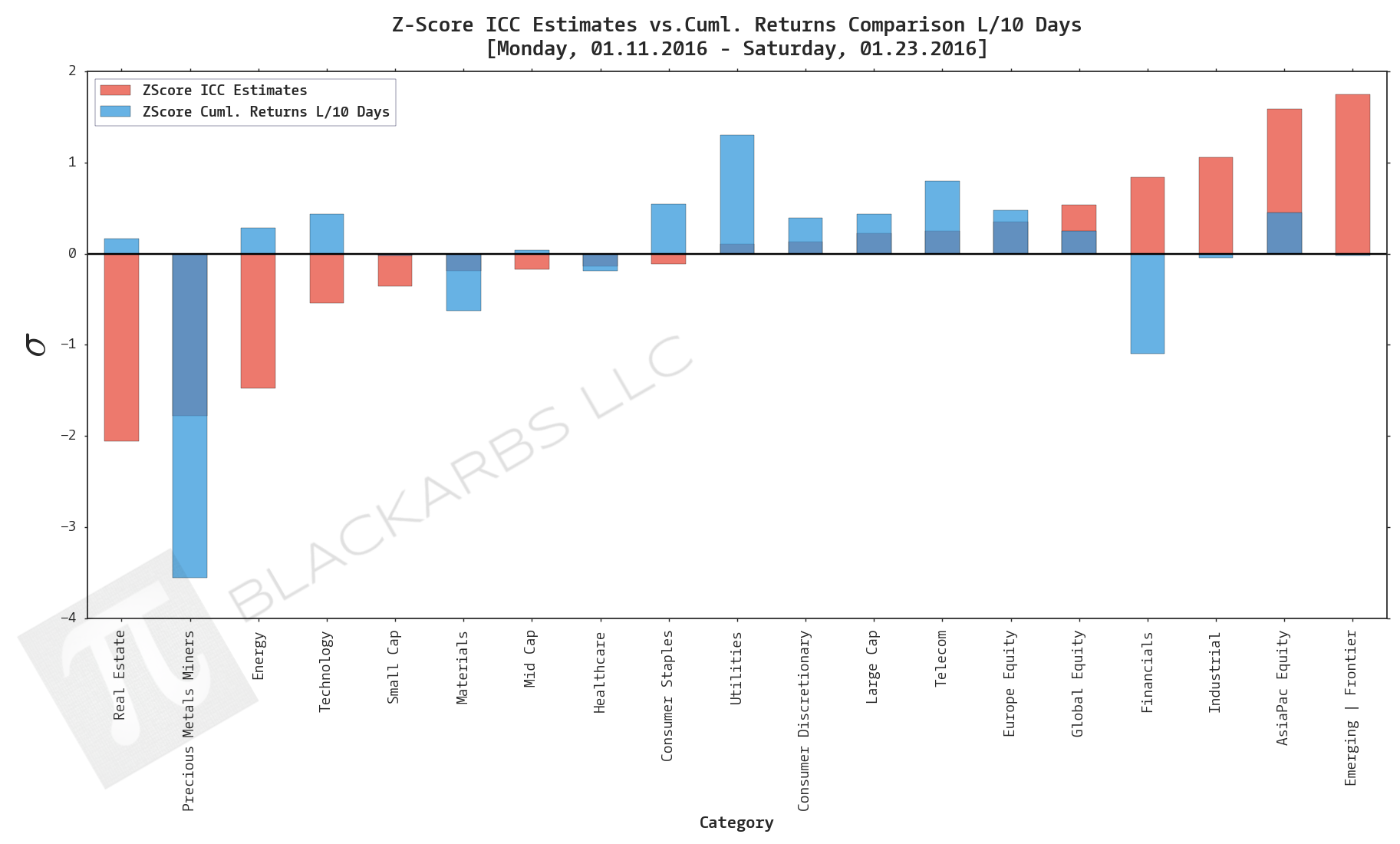
WHAT IS THE "IMPLIED COST OF CAPITAL (ICC)" MODEL? “In accounting and finance the implied cost of equity capital (ICC)—defined as the internal rate of return that equates the current stock price to discounted expected future dividends—is an increasingly popular class of proxies for the expected rate of equity returns. ” — CHARLES C. Y. WANG; an assistant professor of business administration in the Accounting and Management Unit at Harvard Business School The basic concept of the ICC model is

READ MORE
COMPOSITE MACRO ETF WEEKLY ANALYTICS (1/30/2016)
Global MarketsPython

COMPOSITE MACRO ETF WEEKLY ANALYTICS (1/30/2016)

LAYOUT (Organized by Time Period): Composite ETF Cumulative Returns Momentum Bar plot Composite ETF Cumulative Returns Line plot Composite ETF Risk-Adjusted Returns Scatter plot (Std vs Mean) Composite ETF Risk-Adjusted Return Correlations Heatmap (Clusterplot) Composite ETF Cumulative Return Tables Notable Trends and Observations COMPOSITE ETF COMPONENTS: LAST 252 TRADING DAYS Click here for help understanding this chart Click here for help understanding this chart Click here

READ MORE
USING IMPLIED VOLATILITY TO PREDICT ETF RETURNS (1/23/16)
PythonGlobal Markets

USING IMPLIED VOLATILITY TO PREDICT ETF RETURNS (1/23/16)

To see the origin of this series click here In the paper that inspired this series ("What Does Individual Option Volatility Smirk Tell Us About Future Equity Returns") the authors' research shows that their calculation of the Option Volatility Smirk is predictive of equity returns up to 4 weeks. Therefore, each week, I will calculate the Long/Short legs of a portfolio constructed by following their criteria as closely as possible. However this study will focus on ETF's as opposed to single name

READ MORE
COMPOSITE MACRO ETF WEEKLY IMPLIED COST-OF-CAPITAL ESTIMATES VS. CUMULATIVE RETURNS (1/23/16)
PythonGlobal Markets

COMPOSITE MACRO ETF WEEKLY IMPLIED COST-OF-CAPITAL ESTIMATES VS. CUMULATIVE RETURNS (1/23/16)

WHAT IS THE "IMPLIED COST OF CAPITAL (ICC)" MODEL? “In accounting and finance the implied cost of equity capital (ICC)—defined as the internal rate of return that equates the current stock price to discounted expected future dividends—is an increasingly popular class of proxies for the expected rate of equity returns. ” — CHARLES C. Y. WANG; an assistant professor of business administration in the Accounting and Management Unit at Harvard Business School The basic concept of the ICC model is

READ MORE
COMPOSITE MACRO ETF WEEKLY ANALYTICS (1/23/2016)
Global MarketsPython

COMPOSITE MACRO ETF WEEKLY ANALYTICS (1/23/2016)

LAYOUT (Organized by Time Period): Composite ETF Cumulative Returns Momentum Bar plot Composite ETF Cumulative Returns Line plot Composite ETF Risk-Adjusted Returns Scatter plot (Std vs Mean) Composite ETF Risk-Adjusted Return Correlations Heatmap (Clusterplot) Composite ETF Cumulative Return Tables Notable Trends and Observations COMPOSITE ETF COMPONENTS: LAST 252 TRADING DAYS Click here for help understanding this chart Click here for help understanding this chart Click here

READ MORE
USING IMPLIED VOLATILITY TO PREDICT ETF RETURNS (1/17/16)
ResearchQuant

USING IMPLIED VOLATILITY TO PREDICT ETF RETURNS (1/17/16)

To see the origin of this series click here In the paper that inspired this series ("What Does Individual Option Volatility Smirk Tell Us About Future Equity Returns") the authors' research shows that their calculation of the Option Volatility Smirk is predictive of equity returns up to 4 weeks. Therefore, each week, I will calculate the Long/Short legs of a portfolio constructed by following their criteria as closely as possible. However this study will focus on ETF's as opposed to single name

READ MORE
COMPOSITE MACRO ETF WEEKLY IMPLIED COST-OF-CAPITAL ESTIMATES VS. CUMULATIVE RETURNS (1/16/16)
Global MarketsPython

COMPOSITE MACRO ETF WEEKLY IMPLIED COST-OF-CAPITAL ESTIMATES VS. CUMULATIVE RETURNS (1/16/16)

WHAT IS THE "IMPLIED COST OF CAPITAL (ICC)" MODEL? “In accounting and finance the implied cost of equity capital (ICC)—defined as the internal rate of return that equates the current stock price to discounted expected future dividends—is an increasingly popular class of proxies for the expected rate of equity returns. ” — CHARLES C. Y. WANG; an assistant professor of business administration in the Accounting and Management Unit at Harvard Business School The basic concept of the ICC model is

READ MORE
COMPOSITE MACRO ETF WEEKLY ANALYTICS (1/16/2016)
Global MarketsPython

COMPOSITE MACRO ETF WEEKLY ANALYTICS (1/16/2016)

LAYOUT (Organized by Time Period): Composite ETF Cumulative Returns Momentum Bar plot Composite ETF Cumulative Returns Line plot Composite ETF Risk-Adjusted Returns Scatter plot (Std vs Mean) Composite ETF Risk-Adjusted Return Correlations Heatmap (Clusterplot) Composite ETF Cumulative Return Tables Notable Trends and Observations COMPOSITE ETF COMPONENTS: LAST 252 TRADING DAYS Click here for help understanding this chart Click here for help understanding this chart Click here

READ MORE
USING IMPLIED VOLATILITY TO PREDICT EQUITY/ETF RETURNS (1/11/16)
PythonQuant

USING IMPLIED VOLATILITY TO PREDICT EQUITY/ETF RETURNS (1/11/16)

To see the origin of this series click here In the paper that inspired this series ("What Does Individual Option Volatility Smirk Tell Us About Future Equity Returns") the authors research shows that Option Volatility Smirk they calculate is predictive up to 4 weeks. Therefore, each week, I will calculate the Long/Short legs of a portfolio constructed by following their criteria as closely as possible. I will then track the results of the Long/Short portfolio, in equity returns, cumulatively fo

READ MORE
COMPOSITE MACRO ETF WEEKLY ANALYTICS (1/09/2016)
Global MarketsPython

COMPOSITE MACRO ETF WEEKLY ANALYTICS (1/09/2016)

LAYOUT (Organized by Time Period): Composite ETF Cumulative Returns Momentum Bar plot Composite ETF Cumulative Returns Line plot Composite ETF Risk-Adjusted Returns Scatter plot (Std vs Mean) Composite ETF Risk-Adjusted Return Correlations Heatmap (Clusterplot) Composite ETF Cumulative Return Tables Notable Trends and Observations COMPOSITE ETF COMPONENTS: LAST 252 TRADING DAYS Click here for help understanding this chart Click here for help understanding this chart Click here

READ MORE
Using Implied Volatility to Predict Equity/ETF Returns
Equity AnalysisPython

Using Implied Volatility to Predict Equity/ETF Returns

During a discussion with an knowledgeable options trader, I was told the significance of interpreting the "Implied Volatility Skew" for stocks and given a paper to read for homework. To get a basic understanding of Implied Volatility Skew see this link here. The paper I was told to read was "What Does Individual Option Volatility Smirk Tell Us About Future Equity Returns" by Yuhang Xing, Xiaoyan Zhang and Rui Zhao. In their paper they show empirically, using their SKEW measure, allowed one to p

READ MORE
COMPOSITE MACRO ETF WEEKLY ANALYTICS (1/02/2016)
Global MarketsPython

COMPOSITE MACRO ETF WEEKLY ANALYTICS (1/02/2016)

LAYOUT (Organized by Time Period): Composite ETF Cumulative Returns Momentum Bar plot Composite ETF Cumulative Returns Line plot Composite ETF Risk-Adjusted Returns Scatter plot (Std vs Mean) Composite ETF Risk-Adjusted Return Correlations Heatmap (Clusterplot) Composite ETF Cumulative Return Tables Notable Trends and Observations COMPOSITE ETF COMPONENTS: LAST 252 TRADING DAYS Click here for help understanding this chart Click here for help understanding this chart Click here

READ MORE
PythonQuant

COMPOSITE MACRO ETF WEEKLY ANALYTICS (12/26/2015)

LAYOUT (Organized by Time Period): Composite ETF Cumulative Returns Momentum Bar plot Composite ETF Cumulative Returns Line plot Composite ETF Risk-Adjusted Returns Scatter plot (Std vs Mean) Composite ETF Risk-Adjusted Return Correlations Heatmap (Clusterplot) Composite ETF Cumulative Return Tables Notable Trends and Observations COMPOSITE ETF COMPONENTS: LAST 252 TRADING DAYS Click here for help understanding this chart Click here for help understanding this chart Click here

READ MORE
COMPOSITE MACRO ETF WEEKLY ANALYTICS (12/19/2015)
PythonGlobal Markets

COMPOSITE MACRO ETF WEEKLY ANALYTICS (12/19/2015)

LAYOUT (Organized by Time Period): Composite ETF Cumulative Returns Momentum Bar plot Composite ETF Cumulative Returns Line plot Composite ETF Risk-Adjusted Returns Scatter plot (Std vs Mean) Composite ETF Risk-Adjusted Return Correlations Heatmap (Clusterplot) Composite ETF Cumulative Return Tables Notable Trends and Observations COMPOSITE ETF COMPONENTS: LAST 252 TRADING DAYS Click here for help understanding this chart Click here for help understanding this chart Click here

READ MORE
COMPOSITE MACRO ETF WEEKLY ANALYTICS (12/13/2015)
Global MarketsPython

COMPOSITE MACRO ETF WEEKLY ANALYTICS (12/13/2015)

LAYOUT (Organized by Time Period): Composite ETF Cumulative Returns Momentum Bar plot Composite ETF Cumulative Returns Line plot Composite ETF Risk-Adjusted Returns Scatter plot (Std vs Mean) Composite ETF Risk-Adjusted Return Correlations Heatmap (Clusterplot) Composite ETF Cumulative Return Tables Notable Trends and Observations COMPOSITE ETF COMPONENTS: YEAR-TO-DATE LAST 247 TRADING DAYS Click here for help understanding this Chart Click here for help understanding this Char

READ MORE
COMPOSITE MACRO ETF WEEKLY ANALYTICS (12/06/2015)
Global MarketsPython

COMPOSITE MACRO ETF WEEKLY ANALYTICS (12/06/2015)

LAYOUT (Organized by Time Period): Composite ETF Cumulative Returns Momentum Bar plot and associated Tables Composite ETF Cumulative Returns Line plot Composite ETF Risk-Adjusted Returns Scatter plot (Std vs Mean) Composite ETF Risk-Adjusted Return Correlations Heatmap (Clusterplot) COMPOSITE ETF COMPONENTS: YEAR-TO-DATE LAST 242 TRADING DAYS Click here for help understanding this Chart Click here for help understanding this Chart Click here for help understanding this Chart Clic

READ MORE
COMPOSITE MACRO ETF WEEKLY IMPLIED COST-OF-CAPITAL ESTIMATES VS. CUMULATIVE RETURNS (11/28/15)
PythonGlobal Markets

COMPOSITE MACRO ETF WEEKLY IMPLIED COST-OF-CAPITAL ESTIMATES VS. CUMULATIVE RETURNS (11/28/15)

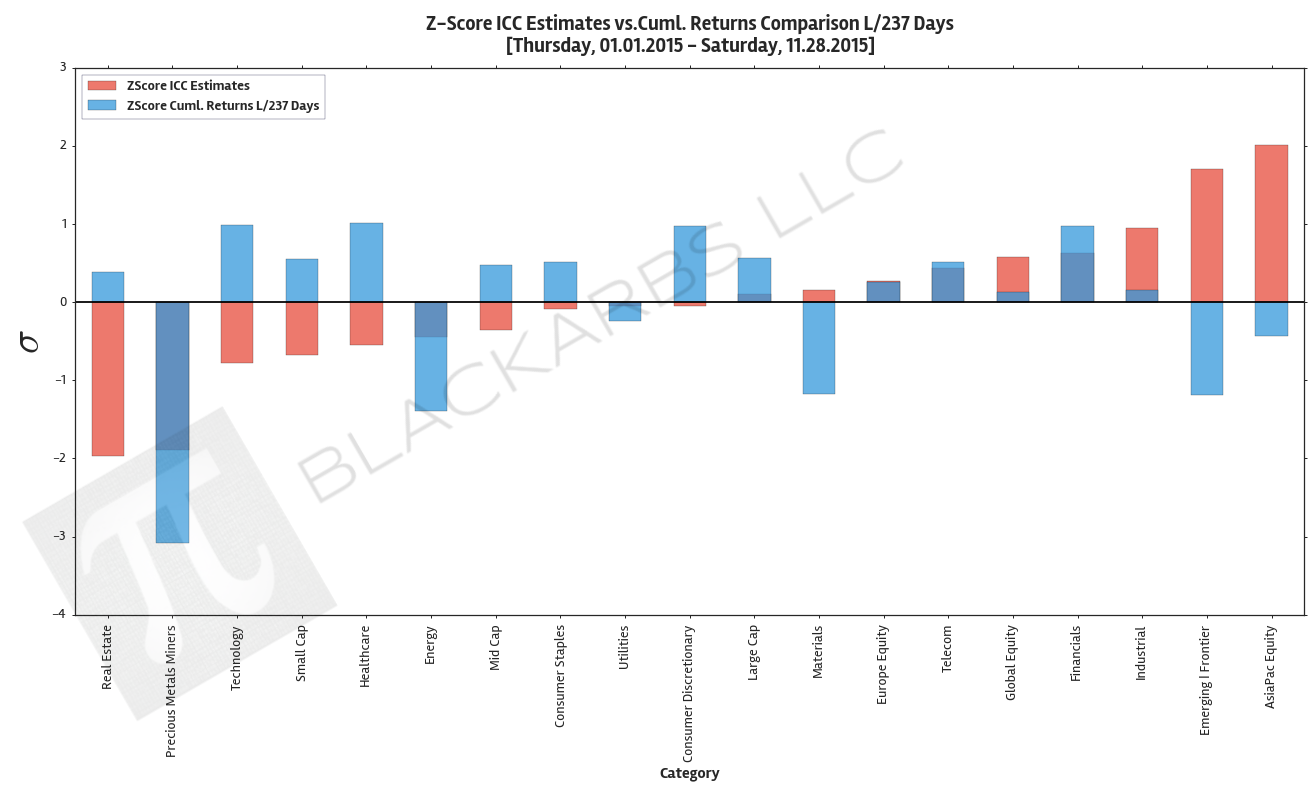
WHAT IS THE "IMPLIED COST OF CAPITAL (ICC)" MODEL? “In accounting and finance the implied cost of equity capital (ICC)—defined as the internal rate of return that equates the current stock price to discounted expected future dividends—is an increasingly popular class of proxies for the expected rate of equity returns. ” — CHARLES C. Y. WANG; an assistant professor of business administration in the Accounting and Management Unit at Harvard Business School The basic concept of the ICC model is

READ MORE
COMPOSITE MACRO ETF WEEKLY ANALYTICS (11/28/2015)
PythonGlobal Markets

COMPOSITE MACRO ETF WEEKLY ANALYTICS (11/28/2015)

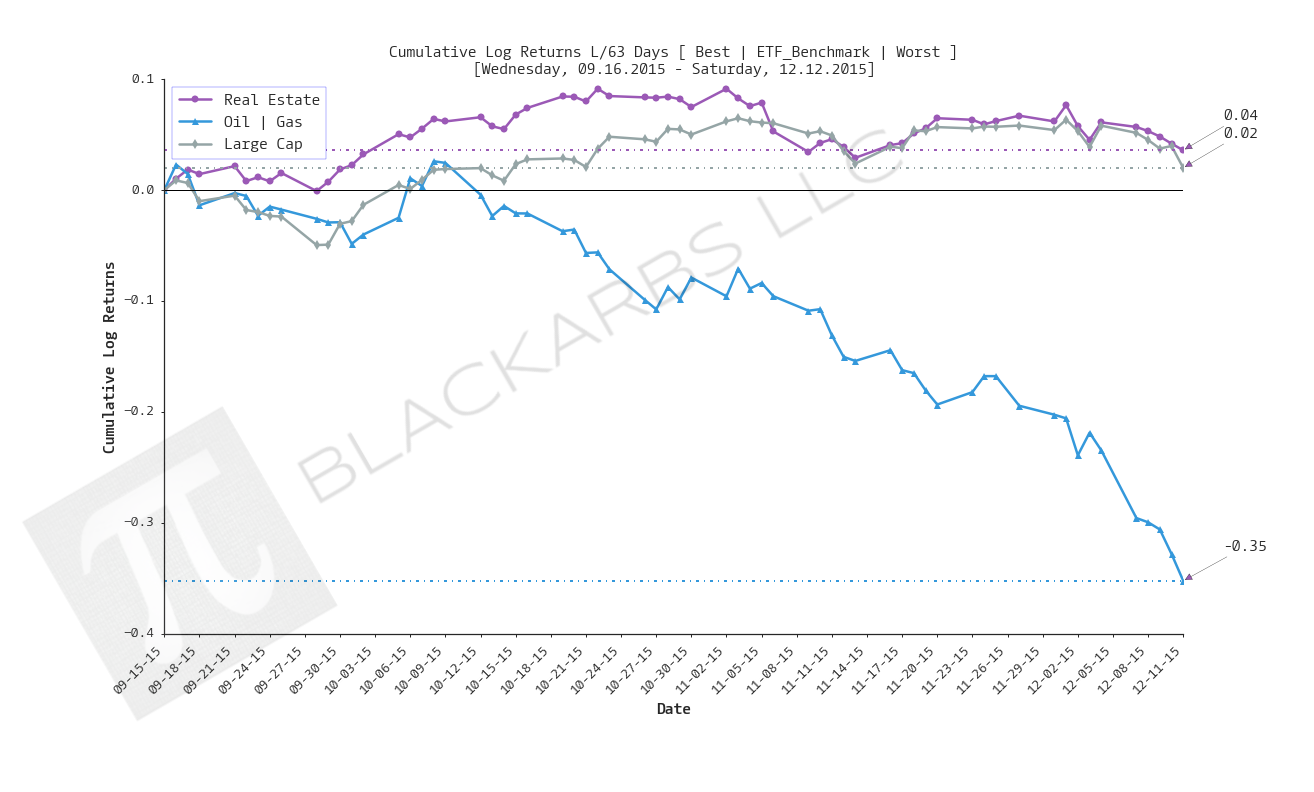
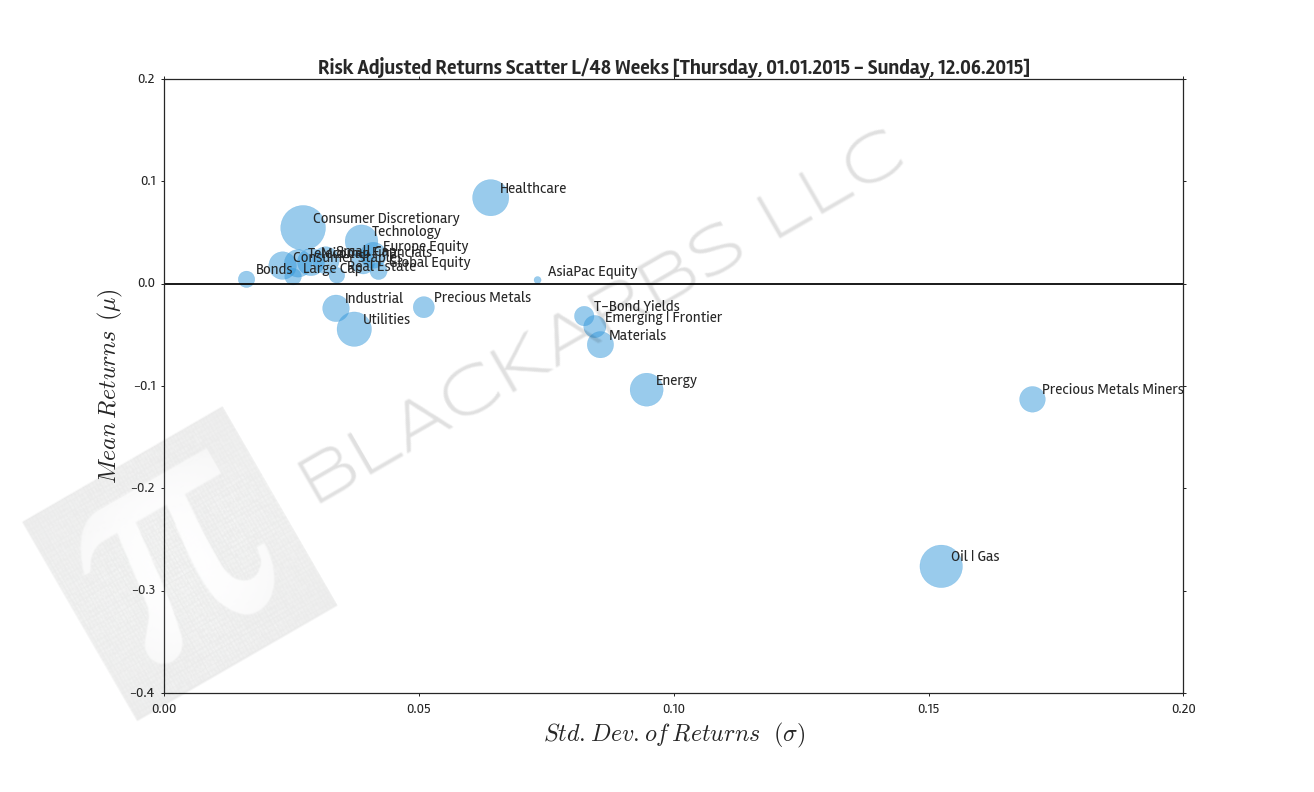
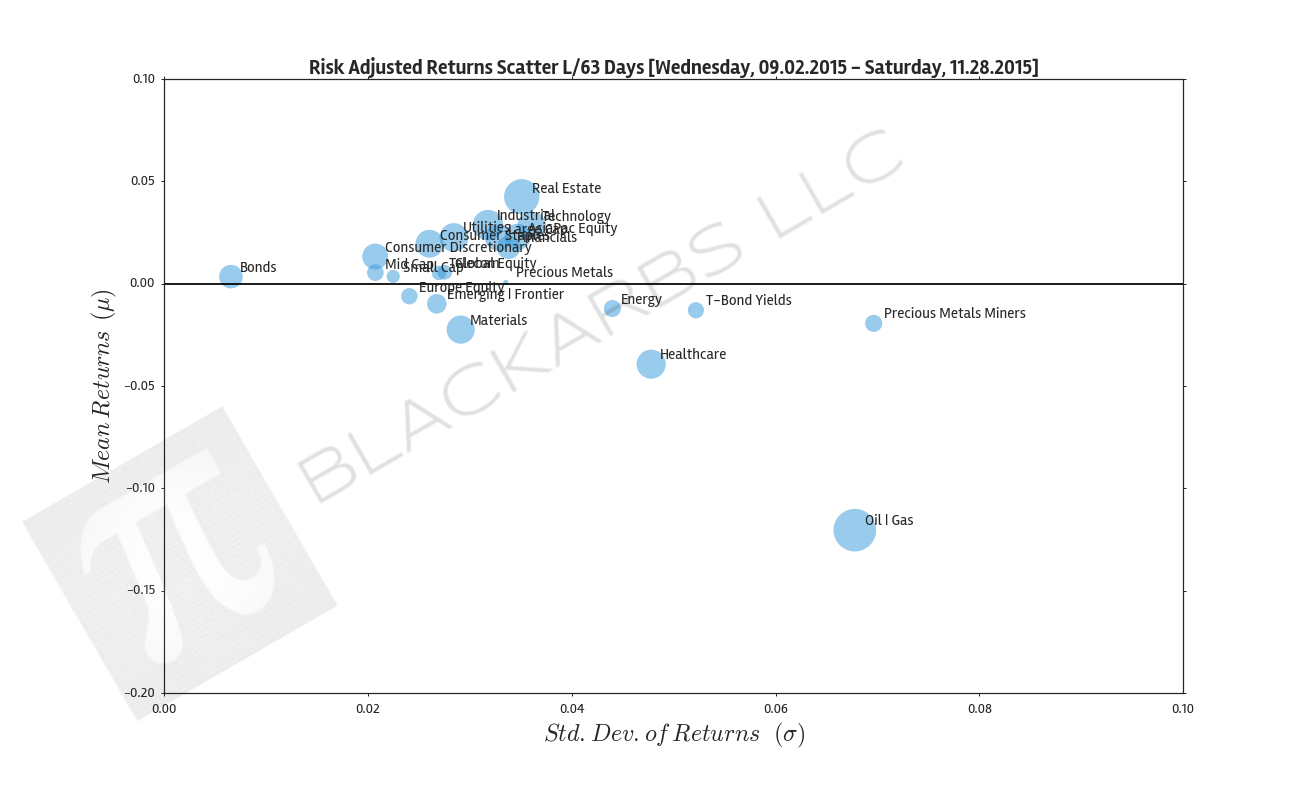
NEW LAYOUT (Organized by Time Period): Composite ETF Cumulative Returns Momentum Bar plot and associated Tables Composite ETF Cumulative Returns Line plot Composite ETF Risk-Adjusted Returns Scatter plot (Std vs Mean) Composite ETF Risk-Adjusted Return Correlations Heatmap (Clusterplot) COMPOSITE ETF COMPONENTS: YEAR-TO-DATE LAST 237 TRADING DAYS Click here for help understanding this Chart Click here for help understanding this Chart Click here for help understanding this Chart

READ MORE
COMPOSITE MACRO ETF WEEKLY IMPLIED COST-OF-CAPITAL ESTIMATES VS. CUMULATIVE RETURNS (11/21/15)
PythonGlobal Markets

COMPOSITE MACRO ETF WEEKLY IMPLIED COST-OF-CAPITAL ESTIMATES VS. CUMULATIVE RETURNS (11/21/15)

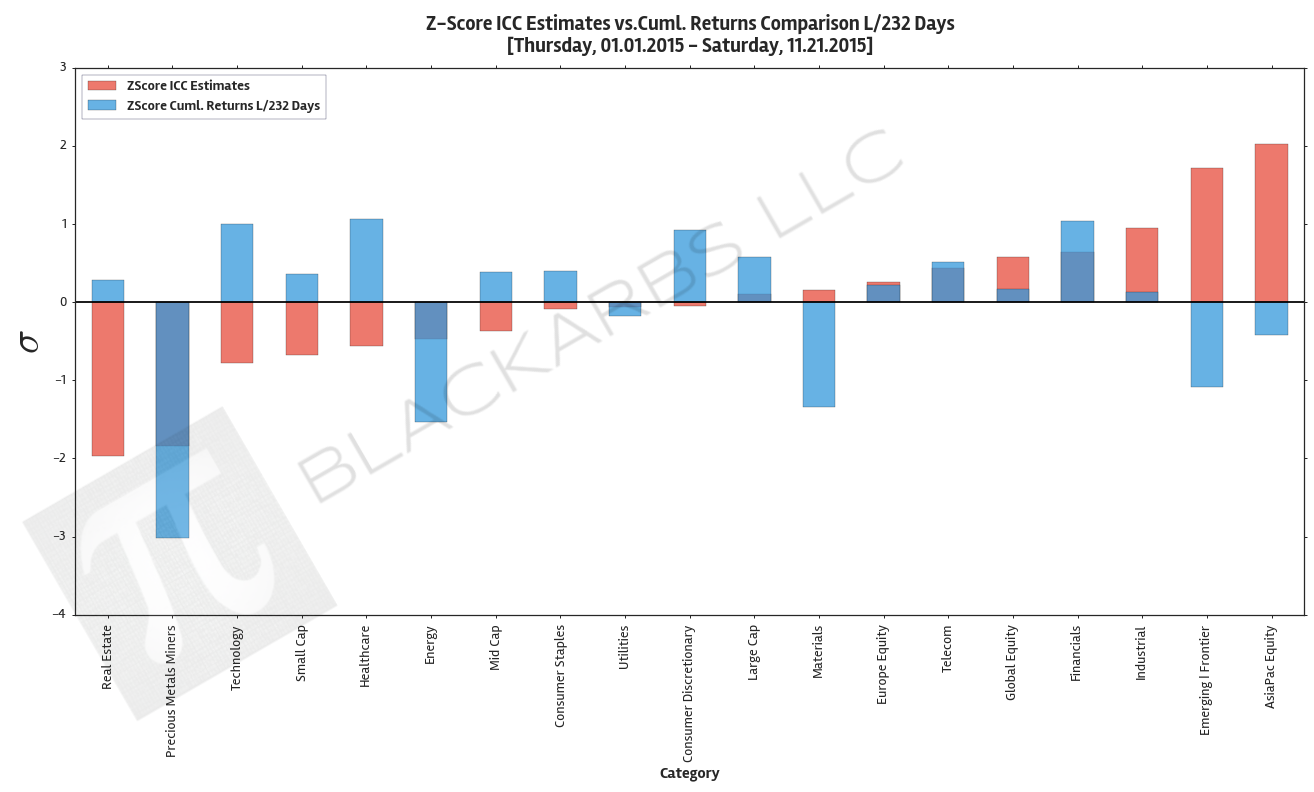
WHAT IS THE "IMPLIED COST OF CAPITAL (ICC)" MODEL? “In accounting and finance the implied cost of equity capital (ICC)—defined as the internal rate of return that equates the current stock price to discounted expected future dividends—is an increasingly popular class of proxies for the expected rate of equity returns. ” — CHARLES C. Y. WANG; an assistant professor of business administration in the Accounting and Management Unit at Harvard Business School The basic concept of the ICC model is

READ MORE
COMPOSITE MACRO ETF WEEKLY ANALYTICS (11/21/2015)
PythonGlobal Markets

COMPOSITE MACRO ETF WEEKLY ANALYTICS (11/21/2015)

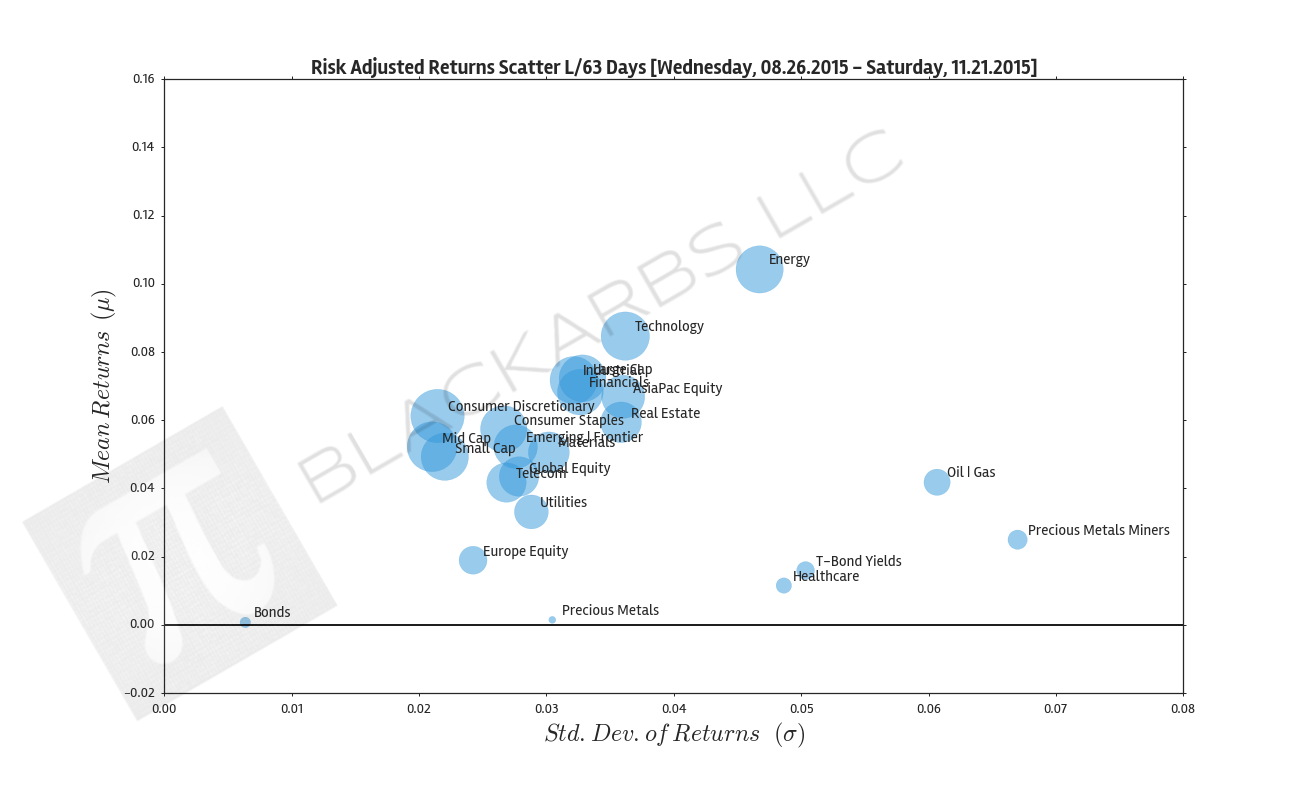
NEW LAYOUT (Organized by Time Period): Composite ETF Cumulative Returns Momentum Bar plot and associated Tables Composite ETF Cumulative Returns Line plot Composite ETF Risk-Adjusted Returns Scatter plot (Std vs Mean) Composite ETF Risk-Adjusted Return Correlations Heatmap (Clusterplot) COMPOSITE ETF COMPONENTS: YEAR-TO-DATE LAST 232 TRADING DAYS Click here for help understanding this Chart Click here for help understanding this Chart Click here for help understanding this Chart

READ MORE
COMPOSITE MACRO ETF WEEKLY IMPLIED COST-OF-CAPITAL ESTIMATES VS. CUMULATIVE RETURNS (11/14/15)
PythonGlobal Markets

COMPOSITE MACRO ETF WEEKLY IMPLIED COST-OF-CAPITAL ESTIMATES VS. CUMULATIVE RETURNS (11/14/15)

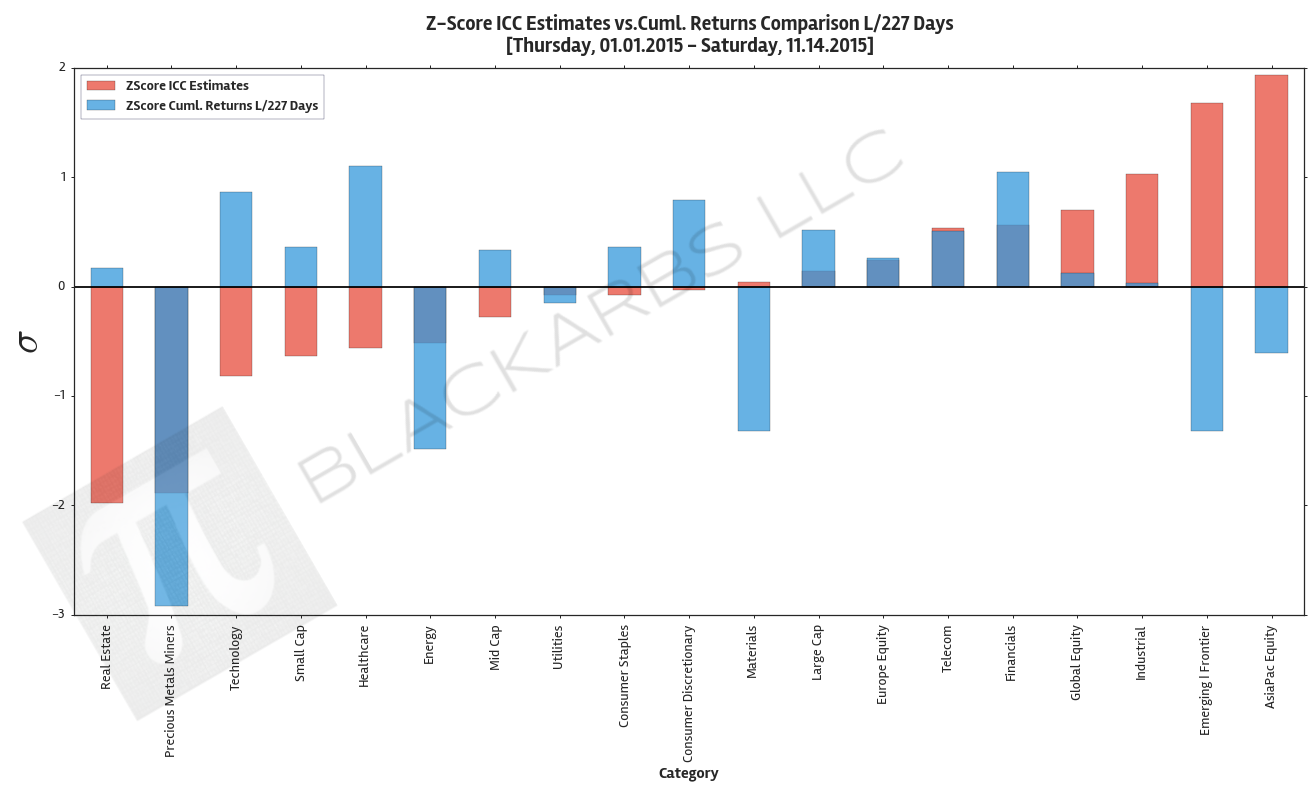
WHAT IS THE "IMPLIED COST OF CAPITAL (ICC)" MODEL? “In accounting and finance the implied cost of equity capital (ICC)—defined as the internal rate of return that equates the current stock price to discounted expected future dividends—is an increasingly popular class of proxies for the expected rate of equity returns. ” — CHARLES C. Y. WANG; an assistant professor of business administration in the Accounting and Management Unit at Harvard Business School The basic concept of the ICC model is

READ MORE
COMPOSITE MACRO ETF WEEKLY ANALYTICS (11/14/2015)
PythonGlobal Markets

COMPOSITE MACRO ETF WEEKLY ANALYTICS (11/14/2015)

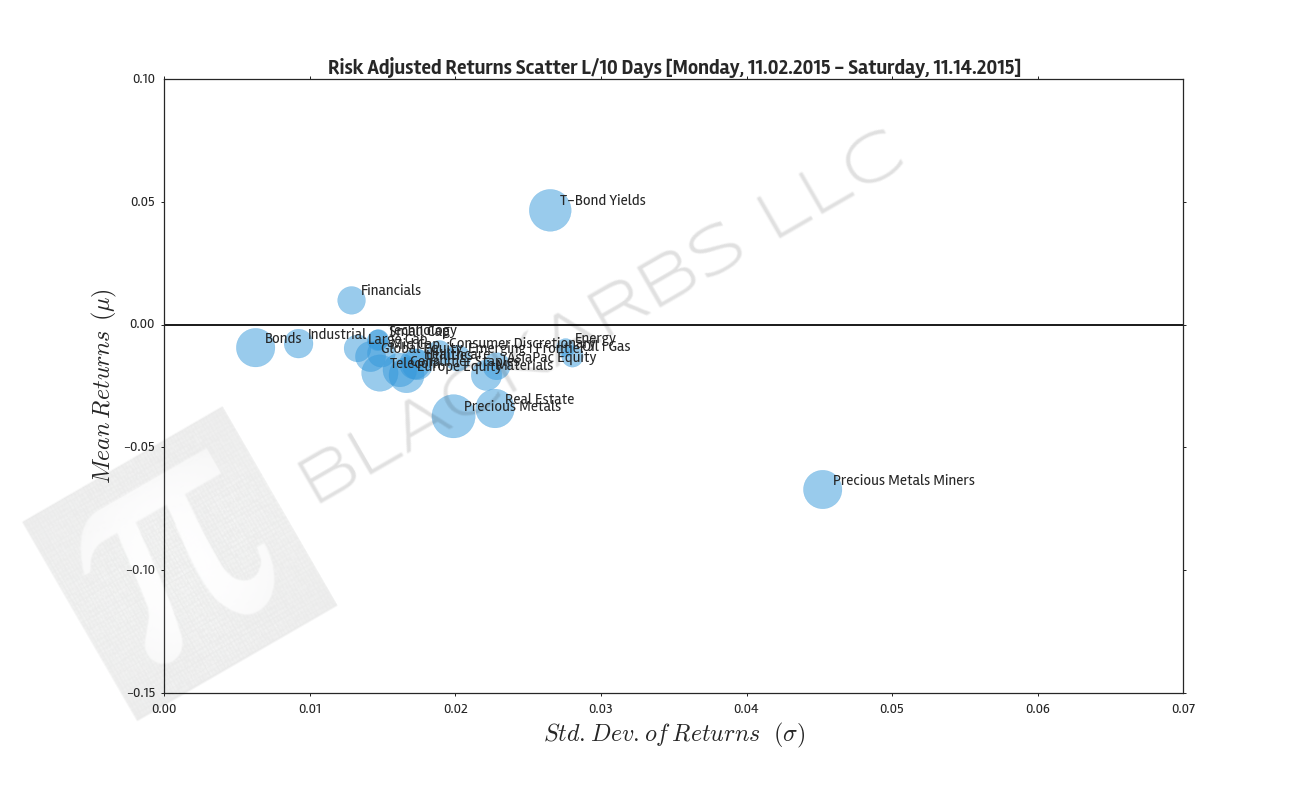
NEW LAYOUT (Organized by Time Period): Composite ETF Cumulative Returns Momentum Bar plot and associated Tables Composite ETF Cumulative Returns Line plot Composite ETF Risk-Adjusted Returns Scatter plot (Std vs Mean) Composite ETF Risk-Adjusted Return Correlations Heatmap (Clusterplot) Composite ETF Components: YEAR-TO-DATE LAST 227 TRADING DAYS Click here for help understanding this Chart Click here for help understanding this Chart Click here for help understanding this Chart

READ MORE
Global MarketsPython

COMPOSITE MACRO ETF WEEKLY IMPLIED COST OF CAPITAL ESTIMATES vs. CUMULATIVE RETURNS (11/07/15)

WHAT IS THE "IMPLIED COST OF CAPITAL (ICC)" MODEL? “In accounting and finance the implied cost of equity capital (ICC)—defined as the internal rate of return that equates the current stock price to discounted expected future dividends—is an increasingly popular class of proxies for the expected rate of equity returns. ” — CHARLES C. Y. WANG; an assistant professor of business administration in the Accounting and Management Unit at Harvard Business School The basic concept of the ICC model is

READ MORE
COMPOSITE MACRO ETF WEEKLY ANALYTICS (11/07/2015)
Global MarketsPython

COMPOSITE MACRO ETF WEEKLY ANALYTICS (11/07/2015)

NEW LAYOUT: Composite ETF Cumulative Returns Momentum Bar plot and associated Tables Composite ETF Cumulative Returns Line plot Composite ETF Risk-Adjusted Returns Scatter plot (Std vs Mean) Composite ETF Risk-Adjusted Return Correlations Heatmap (Clusterplot) YEAR-TO-DATE LAST 222 TRADING DAYS Click here for help understanding this Chart Click here for help understanding this Chart Click here for help understanding this Chart Click here for help understanding this Chart LAST 63

READ MORE
COMPOSITE MACRO ETF IMPLIED COST OF CAPITAL ESTIMATES
PythonGlobal Markets

COMPOSITE MACRO ETF IMPLIED COST OF CAPITAL ESTIMATES

Earlier this year I used to publish a bi-weekly article using the "Implied Cost of Capital" model as an ETF relative value estimation tool. Unfortunately State Street began reporting obvious erroneous data points and eventually stopped providing certain fundamental data altogether. As a result I had to suspend publishing of my ICC estimates. Well thanks to YCharts.com and their excellent site I was able to find the requisite data needed to begin publishing my model estimates again. what is th

READ MORE
COMPOSITE MACRO ETF WEEKLY ANALYTICS (10/31/2015)
Global MarketsPython

COMPOSITE MACRO ETF WEEKLY ANALYTICS (10/31/2015)

NEW LAYOUT: Going forward I will be testing a new organizational format for the charts. I have created a chart description page which details how each plot type is commonly interpreted (used). I will provide a link to the chart description page in the caption of each chart. The primary change is all the chart types will be grouped by the referenced time period. It is my hope that grouping the data this way will allow for easier analysis. Each time period grouping will display the charts in the

READ MORE
COMPOSITE MACRO ETF WEEKLY ANALYTICS (10/25/2015)
Global MarketsPython

COMPOSITE MACRO ETF WEEKLY ANALYTICS (10/25/2015)

COMPOSITE ETF CUMULATIVE RETURN MOMENTUM These charts show the sum (cumulative) of the daily returns of each composite ETF over the specified period. The daily return is calculated as the log of the percent change between daily adjusted close prices. These charts help determine asset class return momentum. This is important because momentum is arguably the strongest and most persistent market anomaly. Poorly performing asset classes are likely to continue under performing while outperforming a

READ MORE
Global MarketsPython

COMPOSITE MACRO ETF WEEKLY ANALYTICS (10/18/2015)

COMPOSITE ETF CUMULATIVE RETURN MOMENTUM These charts show the sum (cumulative) of the daily returns of each composite ETF over the specified period. The daily return is calculated as the log of the percent change between daily adjusted close prices. These charts help determine asset class return momentum. This is important because momentum is arguably the strongest and most persistent market anomaly. Poorly performing asset classes are likely to continue under performing while outperforming a

READ MORE
Global MarketsPython

COMPOSITE MACRO ETF WEEKLY ANALYTICS (10/10/2015)

COMPOSITE ETF CUMULATIVE RETURN MOMENTUM These charts show the sum (cumulative) of the daily returns of each composite ETF over the specified period. The daily return is calculated as the log of the percent change between daily adjusted close prices. These charts help determine asset class return momentum. This is important because momentum is arguably the strongest and most persistent market anomaly. Poorly performing asset classes are likely to continue under performing while outperforming a

READ MORE
Global MarketsPython

COMPOSITE MACRO ETF WEEKLY ANALYTICS (10/04/2015)

COMPOSITE ETF CUMULATIVE RETURN MOMENTUM These charts show the sum (cumulative) of the daily returns of each composite ETF over the specified period. The daily return is calculated as the log of the percent change between daily adjusted close prices. These charts help determine asset class return momentum. This is important because momentum is arguably the strongest and most persistent market anomaly. Poorly performing asset classes are likely to continue under performing while outperforming a

READ MORE
Equity AnalysisPython

Could SPY ETF Component Participation Have Alerted Us to Sell (Hedge) Prior to the Recent Market Downturn?

This is the Python Code version of a guest post presented here on RectitudeMarket.com. If you would like to read the analysis without the Python code please click the link above. To market pundits and casual observers the recent correction in equity markets appeared as a surprise. Overall headline economic data was positive at best and mixed at worst. Domestically, capital markets had been looking ‘ok’ while most of the major volatility was taking place abroad in emerging markets, and commodity

READ MORE
Global MarketsPython

COMPOSITE MACRO ETF WEEKLY ANALYTICS (9/28/2015)

COMPOSITE ETF CUMULATIVE RETURN MOMENTUM These charts show the sum (cumulative) of the daily returns of each composite ETF over the specified period. The daily return is calculated as the log of the percent change between daily adjusted close prices. These charts help determine asset class return momentum. This is important because momentum is arguably the strongest and most persistent market anomaly. Poorly performing asset classes are likely to continue under performing while outperforming a

READ MORE
EducationEquity Analysis

Guest Post Previously Featured on RectitudeMarket.com (09/02/2015)

**Note: This post already appeared as a guest post on rectitudemarket.com. The reason I'm posting this article when it is 'outdated', is twofold. 1) I think it's beneficial to review previous works especially when one has the benefit of hindsight. This helps us determine the accuracy and bias of the research presented. 2) I further introduce the concept of conditional cumulative returns, which adds insight to what happens to our securities' returns given some other event occurring. In this case,

READ MORE
Global MarketsPython

COMPOSITE MACRO ETF WEEKLY ANALYTICS (9/20/2015)

COMPOSITE ETF CUMULATIVE RETURN MOMENTUM These charts show the sum (cumulative) of the daily returns of each composite ETF over the specified period. The daily return is calculated as the log of the percent change between daily adjusted close prices. These charts help determine asset class return momentum. This is important because momentum is arguably the strongest and most persistent market anomaly. Poorly performing asset classes are likely to continue under performing while outperforming a

READ MORE
Global MarketsPython

COMPOSITE MACRO ETF WEEKLY ANALYTICS (9/14/2015)

COMPOSITE ETF CUMULATIVE RETURN MOMENTUM These charts show the sum (cumulative) of the daily returns of each composite ETF over the specified period. The daily return is calculated as the log of the percent change between daily adjusted close prices. These charts help determine asset class return momentum. This is important because momentum is arguably the strongest and most persistent market anomaly. Poorly performing asset classes are likely to continue under performing while outperforming a

READ MORE
Composite Macro ETF Weekly Analytics (8/30/2015)
Global MarketsQuant

Composite Macro ETF Weekly Analytics (8/30/2015)

COMPOSITE ETF CUMULATIVE RETURN MOMENTUM These charts show the sum (cumulative) of the daily returns of each composite ETF over the specified period. The daily return is calculated as the log of the percent change between daily adjusted close prices. These charts help determine asset class return momentum. This is important because momentum is arguably the strongest and most persistent market anomaly. Poorly performing asset classes are likely to continue under performing while outperforming a

READ MORE
Was David Woo Right; Was the Selloff Exacerbated by Risk Parity Strategies?
Global MarketsFixed Income

Was David Woo Right; Was the Selloff Exacerbated by Risk Parity Strategies?

Today after the close Bloomberg TV had David Woo, Managing Director and Head of Global Rates and Currencies Research at Bank of America/Merrill Lynch, on to provide some insight regarding recent market action. More specifically, he addressed how Chinese and American markets are linked. He dropped a lot of gems during his segment but one point really struck a chord with me. He said that the recent selloff has likely been exacerbated by "Risk Parity Guys". If you're unfamiliar with 'risk parity'

READ MORE
COMPOSITE MACRO ETF CUMULATIVE RETURN MOMENTUM (08.23.2015)
PythonQuant

COMPOSITE MACRO ETF CUMULATIVE RETURN MOMENTUM (08.23.2015)

Here is the updated list of composite ETF components. LAST 1260 TRADING DAYS (5 YEARS) Source: Yahoo Finance LAST 504 TRADING DAYS (2 YEARS) Source: Yahoo Finance LAST 252 TRADING DAYS (1 YEAR) Source: Yahoo Finance LAST 126 TRADING DAYS (6 MONTHS) Source: Yahoo Finance LAST 63 TRADING DAYS (3 MONTHS) Source: Yahoo Finance LAST 21 TRADING DAYS (1 MONTH) Source: Yahoo Finance LAST 10 TRADING DAYS Source: Yahoo Finance Blog RSS #block-yui_3_17_2_2_1440420671029_16964 .social-i

READ MORE
PythonResearch

Get Free Financial Data w/ Python (State street ETF Holdings - SPY)

One issue I frequently encounter during my research is the need to compare an individual stock, or collection of stocks vs its ETF benchmark. To do this I need accurate ETF holdings data. Generally this information is located on the ETF provider's website. However, this information is often inconvenient to access. Most websites including the ETF provider will do something like the following, where they only show the top 10 holdings, when what we really need is accessible only by clicking the hi

READ MORE
Equity AnalysisPython

Composite Macro ETF Cumulative Return Momentum (08.16.2015)

Here are the updated ETF components I'm using to construct the ETF composites. Last 504 Trading Days Composite ETF Cumulative Returns Last 252 Trading Days Composite ETF Cumulative Returns Last 126 Trading Days Composite ETF Cumulative Returns Last 63 Trading Days Composite ETF Cumulative Returns last 21 Trading days Composite ETF Cumulative Returns Last 10 Trading days Composite ETF Cumulative Returns Blog RSS #block-yui_3_17_2_4_1439677863749_22267

READ MORE
Price Dispersion as a Smart Money Indicator
Equity AnalysisQuant

Price Dispersion as a Smart Money Indicator

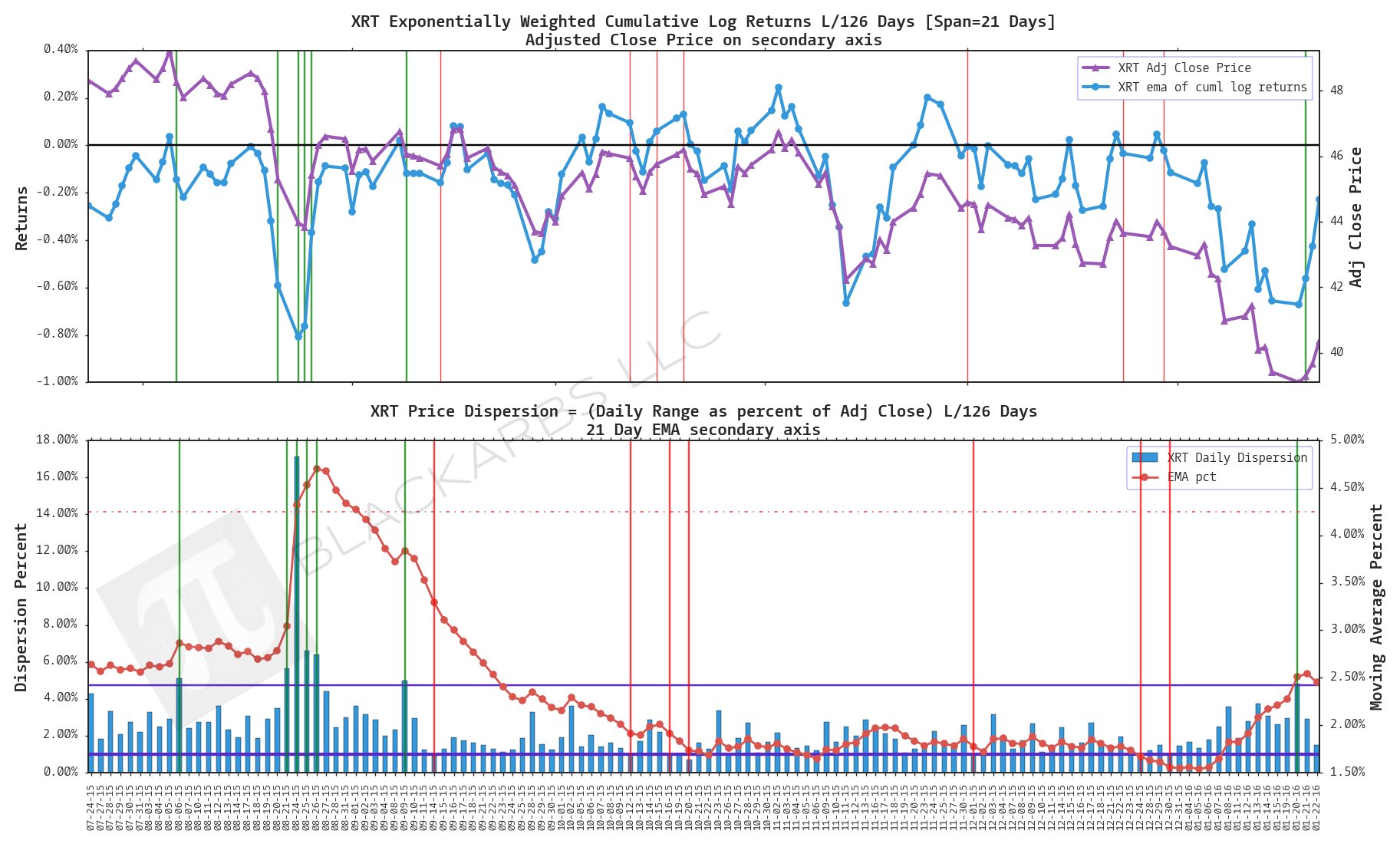
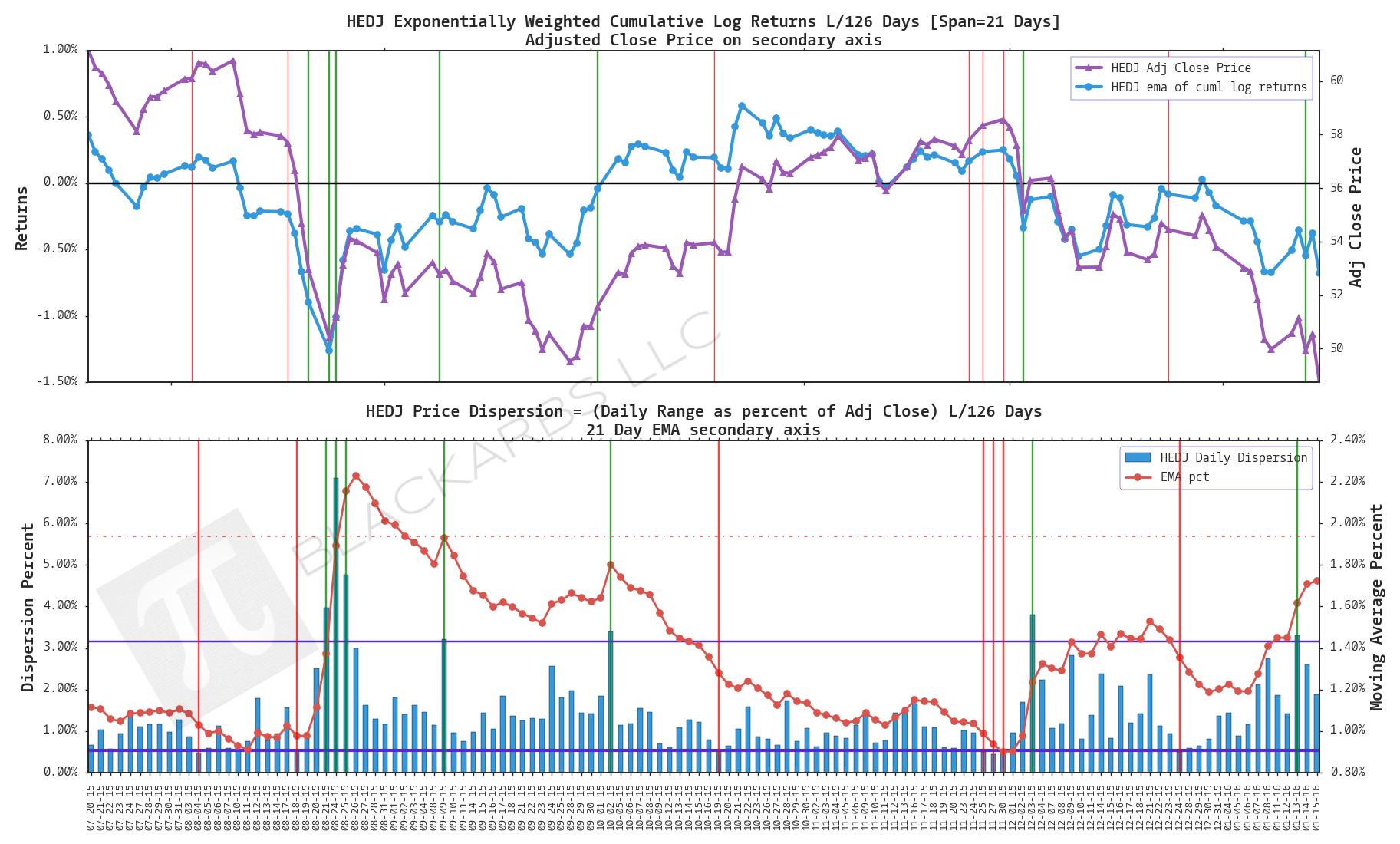
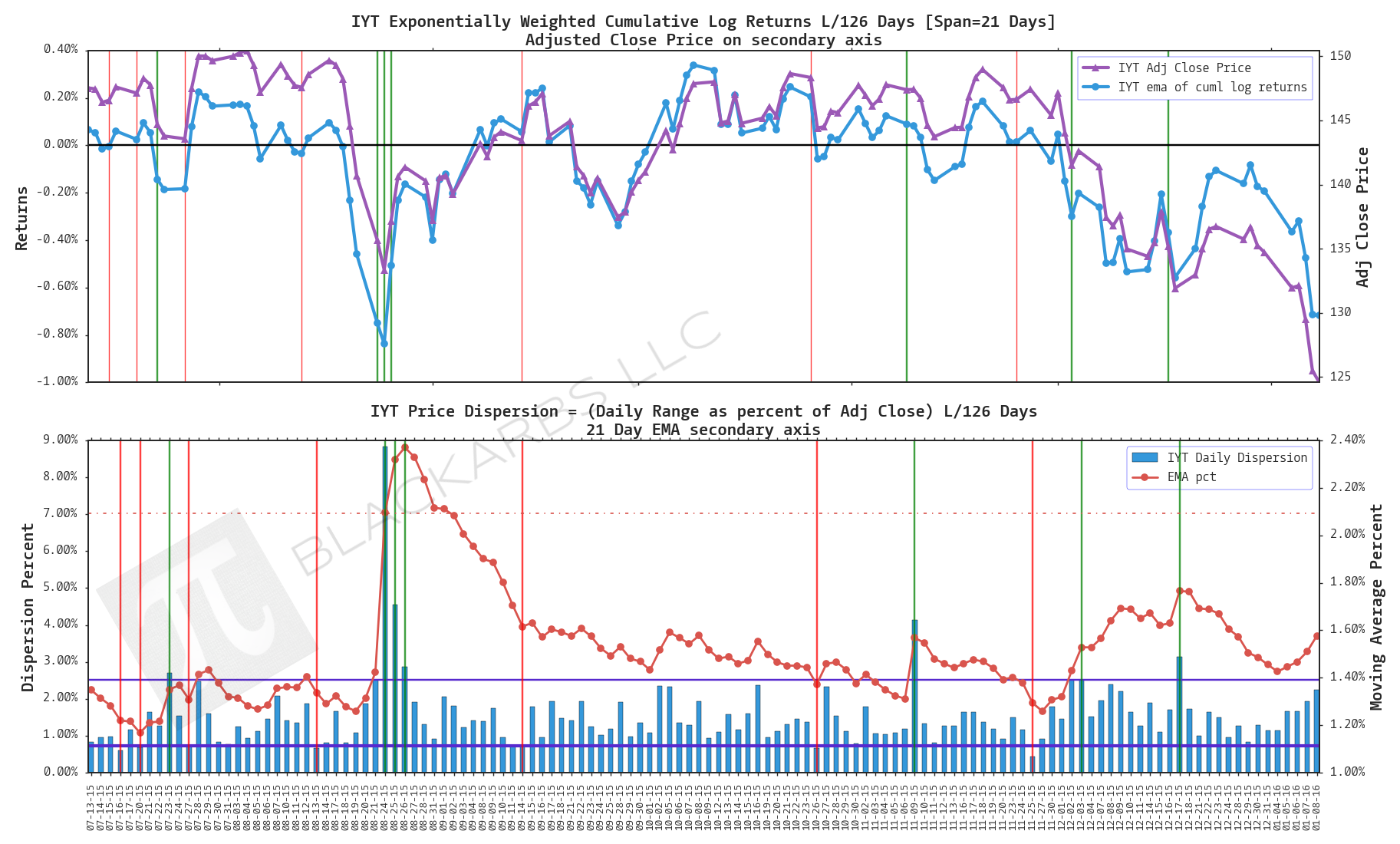
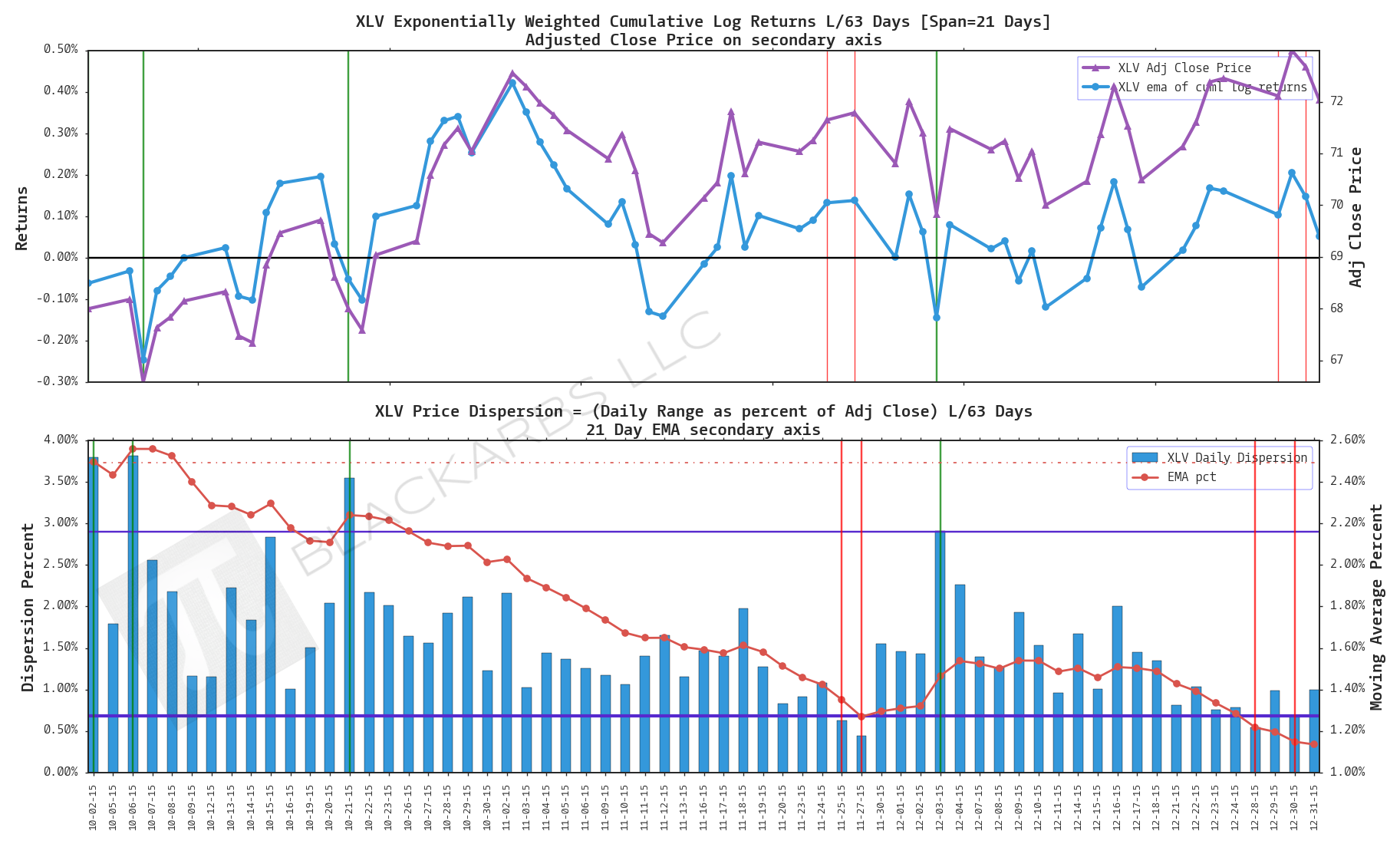
Before I get into the topic at hand, let me say I have not seen the following stock price data interpreted or studied like I am about to show you. As far as I am aware my approach is unique in that it is not overly complicated, can be generalized across a large cross section of asset class ETFs, and makes intuitive sense regarding market structure. Before I introduce the chart it is important that I clarify some definitions. What is Price Dispersion? I'm sure this may have many meanings amon

READ MORE
Composite Equity ETF Analysis (8/10/2015)
Equity AnalysisResearch

Composite Equity ETF Analysis (8/10/2015)

While I continue to update the ICC Valuation methodology I plan to post more of the custom charts I use to gain insight into current market structure, momentum, and relative value. Updated Composite ETF List Best vs Worst Performing ETF Composite L/252 Days Best vs Worst Performing ETF Composite L/63 Days Best vs Worst Performing ETF Composite L/21 Days BarPlot Cumulative Returns L/4 Weeks Z - Score Average Risk-Adjusted Returns L/21 Days

READ MORE
Composite Sector ETF Valuation Report [6.15.2015]
Equity AnalysisPython

Composite Sector ETF Valuation Report [6.15.2015]

Check out the updated IPython Notebook where I take a look at changes and trends in ETF valuations using the Implied Cost of Capital model. To learn more about the model and the methodology used see here and here. For reference here is a Table of Contents, but due to some technical issues the TOC is not working properly on the nbviewer.org page. I'll keep working to fix it for the next issue.

READ MORE
COMPOSITE SECTOR ETF VALUATION UPDATED [5.24.2015]
Equity AnalysisGlobal Markets

COMPOSITE SECTOR ETF VALUATION UPDATED [5.24.2015]

Check out my updated IPython Notebook where I take a look at changes and trends in ETF valuations using the Implied Cost of Capital model. To learn more about the model and the methodology used see here and here. Composite Sector ETF Valuation updated [5.24.2015]

READ MORE
Composite Sector ETF Valuation updated [5.10.2015]
Equity AnalysisGlobal Markets

Composite Sector ETF Valuation updated [5.10.2015]

Check out my updated IPython Notebook where I take a look at changes and trends in ETF valuations using the Implied Cost of Capital model. To learn more about the model and the methodology used see here and here. Composite Sector ETF Valuation updated [5.10.2015]

READ MORE
Equity AnalysisQuant

Sector ETF Valuation Using the Implied Cost of Capital (ICC) Model

This post is part of a series examining the ICC model's use as a valuation tool. I first introduced the topic in this post, where I outlined the following: * how I calculate the ICC formula for use in this sector ETF relative valuation model * my assumptions for the model * expected model output and sanity check * why and how I use the model results to enhance my investing Recently I expanded on the subject by detailing the Python code I use to run the analysis along with my interpretation

READ MORE