Tag: Mixture Models

Mixture Model Trading (Part 5 - Algorithm Evaluation with pymc3)
PythonQuant

Mixture Model Trading (Part 5 - Algorithm Evaluation with pymc3)

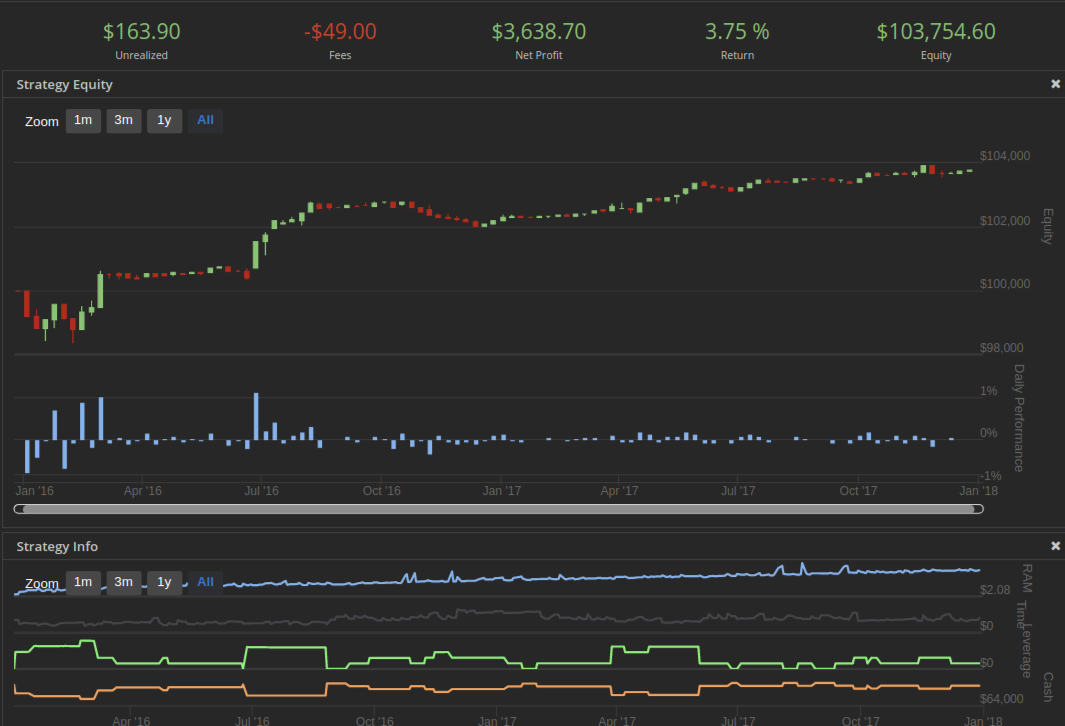
Post Outline * Recap * Chapter Goals and Outline * Links * Embedded Jupyter Notebook Recap See <Mixture Model Trading (Part 1, Part 2, Part 3, Part 4, Part 5, Github Repo)>. This research demonstrates a systematic trading strategy development workflow from theory to implementation to testing. It focuses on the concept of using Gaussian Mixture Models as a method for return distribution prediction and then using a simple market timing strategy to take advantage of the predicted asset retu

READ MORE
Mixture Model Trading (Part 4 - Strategy Implementation)
PythonQuant

Mixture Model Trading (Part 4 - Strategy Implementation)

Post Outline * Chapter Goals and Outline * Links * Introduction * Mixture Model Trading Algorithm Outline * GMM Algorithm Implementation * Next Steps Chapter Goals and Outline * Use Part 3 - strategy research as a basis for algorithmic trading strategy. * Implement strategy using the Quantconnect platform. Links * Mixture Model Trading Github Repo * Part 4 Jupyter Notebook Link * Full Algorithm Python Script Introduction This notebook will walkthrough the algorithm implement

READ MORE
Mixture Model Trading (Part 3 - Strategy Research)
PythonQuant

Mixture Model Trading (Part 3 - Strategy Research)

Post Outline * Introduction * Links * Notebook * Next Steps Introduction This is the beginning of a three part series that I completed towards the end of 2017 as a learning module for Quantinsti.com. The purpose of the series is to demonstrate a research workflow focused around the theory and application of mixture models as the core framework behind a algorithmic trading strategy. Below is a quote taken from the README of the github repo: “The primary goal of this repo is to demonstrat

READ MORE
Mixture Model Trading (Part 2 - Gaussian Mixtures)
PythonQuant

Mixture Model Trading (Part 2 - Gaussian Mixtures)

Post Outline * Introduction * Links * Notebook * Next Steps Introduction This is the beginning of a three part series that I completed towards the end of 2017 as a learning module for Quantinsti.com. The purpose of the series is to demonstrate a research workflow focused around the theory and application of mixture models as the core framework behind a algorithmic trading strategy. Below is a quote taken from the README of the github repo: “The primary goal of this repo is to demonstrat

READ MORE
Mixture Model Trading (Part 1 - Motivation)
PythonQuant

Mixture Model Trading (Part 1 - Motivation)

Post Outline * Introduction * Links * Notebook * Next Steps Introduction This is the beginning of a three part series that I completed towards the end of 2017 as a learning module for Quantinsti.com. The purpose of the series is to demonstrate a research workflow focused around the theory and application of mixture models as the core framework behind a algorithmic trading strategy. Below is a quote taken from the README of the github repo: I will be presenting each of the notebooks

READ MORE
Can We Use Mixture Models to Predict Market Bottoms? (Part 3)
PythonQuant

Can We Use Mixture Models to Predict Market Bottoms? (Part 3)

Post Outline * Recap * Webinar Hypothesis * Anaylsis/Conclusions * Jupyter (IPython) Notebook * Github Links and Resources Recap Thus far in the series we've explored the idea of using Gaussian mixture models (GMM) to predict outlier returns. Specifically, we were measuring two things: 1. The accuracy of the strategy implementation in predicting return distributions. 2. The return pattern after an outlier event. During the exploratory phase of this project there were some interestin

READ MORE
Can We Use Mixture Models to Predict Market Bottoms? (Part 2)
PythonResearch

Can We Use Mixture Models to Predict Market Bottoms? (Part 2)

Post Outline * Recap * Model Update * Model Testing * Model Results * Conclusions * Code Recap In the previous post I gave a basic "proof" of concept, where we designed a trading strategy using Sklearn's implementation of Gaussian mixture models. The strategy attempts to predict an asset's return distribution such that returns that fall outside the predicted distribution are considered outliers and likely to mean revert. It showed some promise but had many areas in need of improvement.

READ MORE
Can We Use Mixture Models to Predict Market Bottoms?
EducationPython

Can We Use Mixture Models to Predict Market Bottoms?

Post Outline * Recap * Hypothesis * Strategy * Conclusion * Caveats and Areas of Exploration * References Recap In Part 1 we learned about Hidden Markov Models and their application using a toy example involving a lazy pet dog. In Part 2 we learned about the expectation-maximization algorithm, K-Means, and how Mixture Models improve on K-Means weaknesses. If you still have some questions or fuzzy understanding about these topics, I would recommend reviewing the prior posts. In those po

READ MORE
Intro to Expectation-Maximization, K-Means, Gaussian Mixture Models with Python, Sklearn
PythonQuant

Intro to Expectation-Maximization, K-Means, Gaussian Mixture Models with Python, Sklearn

Post Outline * Part 1 Recap * Part 2 Goals * Jupyter (IPython) Notebook * References part 1 recap In part 1 of this series we got a feel for Markov Models, Hidden Markov Models, and their applications. We went through the process of using a hidden Markov model to solve a toy problem involving a pet dog. We concluded the article by going through a high level quant finance application of Gaussian mixture models to detect historical regimes. part 2 goals In this post, my goal is to impar

READ MORE
Understanding Hidden Variables with Python - Research Roadmap
PythonQuant

Understanding Hidden Variables with Python - Research Roadmap

Post Outline * Motivating the Journey * Where Do Edges Come From? * The Problem with Traditional Research * The Hidden Side * A Brief Description: * Part 1 - A Visual Introduction to Hidden Markov Models with Python * Part 2 - Exploring Mixture Models with Scikit-Learn and Python * Part 3 - Predicting Market Bottoms with Scikit-Learn and Python Motivating the Journey Where do Edges Come From? Edges come from superior ability to identify and execute profitable strategies

READ MORE